



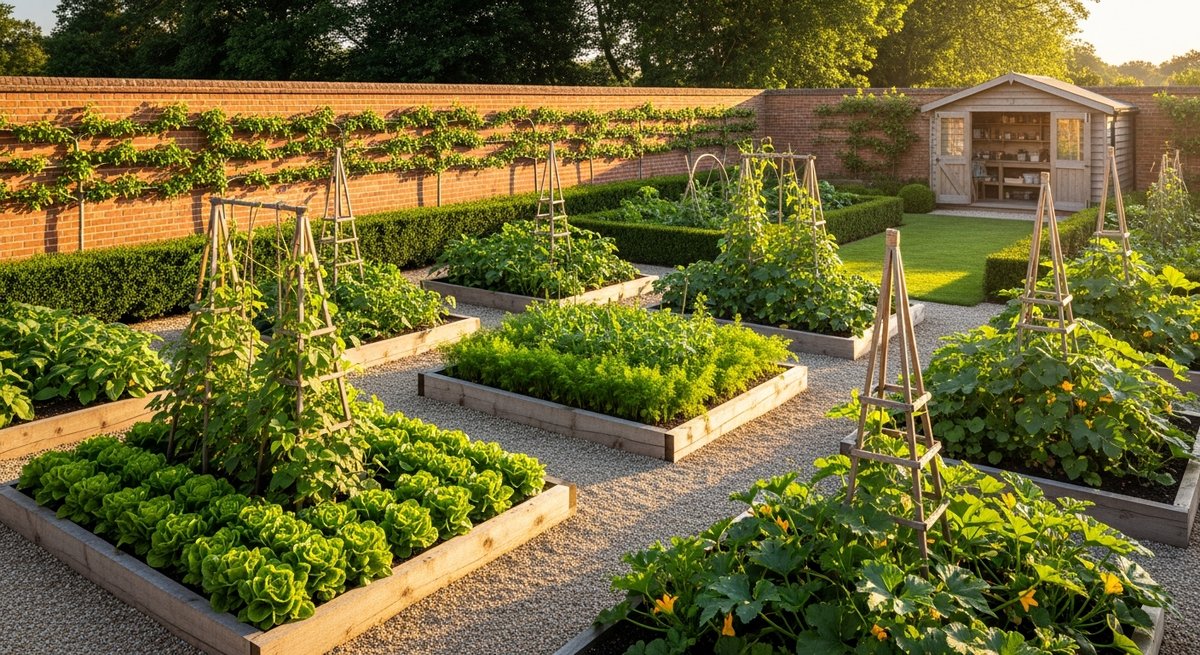
If you want a kitchen garden that actually produces food rather than good intentions, the design stage is where success or failure is decided. Soil preparation, crop rotation, irrigation runs, path widths, compost placement – every one of these details needs to be resolved before a single seed goes in the ground. Hiring a specialist kitchen garden designer is the most reliable way to get those decisions right the first time, but it is also a significant financial and creative commitment. This guide covers what a kitchen garden designer does, what the work should cost, how to vet candidates properly, and when a designer is genuinely worth the fee.
Contents
- 1 What a kitchen garden designer actually does
- 2 Kitchen garden design costs: what to expect in 2025-2026
- 3 How to find and vet a kitchen garden designer
- 4 Questions to ask a designer before hiring
- 5 Red flags to watch for
- 6 Kitchen garden layout ideas: what good design looks like
- 7 Timeline: from first contact to first harvest
- 8 When to hire a designer and when not to
- 9 Frequently asked questions
What a kitchen garden designer actually does
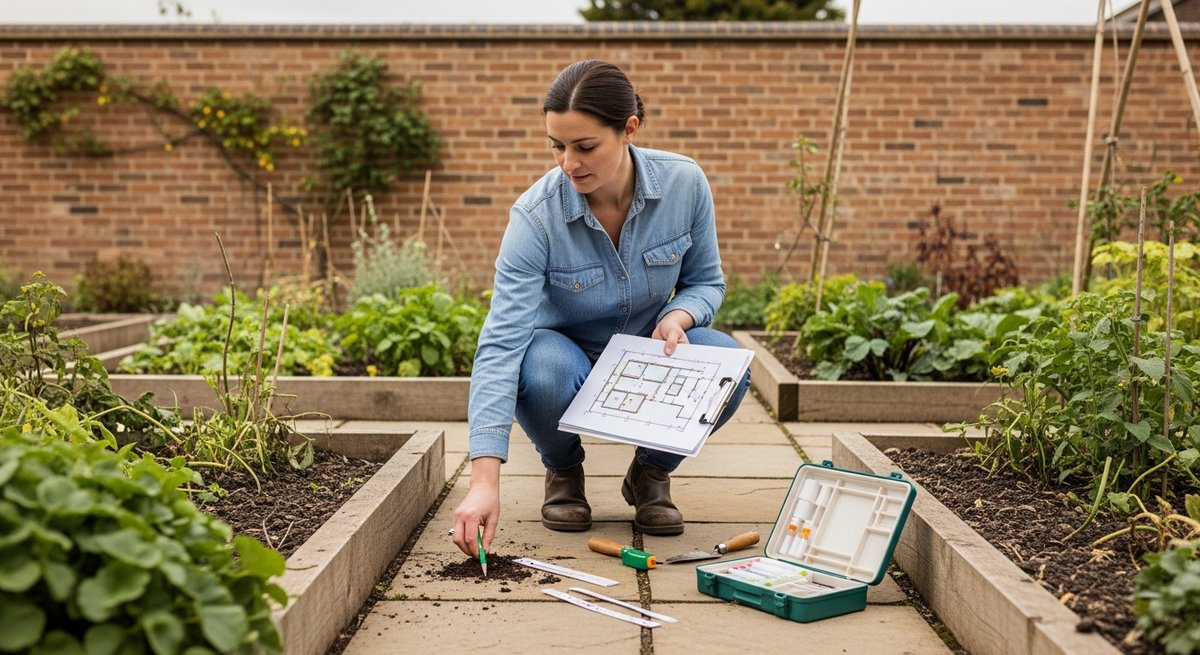
A kitchen garden designer does more than draw beds on paper. According to the Royal Horticultural Society, productive garden design requires integrating soil science, microclimate analysis, crop sequencing, and structural planning before aesthetics are considered. A competent designer will begin with a site survey that measures light levels across the day, records frost pocket data if available, assesses soil structure and drainage, and identifies any overhead or underground services that affect layout.
From the survey, the designer produces a scaled planting plan that specifies bed dimensions, path widths (typically 60-90 cm / 24-35 in for a working kitchen garden), irrigation routes, compost and storage positions, and a crop rotation framework. This is functional infrastructure planning. A potager garden design, which combines productive planting with formal geometry, adds a second layer of visual structure, but the productive logic must underpin it from the start.
The designer may also manage the build phase, sourcing materials, briefing contractors, and overseeing installation. Some offer a maintenance handover session that teaches you how to run the system they have built. Ask explicitly whether this is included in the quoted fee, because it rarely is by default.
Kitchen garden design costs: what to expect in 2025-2026
Design fees in the UK typically range from £800 to £4,500 for a residential kitchen garden, depending on site complexity and the depth of service. A concept plan alone sits at the lower end. A full design and build package with project management sits at the upper end and above. Build costs are separate: a simple raised-bed kitchen garden with gravel paths might cost £3,000-£8,000 to construct, while a walled potager with automated irrigation can reach £30,000 or more.
Be cautious of designers who quote a flat fee without visiting the site first. Any reputable professional will either charge a site-visit fee (commonly £150-£350) before committing to a project fee, or include the site visit within a clearly scoped initial proposal.
For small kitchen garden design – a courtyard plot or a run of raised beds in a suburban back garden – a full design commission may be disproportionate to the build budget. In those cases, a paid consultation of 1-2 hours (£100-£250) to review your self-drawn plans is often better value. A good designer will tell you this honestly rather than sell you a full commission you do not need.
How to find and vet a kitchen garden designer

The most reliable starting point in the UK is the Society of Garden Designers (SGD), which maintains a directory of accredited members and publishes its own code of conduct. The RHS also maintains a list of RHS-affiliated designers. Both directories allow you to filter by location and speciality, and “kitchen garden” or “productive garden” are searchable terms on the SGD site.
Before you contact anyone, assemble the following: the dimensions of your space, your aspect, your approximate budget split between design and build, and a list of crops you actually want to grow. A designer who asks you for this information in the first conversation is doing their job. One who does not ask is designing for themselves.
Request to see completed kitchen garden or productive garden projects specifically, not general landscaping portfolios. A designer with an excellent eye for ornamental borders may have no understanding of crop rotation blocks, brassica netting heights, or the clearance required to run a market trolley between beds. These are not interchangeable skills.
Questions to ask a designer before hiring
The questions below are diagnostic. The answers will tell you whether this person has genuinely built and maintained kitchen gardens or is offering a service at the edge of their competence.
- How do you structure crop rotation across the beds you design, and what rotation cycle length do you recommend for a garden this size?
- What irrigation system do you typically specify, and how is it maintained through winter?
- How do you account for soil improvement at the design stage – do you specify a build-up schedule or just an initial compost layer?
- What is your approach to pest exclusion structures and are these designed into the plan from the start?
- Can you provide a reference from a client whose kitchen garden you designed at least two growing seasons ago?
- What happens if the build contractor encounters ground conditions that change the design – do you revise plans as part of the fee?
If a designer cannot answer the rotation question with a specific cycle (three-year or four-year rotation is standard for most UK productive gardens, per RHS guidance), treat this as a significant red flag.
Red flags to watch for
Several patterns reliably predict a poor outcome. The first is a designer who leads with aesthetics before establishing function – showing mood boards of terracotta pots and espalier pears before asking about your soil type. The second is vague contract language: phrases like “full design service” need to be unpacked into specific deliverables with revision rounds stated.
A third red flag is the absence of a soil assessment in the proposed scope of work. At minimum, a designer should recommend a basic laboratory soil test (typically £15-£30 through the RHS or a commercial lab) at the start of the project. If they do not, the planting and amendment strategy will not be grounded in the actual conditions of your site. Finally, be sceptical of any designer who discourages you from getting a second opinion or comparison quote.
Kitchen garden layout ideas: what good design looks like
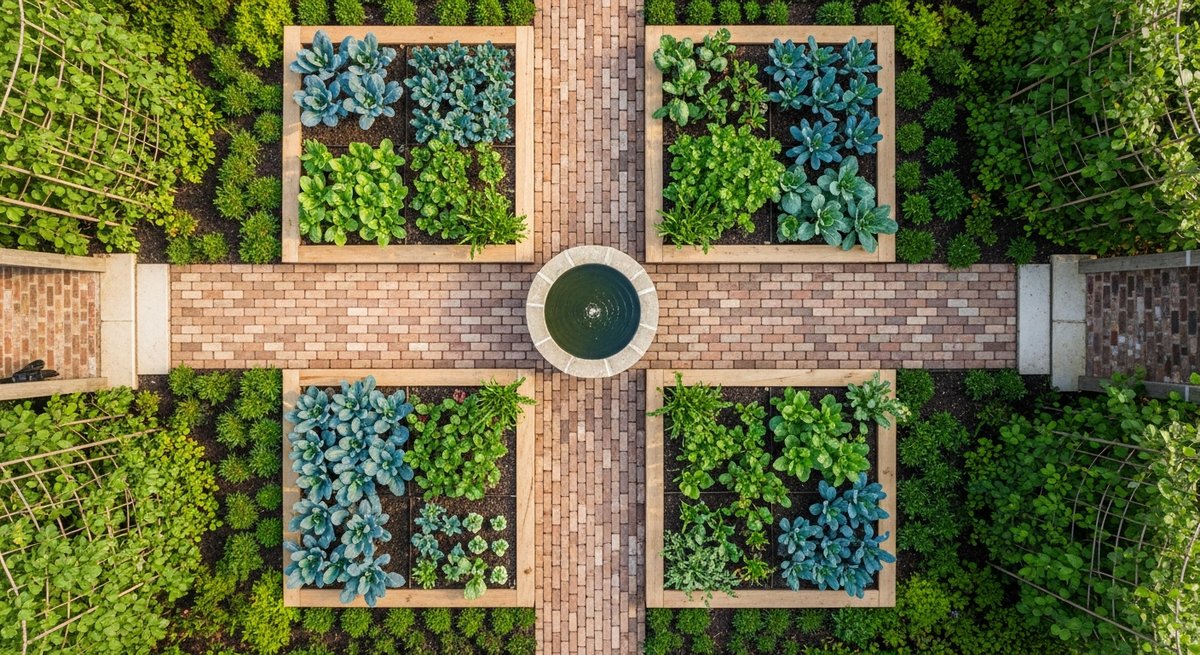
Regardless of style, the most functional kitchen garden layouts share a set of structural principles. Beds are no wider than 120 cm (47 in) so that you can reach the centre from both sides without stepping on the soil. Paths are wide enough for a wheelbarrow: 60 cm (24 in) minimum, 90 cm (35 in) preferred. A water source is within 15 m (50 ft) of the furthest bed. Compost bays are positioned at the entry point to the working area, not tucked into a corner that requires carrying material past planted beds.
Vertical structure – trained fruit, climbing beans, cordon tomatoes – is designed into the plan rather than retrofitted, because post positions, trellis anchoring, and shade cast by tall structures all affect surrounding beds. If you are planning to grow cucumbers in a contained space, the guide to growing cucumbers in pots explains the vertical support requirements that should be reflected in any small kitchen garden design brief. Similarly, if your design will include container-based planting on a terrace or balcony, the principles in how to design a container garden will help you brief your designer on the productive potential of those spaces.
Succession sowing space separates a well-planned kitchen garden from one that looks productive for six weeks and then stalls. Your designer should allocate dedicated nursery bed or propagation bench space – even if that is just a 60 x 120 cm (24 x 47 in) cold frame position – so that transplants are always ready to follow harvested crops without a gap.
Timeline: from first contact to first harvest
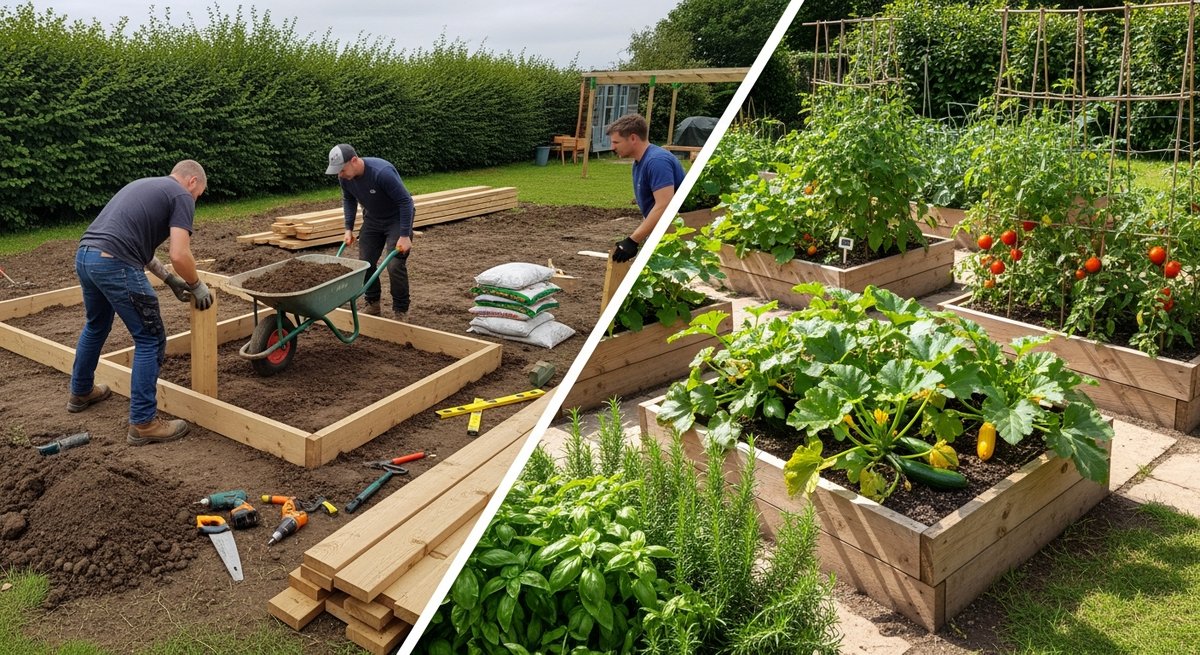
A realistic timeline for a commissioned kitchen garden design runs as follows: initial brief and site survey in month one; concept plan and feedback in month two; detailed design and specification in month three; contractor tendering in months three to four; build phase of four to twelve weeks; planting in the appropriate season following completion. If you start in autumn, a well-managed project can be planted the following spring.
Rushing this timeline is the most common reason kitchen garden projects underperform. Soil that has not settled after raised bed construction will compact unevenly in the first season. Good kitchen garden planning is patient planning. If you are managing plant scheduling yourself in parallel with a design process, a plant calendar app can help you track sowing windows while the physical design is being finalised.
When to hire a designer and when not to
A kitchen garden designer adds the most value in three situations: when the site has significant constraints (slopes, poor drainage, or limited light); when the brief includes formal structural elements such as raised masonry beds, pergolas, or espalier frames; or when the garden will be managed by someone with limited growing experience who needs a system that is intuitive to operate. In these cases the design fee will almost certainly be recovered in avoided construction errors and faster crop establishment.
A designer adds less value when the site is straightforward, the budget is modest, and the gardener is experienced enough to make sound decisions independently. In that scenario, a paid consultation reviewing your own plans is a proportionate investment. A good designer will tell you which category your project falls into. If they cannot, that is your answer.
Frequently asked questions
Scoping and costs
How much does it cost to hire a kitchen garden designer in the UK?
Design fees range from approximately £800 for a basic concept plan to £4,500 or more for a full design and project management service. A site visit fee of £150-£350 is common before a full quote is issued. These figures cover design only; build costs are separate and site-specific.
Is a kitchen garden designer the same as a landscape designer?
Not necessarily. Landscape designers work across ornamental and productive projects, but kitchen garden design requires specific knowledge of crop rotation, productive bed sizing, pest exclusion, and succession sowing. Always ask to see productive garden projects specifically, not a general portfolio.
Do I need planning permission for a kitchen garden?
Most residential kitchen gardens in the UK do not require planning permission. Permitted development rights cover raised beds, paths, and most non-permanent structures. Walled gardens, large glasshouses, and structures over 2.5 m (8.2 ft) height adjacent to boundaries may require consent. Your designer should flag this in the initial scope; if they do not, ask directly and check with your local planning authority.
How long does a kitchen garden design project take?
From first contact to planting, allow four to six months for a standard residential project. More complex sites with significant groundworks or structural elements can extend this to nine to twelve months. Rushing the build phase to meet a planting season is a false economy.
Design and practical detail
What is the ideal bed width for a kitchen garden?
120 cm (47 in) is the maximum recommended width for a kitchen garden bed accessible from both sides, per standard RHS guidance. This allows you to reach the centre without compacting the soil. Beds accessible from one side only should be no wider than 60 cm (24 in).
What is a potager garden and is it harder to design than a standard kitchen garden?
A potager is a French-style ornamental kitchen garden combining productive planting with formal geometry, often using symmetrical beds, edging plants such as dwarf box or chives, and trained fruit as structural elements. It requires more precise design work because the visual geometry must be maintained as crops rotate through the season. It is not inherently more productive, but it is more demanding to design and maintain consistently.
Can I design a small kitchen garden myself without hiring a professional?
Yes, for straightforward sites. The core requirements are beds no wider than 120 cm (47 in), paths wide enough for a wheelbarrow, a water source within practical reach, and a three or four-year crop rotation plan. A paid consultation to review your self-drawn plan is a cost-effective middle ground if you are uncertain about any of those elements.
What soil test should I get before starting a kitchen garden?
A basic laboratory soil analysis covering pH, phosphorus, potassium, magnesium, and organic matter content is sufficient for most kitchen garden projects. The RHS offers soil analysis services, as do several commercial laboratories at similar price points (typically £15-£30 per sample). Collect samples from multiple points across the site and combine them into a composite sample for the most representative result.
