



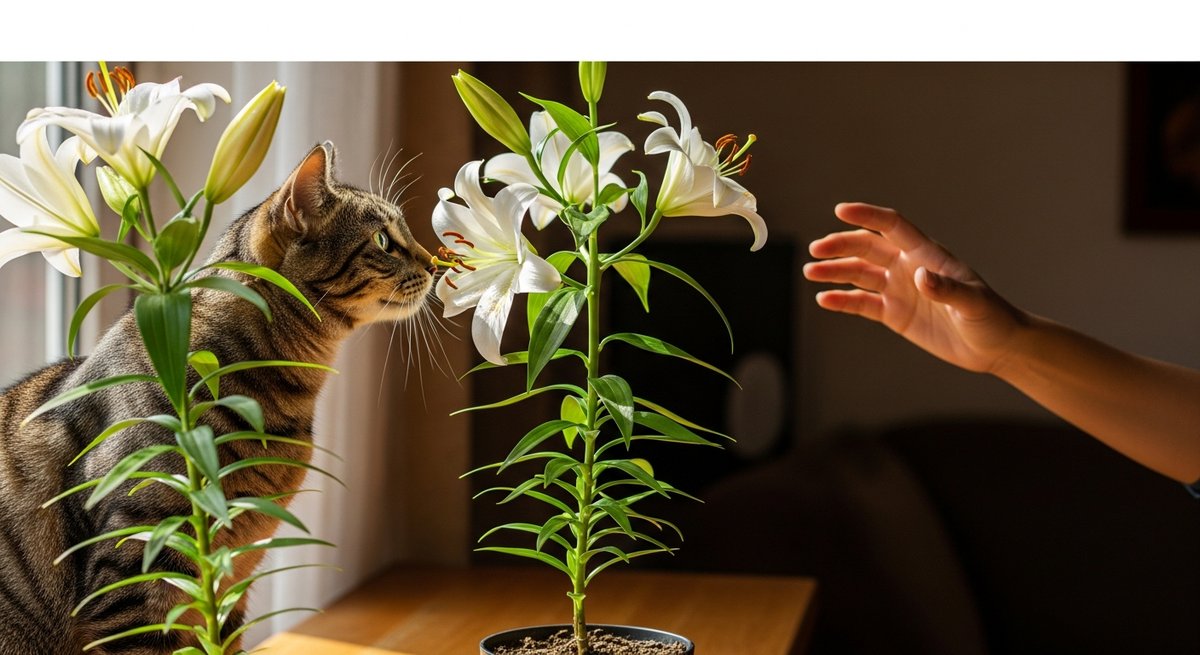
If you have just watched your cat chew a leaf and you are not sure whether the plant is toxic, the safest first step is to identify the plant accurately and call your vet within 30 minutes, even if your cat seems fine. Many plant toxins cause delayed symptoms; acting before symptoms appear gives your vet the best chance to intervene. This guide walks through exactly what to do, what to tell your vet, which plants pose the greatest risk, and how to prevent a repeat incident.
Contents
- 1 Why timing matters: how plant toxins work in cats
- 2 Step-by-step: what to do immediately
- 3 Recognising symptoms of plant poisoning in cats
- 4 The most toxic houseplants to cats: a reference table
- 5 What to tell your vet: a checklist
- 6 Veterinary treatment: what to expect
- 7 Houseplants that are safe for cats
- 8 Preventing repeat incidents: practical measures
- 9 Frequently asked questions
Why timing matters: how plant toxins work in cats
Cats are obligate carnivores with a liver that lacks certain detoxification enzymes present in omnivores and dogs. This makes cats significantly more vulnerable to a range of plant compounds, including phenols, alkaloids, and saponins, that other animals can metabolise without serious harm. Lily nephrotoxins can cause irreversible renal damage within 24 to 72 hours if untreated, even when a cat has eaten only a small amount of petal or pollen (ASPCA, 2024).
Because damage can begin before visible symptoms appear, the window for decontamination is short. Most vets aim to induce vomiting within two hours of ingestion, though this is only appropriate for certain toxins and is never something you should attempt at home without veterinary instruction.
Step-by-step: what to do immediately
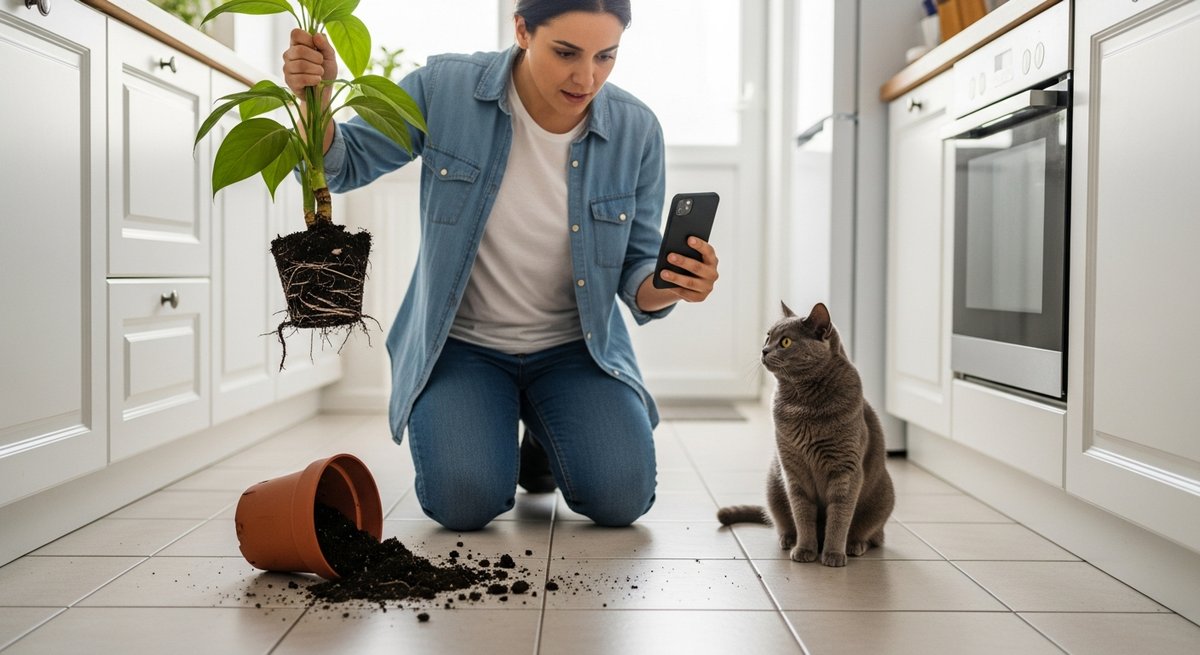
Step 1 – Remove your cat from the plant
Separate your cat from the plant calmly to prevent further ingestion. Do not punish or stress your cat. Note the time as precisely as you can – this is one of the most useful pieces of information you will give your vet.
Step 2 – Identify the plant
Your vet needs the plant’s full name, ideally including the Latin binomial. A common name is not always sufficient; for example, “lily” covers species ranging from non-toxic daylilies to fatally toxic Lilium species. If you do not know the plant name, photograph the leaf, stem, and any flowers and use a reputable identification tool. Our guide on how to use plant identification apps to identify your indoor plants walks through accurate ID methodology. Do not rely on a match below 70% confidence.
Step 3 – Call your vet or poison control
Call your vet or the ASPCA Animal Poison Control Center (888-426-4435) before your cat shows symptoms. Give them: the plant name, estimated quantity ingested, time of ingestion, your cat’s weight and age, and any existing health conditions.
Step 4 – Do not induce vomiting without instruction
Inducing vomiting in cats is not the same as in dogs. Hydrogen peroxide, a common home remedy suggested for dogs, is dangerous in cats and can cause haemorrhagic gastroenteritis (Merck Veterinary Manual, 2023). Only induce vomiting if your vet explicitly instructs you to do so. In most cases, your vet will prefer to handle decontamination in the clinic.
Step 5 – Collect a sample
Place a small clipping of the plant in a sealed bag to bring to the vet. If your cat has vomited, collect a sample in a clean container – this can help the vet identify partially digested plant material and may assist toxicology if needed.
Recognising symptoms of plant poisoning in cats
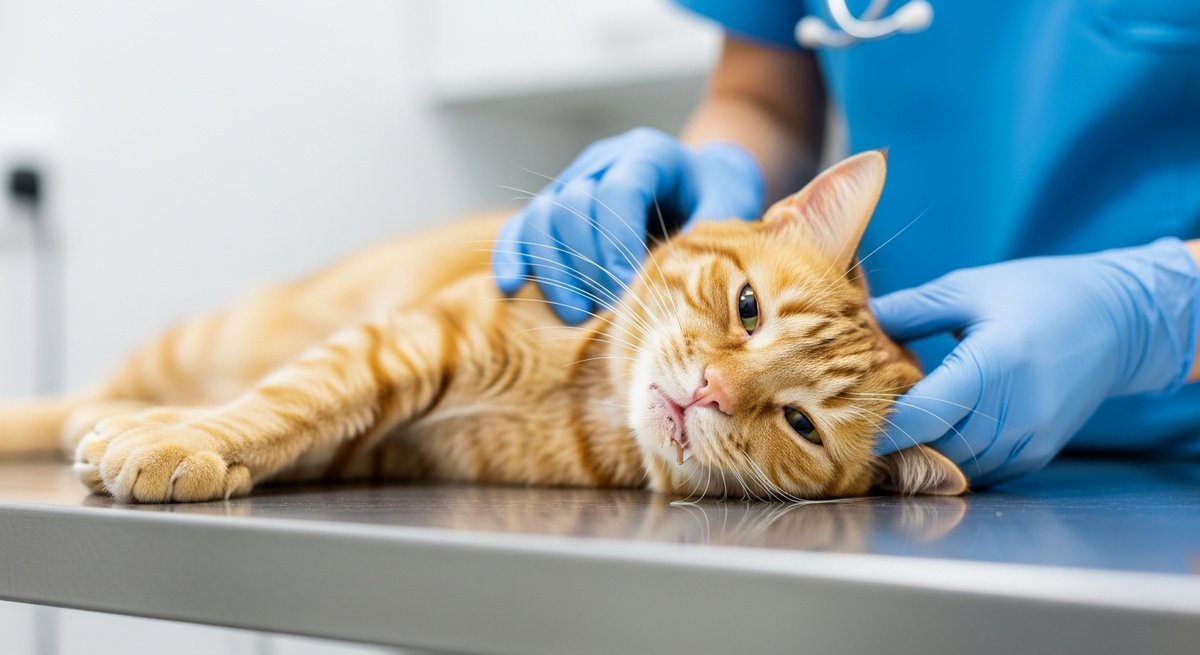
Symptoms vary by toxin class, but the following should prompt an immediate call to your vet even if they appear mild at first:
- Gastrointestinal signs (onset: 15 minutes to 4 hours): vomiting, drooling, pawing at the mouth, diarrhoea, loss of appetite.
- Neurological signs (onset: 30 minutes to 6 hours): tremors, ataxia, seizures, dilated pupils, disorientation.
- Cardiovascular signs (onset: 1 to 8 hours): irregular heartbeat, weakness, collapse. Associated with cardiac glycoside-containing plants such as oleander (Nerium oleander).
- Renal signs (onset: 24 to 72 hours): increased thirst, changes in urination, lethargy. Classic presentation after lily ingestion. By the time these signs appear, significant kidney damage may already have occurred.
- Oral irritation (onset: immediate): drooling, pawing at face, red or swollen gums. Typical of calcium oxalate-containing plants such as Monstera and Philodendron species.
If your cat is vomiting after eating a plant and you are unsure what it ate, treat the situation as a potential poisoning until proven otherwise.
The most toxic houseplants to cats: a reference table
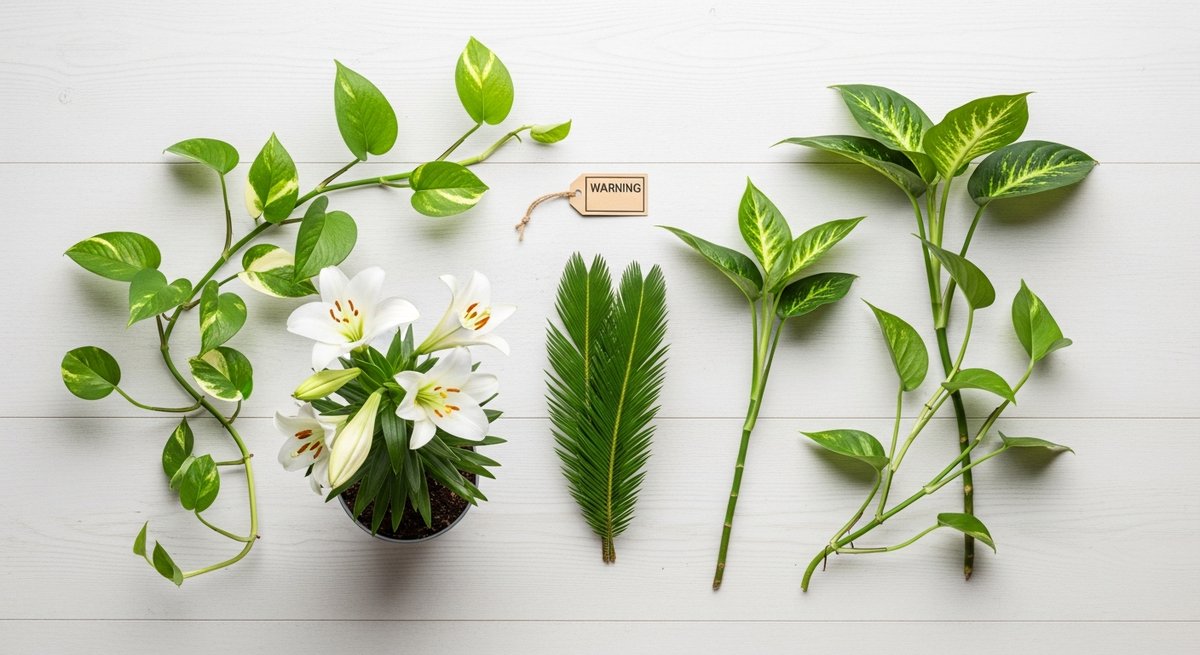
The following plants are among those classified as severely or moderately toxic by the ASPCA (2024) and the RHS. This is not an exhaustive list. If a plant is not listed here, that does not make it safe.
| Plant (common name) | Latin name | Primary toxin | Main risk |
|---|---|---|---|
| Easter lily / Tiger lily | Lilium spp. | Unknown nephrotoxin | Acute kidney failure |
| Sago palm | Cycas revoluta | Cycasin | Liver failure |
| Oleander | Nerium oleander | Cardiac glycosides | Cardiac arrhythmia |
| Autumn crocus | Colchicum autumnale | Colchicine | Multi-organ failure |
| Dieffenbachia (dumb cane) | Dieffenbachia spp. | Calcium oxalate crystals | Oral/airway swelling |
| Pothos | Epipremnum aureum | Calcium oxalate crystals | Oral irritation, GI upset |
| Peace lily | Spathiphyllum spp. | Calcium oxalate crystals | Oral irritation, drooling |
| Azalea / Rhododendron | Rhododendron spp. | Grayanotoxins | Cardiac and neurological effects |
If you are planning your indoor plant collection, our article on plants to avoid in small apartments covers species selection with safety as a priority consideration.
What to tell your vet: a checklist
- Plant common name and Latin name if known.
- Which part was eaten: leaf, stem, root, flower, pollen, or berry. Pollen from Lilium species is disproportionately toxic relative to its volume.
- Estimated quantity: a nibble (less than 1 cm of leaf), a full leaf, or larger amounts.
- Exact time of ingestion or the closest estimate you have.
- Current symptoms, if any, and when they started.
- Your cat’s weight, age, breed, and any medications or pre-existing conditions.
- Whether your cat has vomited and, if so, whether plant material was visible.
Veterinary treatment: what to expect
Treatment depends on the toxin involved and time elapsed since ingestion. For recent ingestion within one to two hours, your vet may induce emesis using dexmedetomidine (the current preferred agent in cats, per the Merck Veterinary Manual, 2023) and administer activated charcoal. For calcium oxalate plant ingestions such as Dieffenbachia or Pothos, vomiting induction is generally avoided because the crystals can cause further irritation on the way back up.
For lily ingestion, the standard protocol is aggressive intravenous fluid diuresis for a minimum of 48 hours to protect the kidneys, even in a cat showing no symptoms (ASPCA, 2024). Baseline renal bloodwork is taken on arrival and repeated at 24 and 48 hours. The prognosis is significantly better when treatment begins before kidney values rise – the single most important reason not to wait for symptoms before calling your vet.
Houseplants that are safe for cats
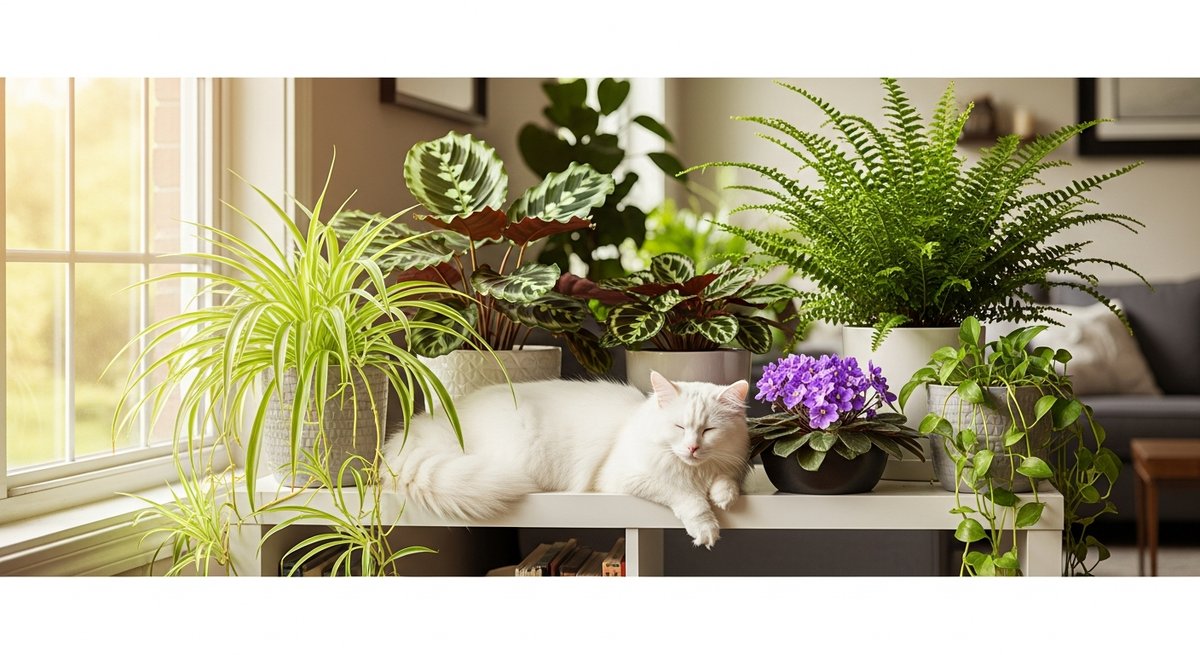
Not all houseplants carry risk. The ASPCA lists the following as non-toxic to cats: spider plant (Chlorophytum comosum), Boston fern (Nephrolepis exaltata), parlour palm (Chamaedorea elegans), African violet (Saintpaulia ionantha), and calathea (Calathea spp.). Our guide to unique indoor plants to add character to your apartment identifies species that are both visually interesting and easier to vet for safety. Cross-check any new species against the ASPCA’s full toxic plant database before purchasing.
Preventing repeat incidents: practical measures
- Physical separation: Place toxic plants in rooms your cat cannot access, not on high shelves. Cats can reach surfaces 1.5 to 2 metres above floor level with ease.
- Grow cat-safe alternatives: Cat grass and valerian give cats an outlet for plant-chewing behaviour and can reduce interest in other houseplants.
- Audit your collection: Cross-reference every plant you own against the ASPCA toxic plant list. Our comparison of top plant identification apps for apartment gardeners reviews accuracy across leading tools.
- Label your plants: Use labels with both the common and Latin name so rapid identification is possible in an emergency.
- Review seasonal additions: Poinsettia at Christmas, Easter lilies in spring, and autumn crocus in garden centres are among the most common seasonal toxicity cases seen by vets.
Frequently asked questions
Symptoms and immediate response
My cat ate a leaf but seems completely fine. Do I still need to call a vet?
Yes. Many toxic plants, particularly lilies, cause kidney or liver damage that is not visible in early behaviour. Call your vet or ASPCA Poison Control (888-426-4435) and provide the plant name; they will advise whether monitoring at home is appropriate or whether your cat needs to be seen immediately.
My cat vomited after eating a plant. Does that mean the toxin is out?
Not necessarily. Vomiting indicates gastrointestinal irritation but does not confirm all toxin has been expelled. Some compounds are rapidly absorbed before vomiting occurs. Treat vomiting after plant ingestion as a symptom that warrants a vet call, not a sign the crisis has resolved.
Can I give my cat milk or water to dilute the poison?
No. Milk is not an antidote and most cats are lactose intolerant. Water will not dilute absorbed toxins. Do not give food, water, or any home remedy until you have spoken to your vet.
How long after eating a toxic plant will symptoms appear?
This depends on the plant. Calcium oxalate irritants cause immediate oral pain. Cardiac glycosides cause symptoms within one to eight hours. Lily nephrotoxins cause kidney failure signs at 24 to 72 hours. This variability is why you should not use symptom onset as your guide for when to act.
Prevention and plant selection
Which common houseplants are safe for cats?
- Spider plant (Chlorophytum comosum) – non-toxic per ASPCA.
- Boston fern (Nephrolepis exaltata) – non-toxic per ASPCA.
- Parlour palm (Chamaedorea elegans) – non-toxic per ASPCA.
- African violet (Saintpaulia ionantha) – non-toxic per ASPCA.
- Calathea spp. – non-toxic per ASPCA.
- Haworthia spp. – non-toxic per ASPCA, though individual plants should still be verified.
Is it safe to keep toxic plants on a high shelf?
No, not reliably. Cats routinely access surfaces at 1.5 to 2 metres and can knock plants down in the process. Physical room separation with a closed door is the only dependable protection.
Are all parts of a toxic plant equally dangerous?
No. Toxin concentration varies by plant part. In Lilium species, pollen is among the most concentrated sources of nephrotoxin; a cat grooming lily pollen from its coat has ingested a clinically significant dose. In Dieffenbachia, the sap contains the highest concentration of calcium oxalate crystals.
Legal notice: This article is provided for general educational purposes only. It does not constitute veterinary advice and is not a substitute for professional diagnosis or treatment. In any suspected poisoning emergency, contact a licensed veterinarian or the ASPCA Animal Poison Control Center (888-426-4435) immediately. Garden.com accepts no liability for outcomes resulting from actions taken or not taken on the basis of this content.
