



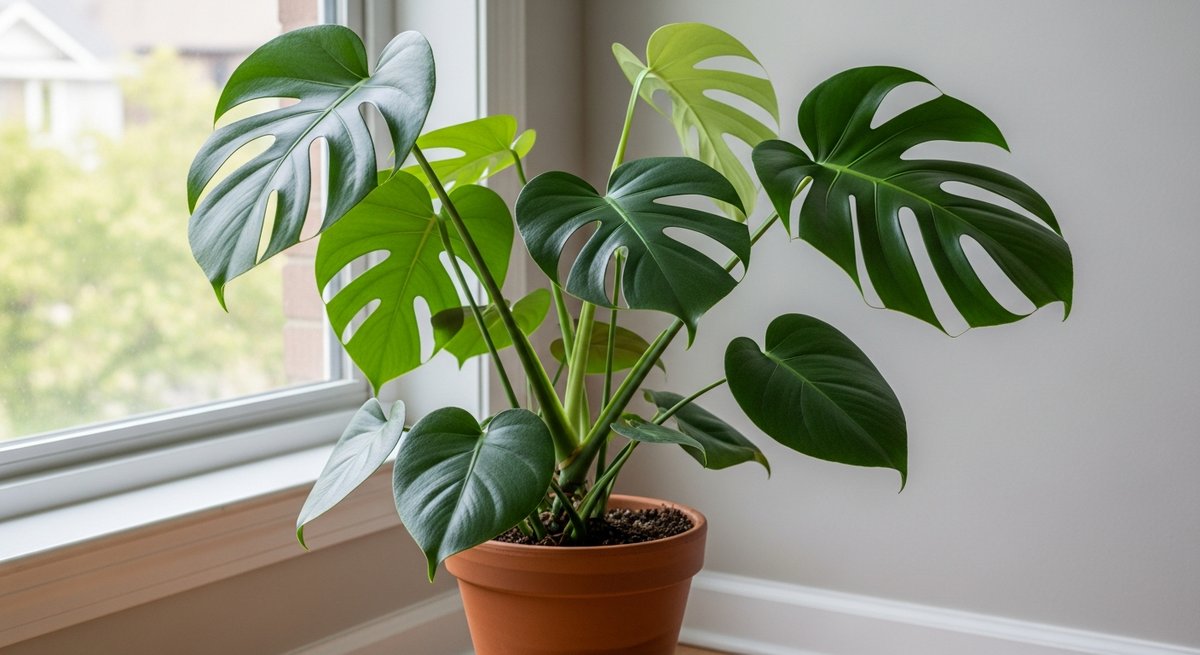
Monstera deliciosa – the Swiss cheese plant – is one of the most rewarding houseplants you can grow, provided you understand what it actually needs. Native to the tropical rainforests of southern Mexico and Central America, it climbs trees in dappled shade, roots into loose organic matter, and never dries out completely. Replicate those conditions at home and you will get the glossy, fenestrated leaves this plant is known for. Miss them, and you will get yellowing, stunted growth, and frustration.
Contents
Quick care summary
| Factor | Requirement |
|---|---|
| Light | Bright indirect light; 1-2 metres from a south- or east-facing window |
| Water | When top 5 cm (2 in) of soil is dry; roughly every 7-10 days in summer |
| Temperature | 18-27°C (64-81°F); no lower than 10°C (50°F) |
| Humidity | 50-70% relative humidity preferred |
| Soil | Free-draining, peat-free mix with added perlite at 20-30% by volume |
| Feeding | Balanced liquid fertiliser at half strength, every 2-4 weeks, March-September |
| Repotting | Every 2 years, or when roots exit drainage holes |
| Toxicity | Toxic to cats, dogs, and humans if ingested (ASPCA) |
Light
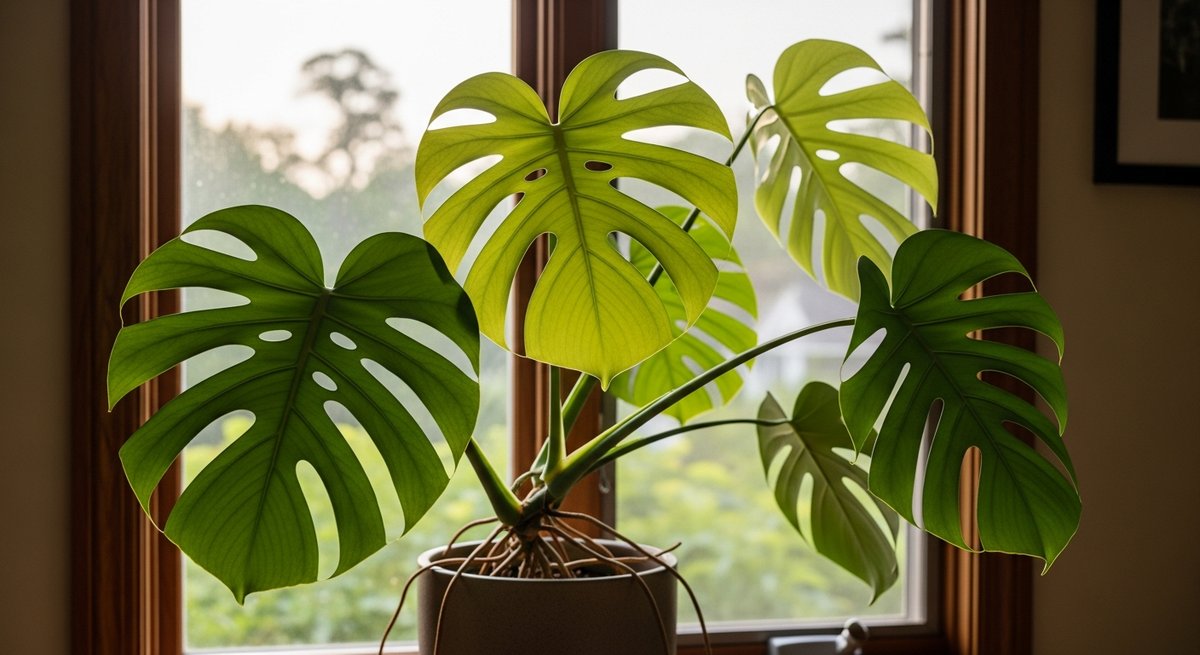
Monstera deliciosa grows fastest and produces the largest fenestrated leaves in bright, indirect light equivalent to 800-2,500 lux. Place it 1-2 metres (3-6 ft) from a south- or east-facing window, where light is strong but not direct. Direct summer sun through glass will scorch the leaves within days, producing pale, papery patches that do not recover. North-facing rooms will sustain the plant but slow growth significantly and reduce fenestration on new leaves.
If your only option is a dim corner, a full-spectrum grow light positioned 30-45 cm (12-18 in) above the canopy for 12-14 hours a day will compensate adequately. Rotate the pot 90 degrees every two to three weeks to prevent the plant leaning toward its light source.
Watering
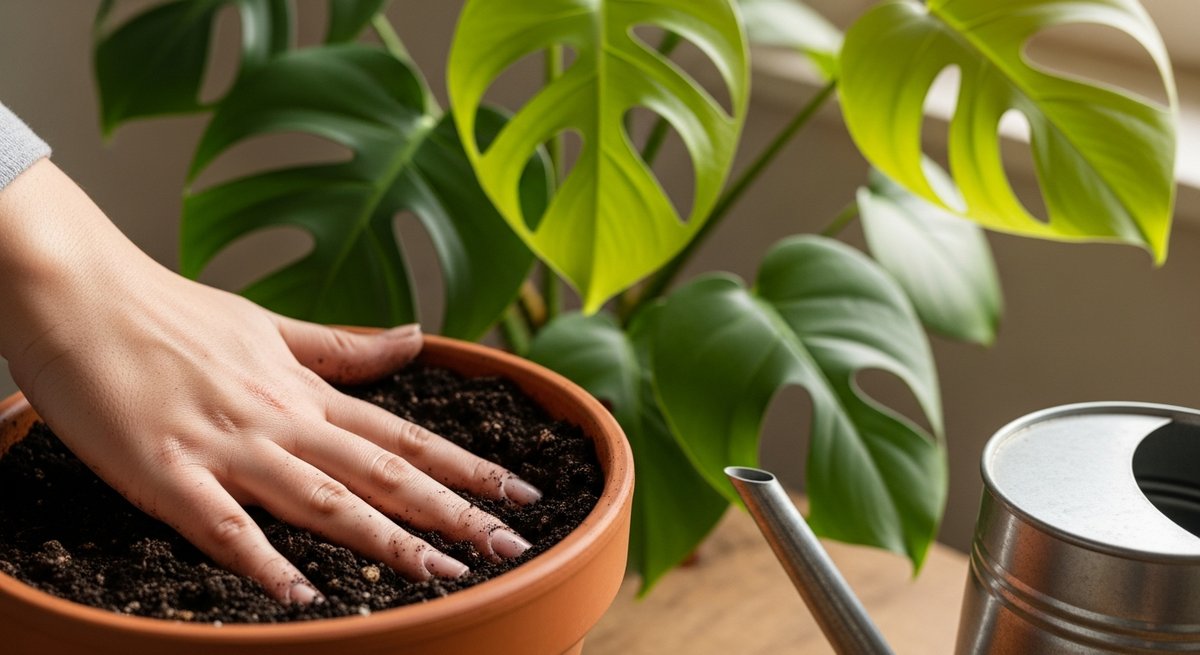
Water when the top 5 cm (2 in) of soil is dry – not because it looks droopy, not because it is Tuesday, but because that is when Monstera roots actually need it. In a warm room during summer, this typically means watering every 7-10 days. In winter, when growth slows, that interval often extends to 14-21 days. Overwatering is the leading cause of Monstera decline: saturated soil deprives roots of oxygen and triggers root rot within 10-14 days in poorly draining compost.
A soil moisture meter removes guesswork entirely. When you do water, pour slowly until water flows freely from the drainage holes, then empty the saucer after 30 minutes. Standing water in a saucer is a direct route to root rot. For more detail, the beginner’s guide to watering indoor plants covers pot selection, water quality, and seasonal adjustment. If you are already seeing yellow leaves and soggy soil, read the guide to identifying and fixing overwatered indoor plants before the damage becomes irreversible.
Soil
In its native habitat, Monstera roots into loose, organic debris – a mixture with high air porosity and fast drainage. A standard peat-free multipurpose compost alone is too dense; mix in perlite at 20-30% by volume. You can also add 10% orchid bark for additional aeration. Avoid compost with water-retaining gel granules, which create the exact conditions that lead to anaerobic rot. pH should sit between 5.5 and 7.0; most peat-free composts fall in this range without amendment.
Temperature and humidity
Monstera deliciosa performs best at 18-27°C (64-81°F) and tolerates short periods down to 10°C (50°F) before cold stress becomes visible as blackening leaf margins. Keep it away from single-glazed windows in winter and away from radiators, which cause rapid compost drying and leaf tip scorch.
The RHS recommends a minimum of 40% relative humidity for tropical foliage plants; 50-70% is optimal for Monstera. In centrally heated rooms, humidity often drops to 30-40% in winter. A humidity tray raises local humidity by roughly 5-10 percentage points. A room humidifier set to 55% is more effective for large specimens. Misting offers only a transient benefit of 15-30 minutes and does not substitute for ambient humidity management.
Feeding
Feed with a balanced liquid fertiliser (NPK ratio close to 20-20-20) at half the recommended label dose, every two to four weeks from March through September. Full-strength doses cause fertiliser salt build-up and root tip burn. Do not feed between October and February: growth slows to near-dormancy and unused nutrients accumulate in the root zone.
If your plant produces pale new leaves with green veins, this indicates interveinal chlorosis consistent with iron or magnesium deficiency. A single application of chelated iron or a foliar spray of 0.2% magnesium sulphate should resolve it within two to three new leaf cycles. If symptoms persist, check soil pH; a reading above 7.5 locks out iron regardless of availability.
Repotting
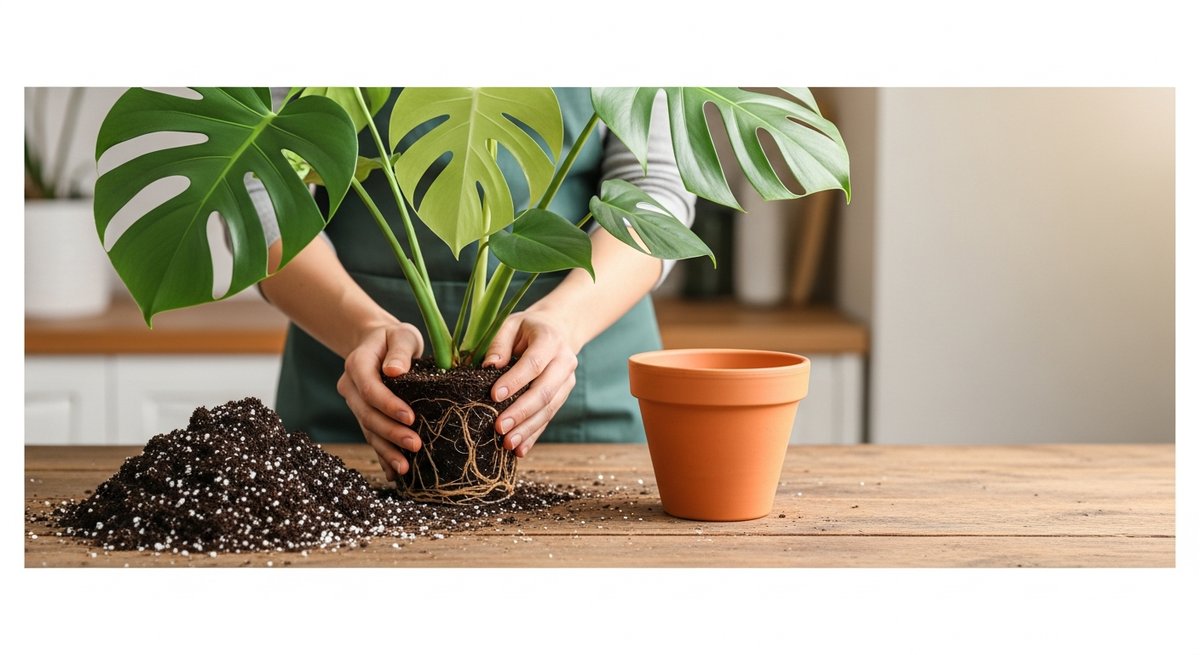
Repot every two years, or when roots emerge more than 2 cm (0.8 in) from drainage holes. Choose a new pot 5-7 cm (2-3 in) larger in diameter; upsizing too aggressively leaves excess damp compost around the root ball and increases rot risk. The best time to repot is March to April, when the plant enters active growth and recovers quickly from root disturbance.
Inspect roots carefully at repotting time. Healthy roots are white to cream and firm. Brown, mushy roots indicate rot; trim them back to clean tissue with sterilised scissors and dust cut ends with powdered cinnamon before repotting into fresh, dry compost. Do not water for five to seven days after repotting a plant that had rotten roots.
Common problems
| Symptom | Most likely cause | Action |
|---|---|---|
| Yellow leaves (lower, older) | Overwatering or waterlogged roots | Check drainage; allow soil to dry; inspect roots |
| Brown leaf edges | Low humidity or cold draughts | Move away from windows; raise humidity to 50%+ |
| No fenestration on new leaves | Insufficient light or juvenile plant under 60 cm (24 in) | Increase light; add a moss pole to encourage vertical growth |
| Small, pale new leaves | Under-feeding or root-bound | Start feeding regimen; check if repotting is due |
| Leggy growth, long internodes | Low light | Move to brighter position |
| White webbing on undersides | Spider mite infestation | Wipe with insecticidal soap solution; increase humidity |
Toxicity
Keep Monstera deliciosa out of reach of pets and young children at all times. Wear gloves when pruning or repotting, as the sap can cause skin and eye irritation.
Propagation
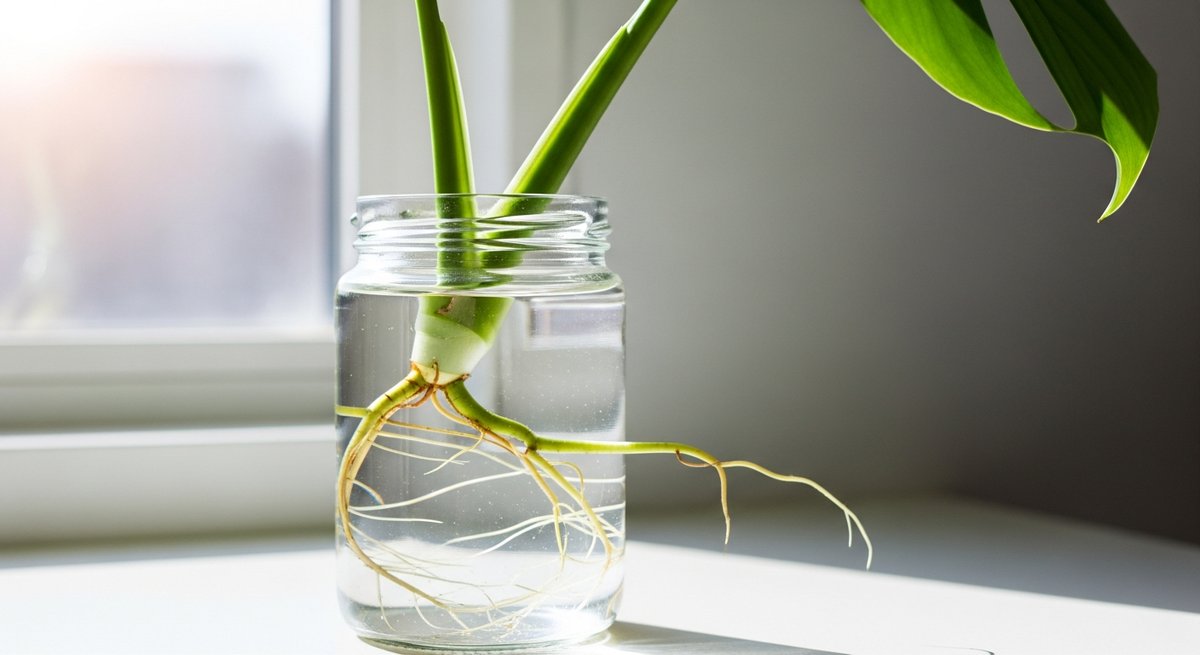
The most reliable propagation method is stem cutting with at least one node and one aerial root, placed in water or moist perlite at 20-24°C (68-75°F). Roots typically emerge within three to five weeks. Cuttings taken in spring and early summer root significantly faster than those taken in autumn. Once roots reach 3-5 cm (1-2 in), pot into the standard perlite-compost mix described above.
Frequently asked questions
Care and growth
Why are my Monstera leaves not splitting?
Leaf fenestration is triggered by sufficient light and plant maturity. Plants under 60 cm (24 in) tall rarely produce split leaves regardless of conditions. Above that height, ensure at least 800 lux of bright indirect light for 10-12 hours per day. A moss pole also encourages the plant to produce more mature, fenestrated growth.
How fast does Monstera deliciosa grow?
In optimal conditions, a healthy Monstera can produce one new leaf every four to six weeks during the growing season. In low light or cool temperatures, this slows to one leaf every eight to twelve weeks.
Should I clean the leaves?
Yes. Dust accumulation on large Monstera leaves reduces photosynthetic efficiency. Wipe each leaf with a damp cloth every four to six weeks. Do not use leaf shine products containing mineral oil, which blocks stomata and can cause long-term growth reduction.
Troubleshooting and safety
Why is my Monstera drooping even though I water it regularly?
- Drooping despite regular watering most commonly indicates root rot from overwatering rather than underwatering.
- Remove the plant from its pot and inspect the root ball. Mushy, dark roots confirm rot.
- Trim affected roots, repot in fresh, dry compost, and reduce watering frequency by 30-40%.
- If roots appear healthy and firm, the cause may be temperature stress or a pot far too large for the root system.
Is Monstera deliciosa safe for cats?
No. The ASPCA classifies Monstera deliciosa as toxic to cats, dogs, and horses. Ingestion causes oral irritation, drooling, vomiting, and difficulty swallowing. Contact ASPCA Poison Control (888-426-4435) or your vet immediately if ingestion occurs.
What is the white sap from a cut Monstera stem?
The white latex-like sap contains calcium oxalate crystals and can cause skin irritation. Wear nitrile or latex gloves when cutting, pruning, or repotting. Avoid contact with eyes and wash hands thoroughly after handling cut plant material.
Sources
- RHS (Royal Horticultural Society): Houseplant care guidance – rhs.org.uk
- Kew Gardens: Monstera deliciosa species data – kew.org
- ASPCA Animal Poison Control Center: Monstera deliciosa toxicity listing – aspca.org
