




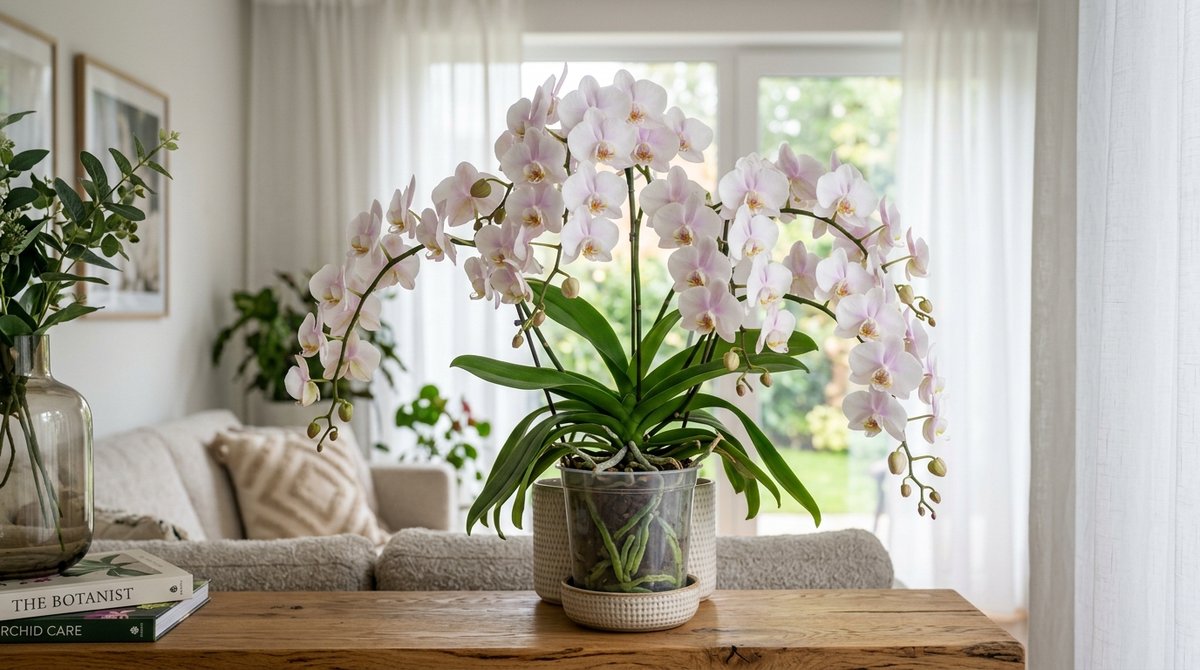
Most orchid deaths in homes happen from overwatering, not neglect. If you understand what the roots need rather than what the leaves look like, you will keep a Phalaenopsis alive for years and likely see it rebloom. This guide covers the measurable requirements for light, water, soil, temperature, and feeding that apply to the moth orchid, the most common type sold in supermarkets and garden centres. Whether you are starting with your first plant or troubleshooting a specimen that has stopped flowering, these orchid care tips come from the Royal Horticultural Society and Kew’s cultivation records, not guesswork.
Quick care summary: Phalaenopsis
The table below shows the standard cultivation range for Phalaenopsis orchids based on RHS and Kew growing guidelines.
| Factor | Range or instruction | Source |
|---|---|---|
| Light | Bright indirect; 10,000-15,000 lux for 12-14 hours | RHS Orchid care guide |
| Watering | When roots turn silvery grey, not on a calendar schedule | Kew, Phalaenopsis cultivation |
| Temperature | 16-24°C (61-75°F) days; minimum 14°C (57°F) nights | RHS |
| Humidity | 50-70% relative humidity | Kew |
| Feeding | Balanced liquid fertiliser at quarter strength, every watering during growth | RHS |
| Repotting | Every 2-3 years, or when bark breaks down | Kew |
Light requirements
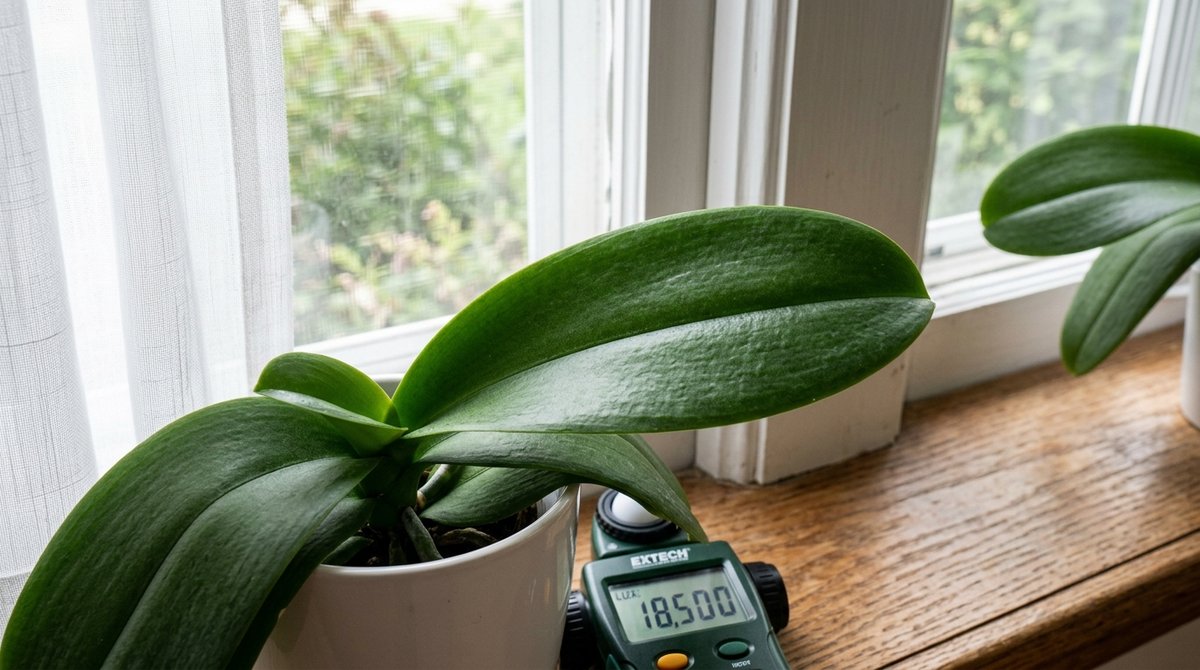
Phalaenopsis orchids are low-light orchids, but “low light” does not mean a dark corner. The RHS specifies 10,000-15,000 lux of bright, indirect light for 12-14 hours daily. An east-facing window usually provides this without the leaf-scorching intensity of direct south or west exposure. If you only have a south-facing window, diffuse the light with a sheer curtain or set the plant back 60-90 cm (2-3 ft) from the glass.
Signs of insufficient light include dark green, soft leaves and a failure to flower. Leaves that turn yellow with brown, crispy patches indicate too much direct sun. A soil moisture meter will not measure light, so consider a simple lux meter app on your phone to check your windowsill. If you are unsure whether your space suits orchids, the article on easy-to-care-for plants for apartment beginners includes lower-light alternatives.
Watering and root health
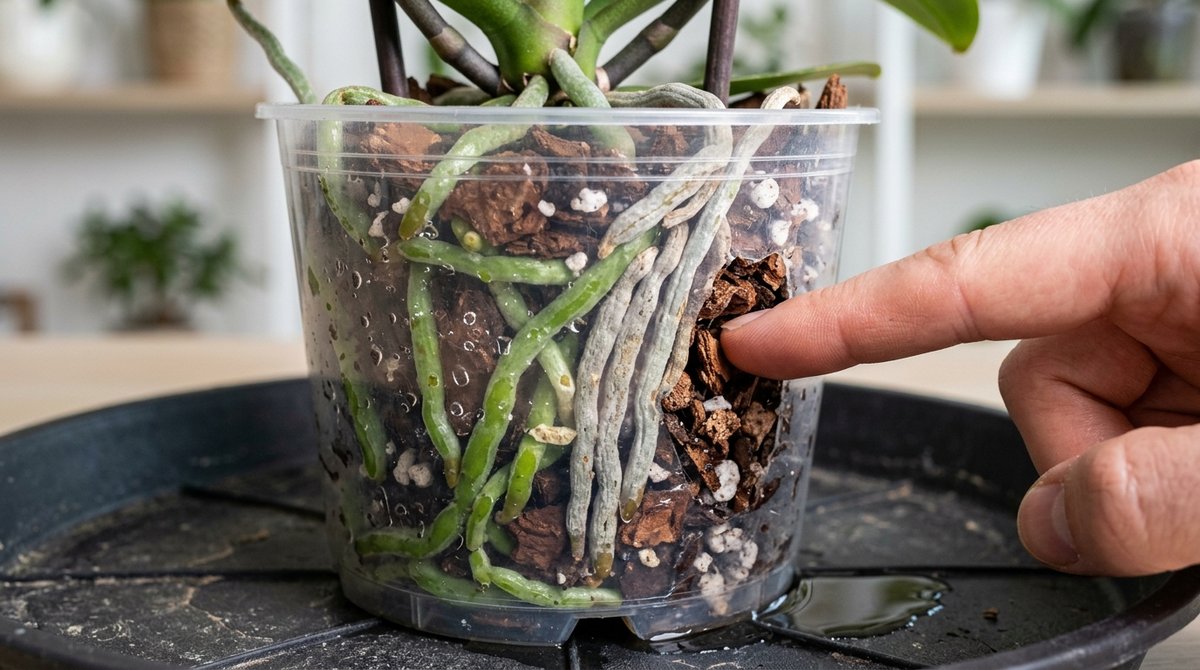
The single most important skill in orchid plant care is reading the roots, not the calendar. Healthy Phalaenopsis roots are green when hydrated and silvery grey when dry. Water thoroughly when the roots turn silvery and the potting mix feels dry to the touch at 2.5 cm (1 in) depth. This usually means watering every 7-10 days in summer and every 10-14 days in winter, though your home humidity and potting mix will shift that range.
Water by running room-temperature water through the bark for 30-60 seconds until it drains freely. Never let the pot sit in standing water; Phalaenopsis roots suffocate in anaerobic conditions. If your orchid is in a decorative outer pot, remove it for watering and return it only after drainage stops.
Root rot develops when roots stay wet too long. Affected roots turn brown, mushy, and may smell sour. If you find this during repotting, sterilise secateurs with 70% isopropyl alcohol and cut away all soft, brown tissue back to firm, white or green root. Dust the cut with ground cinnamon (a mild fungistatic) and repot in fresh bark. Reduce watering frequency by 30-40% and increase air circulation around the plant.
For those interested in alternative growing methods, growing orchids in water (semi-hydroponics) is possible but requires modified technique and consistent water quality.
Soil and potting mix
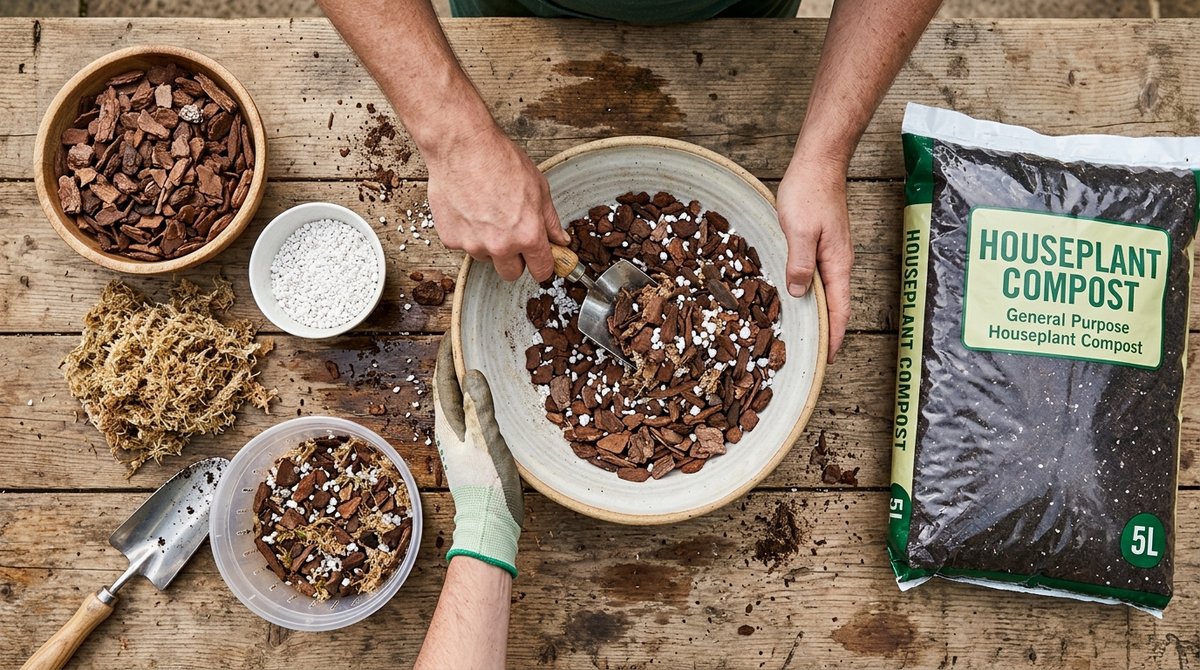
Phalaenopsis orchids are epiphytes; in nature they grow on tree branches, not in soil. Pot them in a mix that mimics this: coarse bark chips (2.5-5 cm / 1-2 in), perlite, and sometimes sphagnum moss. Standard houseplant compost suffocates orchid roots.
The best orchid soil mix depends on your environment. In humid homes, use a bark-heavy mix with minimal moss to dry faster. In dry, centrally heated apartments, add 10-20% sphagnum moss to retain moisture. Kew recommends repotting every 2-3 years, or sooner if the bark breaks down into fine particles that hold too much water.
When repotting, choose a clear plastic pot with drainage holes if you are learning. The transparency lets you monitor root colour and health without disturbing the plant. A pot only 2.5 cm (1 in) larger in diameter than the previous one is correct; oversized pots stay wet too long.
Temperature and humidity
Phalaenopsis orchids need a temperature drop of 5-6°C (9-11°F) between day and night to initiate flower spikes. Days at 21-24°C (70-75°F) and nights at 16-18°C (61-64°F) satisfy this. If your home stays uniformly warm year-round, the plant may grow vegetatively but refuse to bloom.
Humidity at 50-70% supports healthy growth and prevents bud blast (flowers dropping before opening). In most centrally heated homes, winter humidity runs 30-40%. Raise it with a humidity tray (pebbles and water beneath the pot, not touching it), grouping plants, or a small humidifier. Misting leaves briefly raises humidity for minutes only; it is not a substitute for environmental humidity and can encourage fungal spotting if done in cool, still air.
Feeding schedule
Orchid fertilizer tips from the RHS follow a “weakly, weekly” approach: balanced liquid fertiliser (20-20-20 or similar) at quarter strength with every watering during spring and summer growth. In autumn and winter, reduce to half that frequency. Flush the pot with plain water monthly to prevent salt buildup, which shows as brown tips on leaves and a white crust on the pot rim.
Do not use fertiliser on a dry root system; it causes root burn. Always water first, then apply dilute feed. If you are tracking multiple plants, a plant care app for watering schedules can log fertiliser dates alongside watering.
Encouraging reblooming
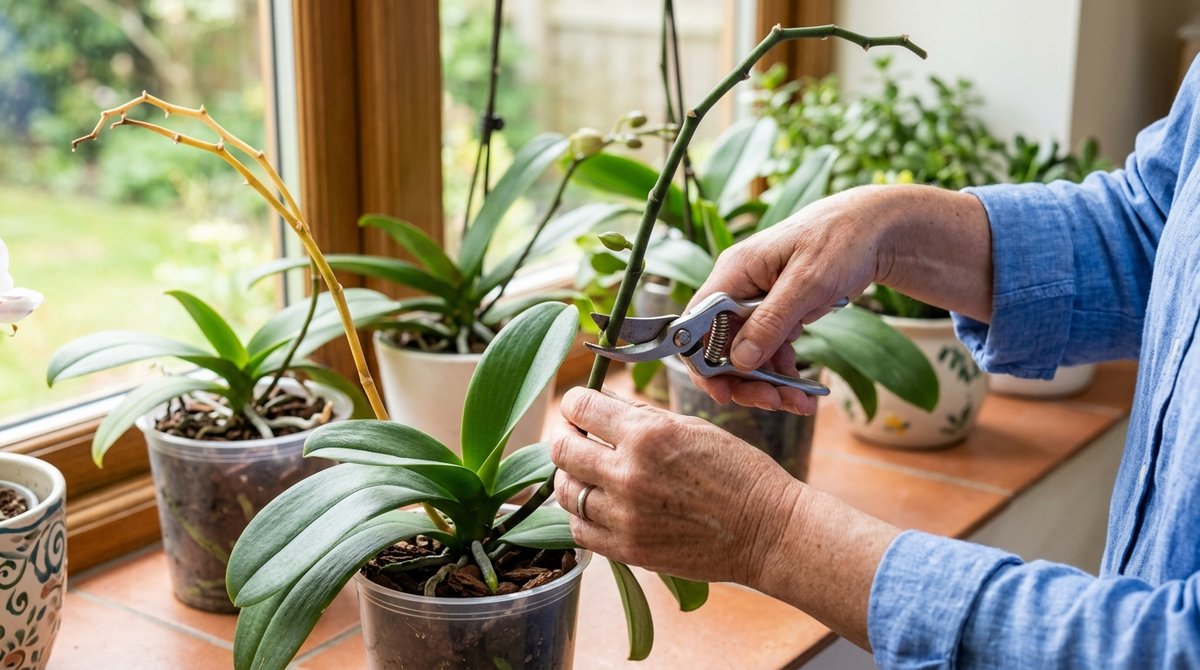
After flowers fade, cut the spike back to just above the second node from the base if the stem is still green. A secondary spike may emerge from that node in 8-12 weeks. If the stem turns yellow or brown, cut it to the base; the plant will generate a new spike when conditions suit, usually in cooler months with adequate light.
Orchid blooming problems most often trace to one of three causes: insufficient light (measure with a lux meter), absence of night temperature drop, or premature bud blast from dry air or drafts. Address these before searching for more exotic explanations.
Pests and prevention
Scale insects and mealybugs are the most common pests on indoor orchids. Check leaf axils and undersides monthly. Early infestations respond to manual removal with a cotton swab dipped in 70% alcohol. For established problems, use horticultural oil or insecticidal soap, keeping the product away from flowers. The guide on preventing pest infestations in apartment plants covers quarantine protocols that apply equally to orchids.
Jewel orchid note
Jewel orchid care differs significantly from Phalaenopsis. Ludisia discolor and its relatives are terrestrial, requiring higher humidity (60-80%), lower light (5,000-8,000 lux), and a peat-based or coir mix rather than bark. They are grown for foliage, not flowers, and tolerate more consistent temperatures without the drop needed for Phalaenopsis blooming. Do not apply moth orchid care to jewel orchids without adjusting these parameters.
When to call a professional
If your orchid has lost more than 60% of its roots to rot, shows spreading black lesions (possible bacterial infection), or has declined despite correcting light and water, consult a specialist orchid nursery or a RHS advisory service. Generic houseplant advice will not recover a plant with advanced disease.
Toxicity and pet safety
Phalaenopsis orchids are listed as non-toxic to cats and dogs by the ASPCA. Ingestion may cause mild gastrointestinal upset simply from the foreign plant material, but no specific toxin is identified. If your pet consumes a large quantity and shows vomiting or lethargy, contact your veterinarian or ASPCA Animal Poison Control at 888-426-4435. This guidance applies specifically to Phalaenopsis; other orchid genera may differ, and the ASPCA does not list all species.
Frequently asked questions
Getting started with orchid care for beginners
How often should I water my orchid?
Water when the roots turn silvery grey and the bark feels dry 2.5 cm (1 in) below the surface. In most homes, this means every 7-14 days depending on season, humidity, and potting mix. Never water on a fixed calendar day without checking the roots first.
Why are my orchid’s flowers falling off?
Bud blast (flowers dropping before or soon after opening) usually indicates one of these measurable problems:
- Temperature swing greater than 10°C (18°F) in 24 hours, often from a nearby radiator or draught
- Humidity below 40% for extended periods
- Ethylene exposure from ripening fruit or cigarette smoke
- Water stress, either drought or root rot causing inability to take up moisture
Can I grow an orchid in a bathroom?
Yes, if the bathroom has a window providing 10,000-15,000 lux of indirect light and temperatures do not exceed 27°C (80°F) for long periods. The humidity is beneficial, but poor air circulation combined with constant moisture on leaves encourages fungal disease. Ensure a window opens or an extractor fan runs regularly.
Troubleshooting and maintenance
How do I fix root rot in my orchid?
Remove the plant from its pot and inspect all roots. Cut away brown, mushy tissue with sterile tools, leaving only firm, white or green roots. Repot in fresh bark, reduce watering frequency by 30-40%, and increase air movement. If fewer than three healthy roots remain, the recovery probability drops sharply; consider professional advice.
What is the best light for indoor orchid care?
Bright, indirect light at 10,000-15,000 lux for 12-14 hours daily. An east-facing window is ideal. South or west windows need sheer diffusion or greater distance from the glass. North-facing windows in the northern hemisphere are usually insufficient alone.
Should I mist my orchid?
Misting raises humidity for minutes only and is not a substitute for environmental humidity at 50-70%. In cool, still conditions, misting can promote fungal leaf spots. Use a humidity tray or humidifier instead for consistent results.
When should I repot my orchid?
Every 2-3 years, or sooner if the bark breaks down into fine particles, the potting mix smells sour, or roots are visibly circling and escaping the pot. The best time is just after flowering, when new root growth is beginning.
Sources
- Royal Horticultural Society. (2024). Orchid care: Phalaenopsis. https://www.rhs.org.uk/plants/types/indoor/orchids/growing-guide
- Royal Botanic Gardens, Kew. (2023). Phalaenopsis cultivation. https://www.kew.org/read-and-watch/phalaenopsis-orchid-care
- American Society for the Prevention of Cruelty to Animals. (2024). Phalaenopsis orchid: Toxic and non-toxic plants. https://www.aspca.org/pet-care/animal-poison-control/toxic-and-non-toxic-plants/phalaenopsis-orchid
