




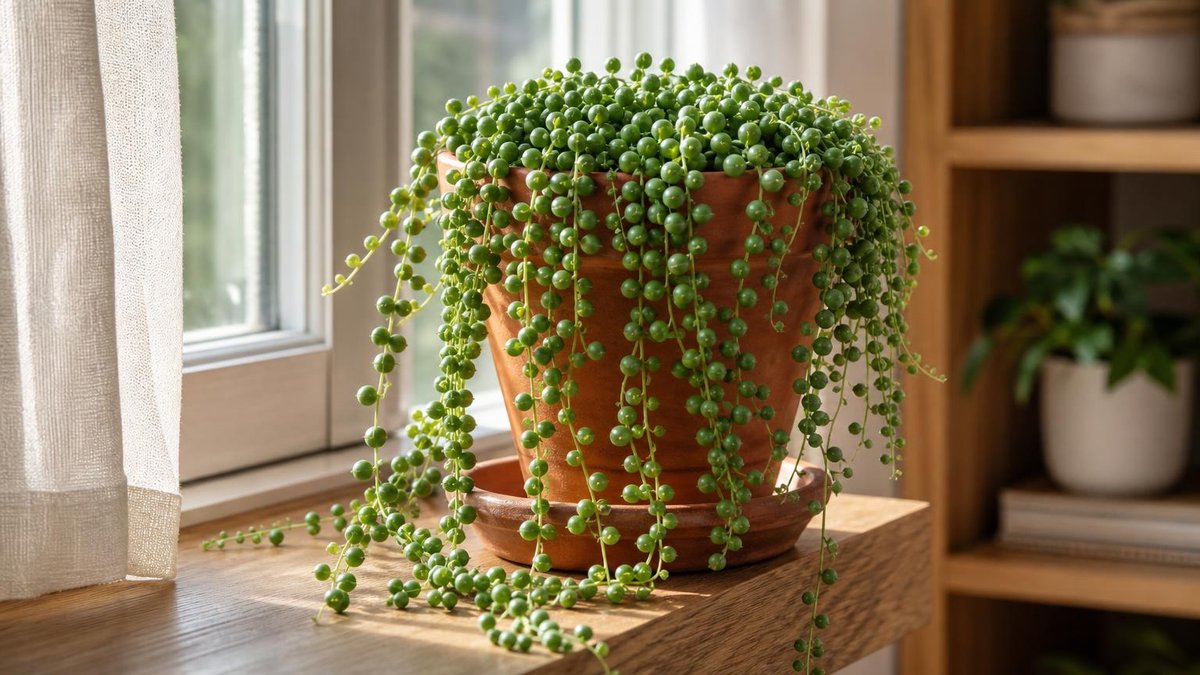
Senecio rowleyanus, commonly called string of pearls, is a trailing succulent native to the dry river valleys of southwestern Africa. Its bead-like leaves store water efficiently, allowing the plant to survive extended drought. In cultivation, this adaptation also makes it highly susceptible to root rot if overwatered. Getting the balance right between light, water, and soil drainage is the difference between a cascading specimen and a collapsed, mushy stem.
Reliable string of pearls care starts with understanding that this plant behaves more like a desert cactus than a typical houseplant. The following guide draws on cultivation data from the Royal Horticultural Society (RHS) and Kew’s Plants of the World Online to give measurable, actionable instructions.
Quick care summary
| Factor | Requirement |
|---|---|
| Light | Bright, indirect light; 4-6 hours daily minimum (Kew, 2023) |
| Water | When top 3-5 cm (1-2 in) of soil is fully dry; reduce to every 3-4 weeks in winter |
| Soil | Gritty, well-draining mix; 50-70% inorganic material (RHS, 2022) |
| Temperature | 16-24°C (61-75°F); protect below 10°C (50°F) |
| Humidity | Low to moderate; 40-50% adequate, tolerates drier air |
| Feeding | Half-strength balanced liquid fertiliser, monthly in spring and summer only |
| Repotting | Every 2-3 years, or when roots emerge from drainage holes |
Light requirements
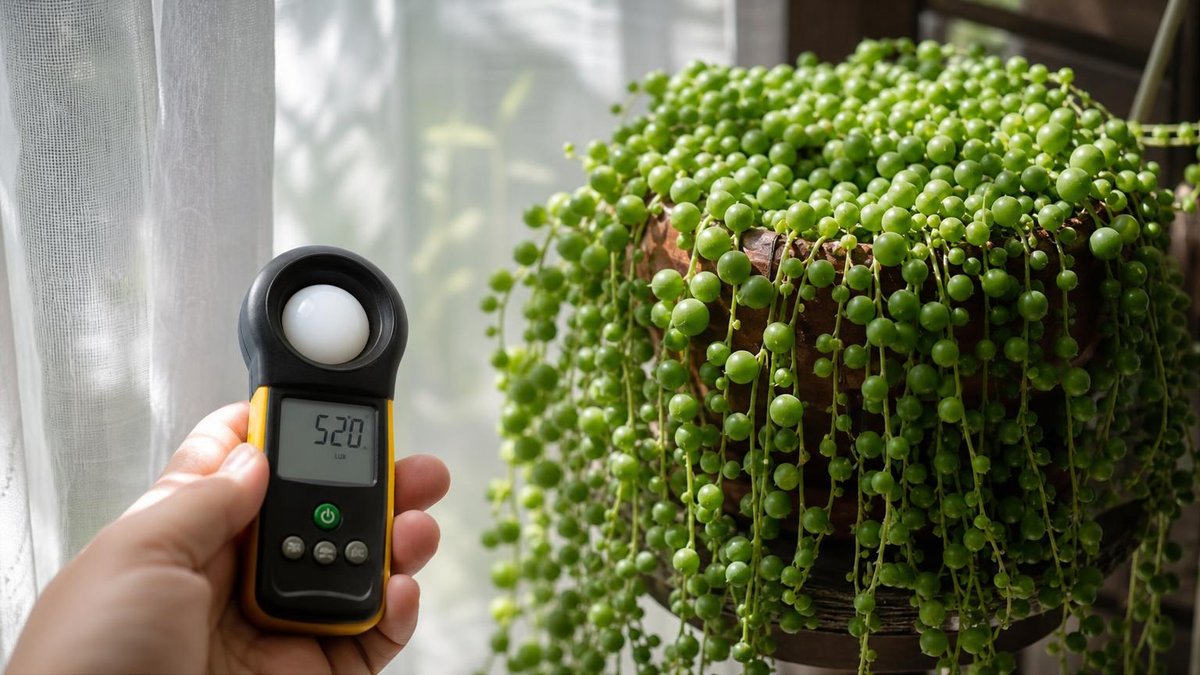
String of pearls light requirements are specific and non-negotiable for long-term health. In its native habitat, S. rowleyanus grows in partial shade under shrub cover, receiving bright but filtered light. Indoors, place the plant within 1-2 metres (3-6 feet) of a south- or west-facing window with sheer curtain diffusion. Direct midday sun scorches the spherical leaves, causing brown, sunken patches that do not recover.
Insufficient light produces elongated, sparse stems with small, widely spaced pearls. This etiolation is permanent on affected growth; pruning and relocating are the only remedies. A soil moisture meter helps monitor conditions, but for light assessment, use a smartphone lux meter app or observe the plant’s growth habit. Compact, plump pearls on 2.5-5 cm (1-2 in) internodes indicate adequate light.
Rotate the pot 90 degrees weekly to maintain even growth. In darker apartments, supplemental grow lights providing 2,000-3,000 lux for 12-14 hours can sustain the plant through winter.
Watering and soil
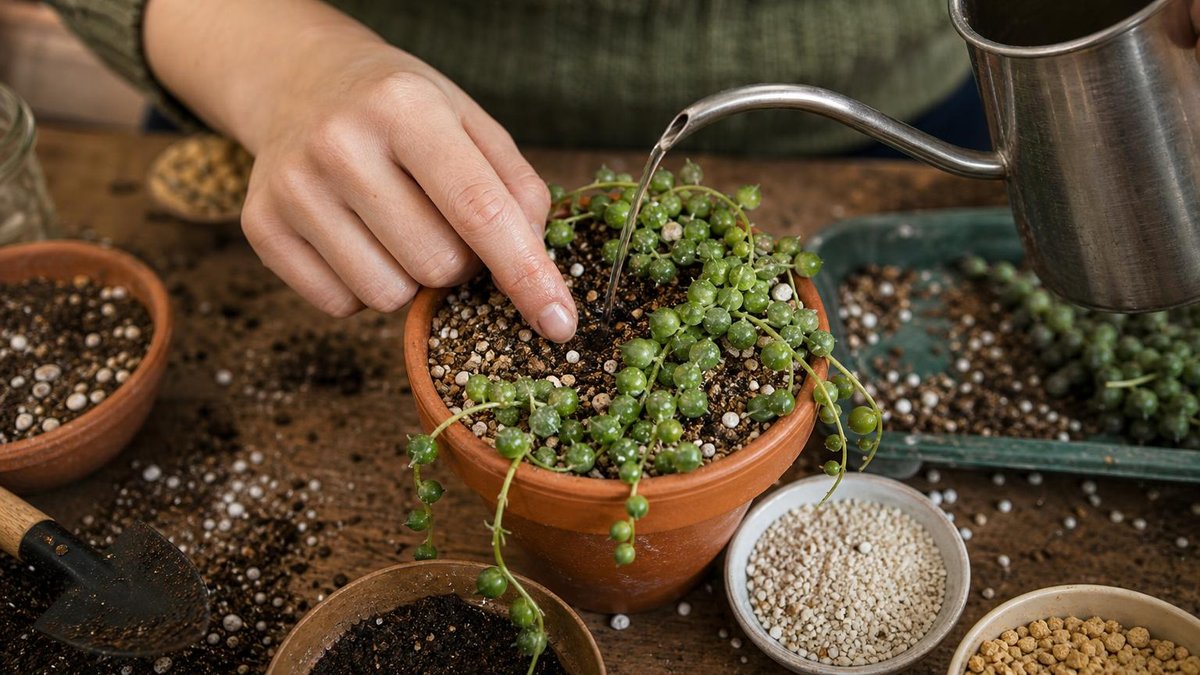
Overwatering kills more string of pearls plants than any other factor. The spherical leaves are modified water-storage organs; when soil remains moist, the shallow root system succumbs to Phytophthora and Pythium species within days. The correct string of pearls watering schedule depends on season, pot size, and environmental conditions, not calendar dates.
Water only when the top 3-5 cm (1-2 in) of soil has dried completely. In summer, this may mean every 7-10 days in a small terracotta pot; in winter, every 3-4 weeks is often sufficient. Use room-temperature water and soak until liquid drains freely from the base. Discard excess from the saucer after 30 minutes. Never let the pot sit in standing water.
Soil composition is equally critical. Standard potting mix retains too much moisture. The RHS recommends a blend of 50-70% inorganic material for Senecio species. A suitable mix contains:
- 2 parts coarse horticultural grit or perlite
- 1 part standard potting compost
- 1 part sharp sand or pumice
Terracotta pots outperform plastic for this species because their porous walls allow evaporative drying. Choose a shallow container only 2.5-5 cm (1-2 in) wider than the root ball; excess soil volume stays wet longer and increases rot risk.
Temperature and humidity
Senecio rowleyanus prefers temperatures between 16-24°C (61-75°F) during active growth. It tolerates brief drops to 10°C (50°F) but suffers tissue damage below this threshold. Keep away from cold windowpanes in winter and from air-conditioning vents in summer. Sudden temperature fluctuations cause leaf drop.
Humidity requirements are modest. The plant thrives in typical household conditions of 40-50% relative humidity and tolerates drier air. High humidity above 60%, combined with poor air circulation and wet soil, promotes fungal problems. No supplemental misting is needed; water on the leaves can cause rot in the narrow crevices where pearls attach to stems.
Feeding
Fertilise sparingly. String of pearls evolved in nutrient-poor substrates and cannot process heavy feeding. Apply a balanced liquid fertiliser at half the manufacturer’s recommended strength, once monthly from April through August only. Cease feeding entirely in autumn and winter when light levels and temperatures reduce metabolic activity.
Excess nitrogen produces soft, pale growth prone to pests and mechanical damage. If pearls lose their characteristic blue-green glaucous colour and become yellow-green, flush the soil with plain water and withhold fertiliser for two months.
Repotting and maintenance
Repot every 2-3 years in spring, or when roots visibly emerge from drainage holes. Select a container only marginally larger than the previous one. Disturb roots minimally; S. rowleyanus resents root disruption and may stall growth for 4-6 weeks after repotting.
Prune to maintain shape and encourage bushiness. Cut stems back to a node using clean, sharp scissors. Remove any stems that have turned translucent or mushy at the base; this is early root rot spreading upward. Sterilise tools between cuts with 70% isopropyl alcohol to prevent cross-contamination.
For those new to succulent maintenance, our simple plant care tips for beginners in small apartments covers foundational skills that transfer directly to Senecio species.
String of pearls propagation tips
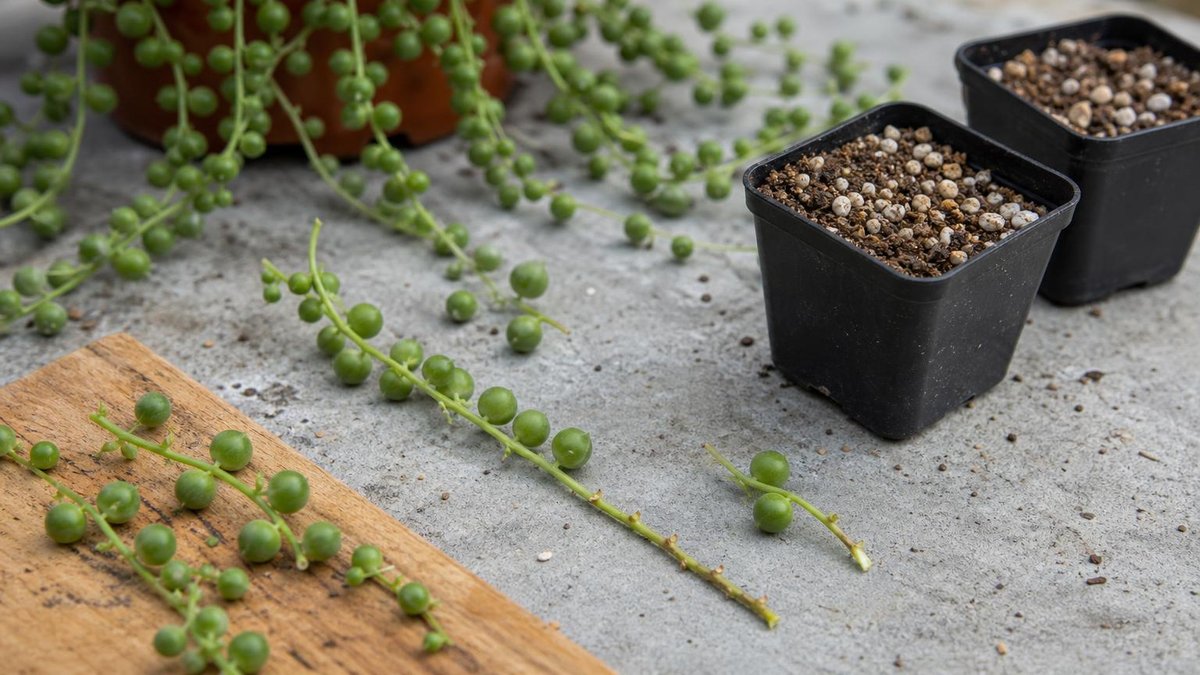
Propagation is straightforward from stem cuttings, best done in spring or early summer when the plant is actively growing. Select healthy stems with firm, plump pearls. Cut a 10-15 cm (4-6 in) section, remove the bottom 3-4 pearls to expose the stem, and let the cutting callus in a dry, shaded spot for 24-48 hours. This drying period seals the wound and prevents infection when planted.
Insert the prepared cutting into dry, gritty propagation mix so the exposed nodes make soil contact. Wait 7-10 days before watering lightly. Roots typically form within 3-4 weeks at 18-21°C (64-70°F). Resist the urge to tug-test for roots; disturbance breaks delicate new growth. Instead, watch for new pearl development, which indicates successful rooting.
Water propagation is possible but riskier for this species. Stem sections rot readily in standing water. If attempting this method, suspend the cutting so only the very base touches water, and transplant to soil the moment roots reach 2 cm (0.75 in) in length.
Common problems
| Symptom | Probable cause | Corrective action |
|---|---|---|
| Translucent, mushy pearls; black stem base | Root rot from overwatering or poorly draining soil | Remove affected growth; repot in fresh gritty mix; withhold water 2 weeks |
| Shrivelled, wrinkled pearls | Underwatering or root loss preventing uptake | Water thoroughly; if roots are dead, take cuttings and restart |
| Elongated stems with small, sparse pearls | Insufficient light (etiolation) | Move to brighter location; prune stretched growth to restart compact form |
| Brown, sunken patches on pearls | Sun scorch from direct midday exposure | Relocate to filtered light; damaged pearls do not recover |
| Cottony white masses in leaf axils | Mealybug infestation | Dab with 70% alcohol; repeat weekly; isolate from other plants |
Mealybugs are the most common pest, attracted to the sheltered crevices between pearls. Inspect new plants before introducing them to your collection. Quarantine purchases for 2-3 weeks. If infestation is severe and widespread, discard the plant rather than risk spreading pests to specimens that would be difficult to replace.
Variegated string of pearls care
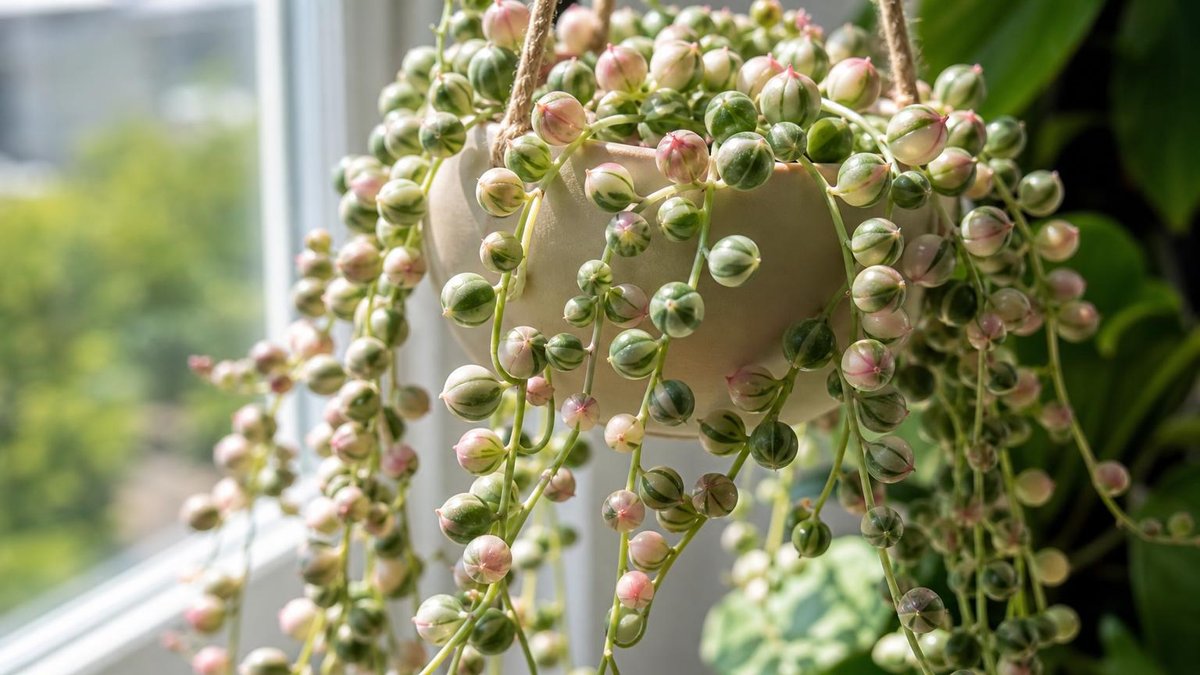
Senecio rowleyanus ‘Variegata’ has cream and pink streaking on some pearls, with correspondingly reduced chlorophyll. This makes variegated string of pearls care slightly more demanding than the species type. The lower photosynthetic capacity means brighter light is needed to achieve equivalent growth; provide 5-6 hours of bright, indirect light minimum. Slower growth also requires less frequent watering; extend the dry period by 2-3 days. Pink coloration intensifies with light stress, but scorch risk remains; monitor closely. Propagation from non-variegated reverted stems produces plain green offspring, so select cuttings with visible variegation.
Variegated specimens are more expensive and slower to establish. Purchase from reputable nurseries to ensure stable variegation rather than temporary stress-induced colour.
Toxicity
Senecio rowleyanus is toxic to cats and dogs if ingested. The ASPCA lists the species as toxic to both, with symptoms including vomiting, diarrhoea, drooling, and lethargy. The toxic principle is not fully characterised but is believed to involve pyrrolizidine alkaloids common in the Asteraceae family. No antidote exists; treatment is supportive veterinary care.
Position trailing stems out of reach of curious pets. If ingestion is suspected, contact your veterinarian immediately or call ASPCA Animal Poison Control at 888-426-4435 (fee may apply). Do not induce vomiting without professional guidance.
For pet owners considering this plant, our guide to first apartment plants includes additional safety considerations for multi-species households.
Frequently asked questions
Watering and routine care
How often should I water string of pearls?
Water when the top 3-5 cm (1-2 in) of soil is completely dry. In practice, this ranges from every 7-10 days in warm, bright summer conditions to every 3-4 weeks in cool, dim winter months. The plant’s leaves will also give a secondary signal: firm, plump pearls indicate adequate hydration, while slight wrinkling means water is needed. Do not water on a fixed schedule without checking soil moisture first.
Can string of pearls grow in low light?
It can survive in moderate light temporarily, but long-term low light produces weak, etiolated growth that is prone to collapse. For healthy string of pearls plant care indoors, provide 4-6 hours of bright, indirect light daily. North-facing windows are generally insufficient in northern latitudes; supplement with grow lights or select a more shade-tolerant species.
What is the best soil mix for string of pearls?
A gritty, fast-draining mix with 50-70% inorganic material. Combine 2 parts coarse perlite or horticultural grit, 1 part potting compost, and 1 part sharp sand or pumice. This approximates the rocky, nutrient-poor substrates of the plant’s native range and prevents the root rot that standard mixes encourage.
Propagation and troubleshooting
Why are my string of pearls shrivelling?
Shrivelling indicates water loss from the storage pearls. This occurs either from underwatering (leaves use stored reserves) or from root death due to prior overwatering (roots cannot absorb even when soil is wet). Check soil moisture and root condition. If roots are brown and mushy, take healthy cuttings and propagate; the original plant is unlikely to recover.
How do I propagate string of pearls successfully?
Take 10-15 cm (4-6 in) stem cuttings in spring, allow the cut end to callus for 24-48 hours, then insert into dry gritty mix. Wait 7-10 days before the first light watering. Rooting occurs in 3-4 weeks at 18-21°C (64-70°F). The most common failure is watering too soon, which causes the cutting to rot before roots form.
Is string of pearls safe for pets?
No. The ASPCA classifies Senecio rowleyanus as toxic to cats and dogs. Ingestion causes gastrointestinal distress and requires veterinary attention. Keep plants in hanging containers well above pet reach, or choose a non-toxic alternative such as Peperomia species if pet access cannot be controlled.
Sources
- Royal Horticultural Society, 2022. Senecio cultivation guide. https://www.rhs.org.uk/plants/types/succulents/cacti-succulents
- Kew Royal Botanic Gardens, 2023. Senecio rowleyanus (string of pearls). Plants of the World Online. https://powo.science.kew.org/taxon/urn:lsid:ipni.org:names:245699-1
- ASPCA, 2024. Senecio rowleyanus (string of pearls): Toxic to dogs, toxic to cats. https://www.aspca.org/pet-care/animal-poison-control/toxic-and-non-toxic-plants/string-of-pearls
