




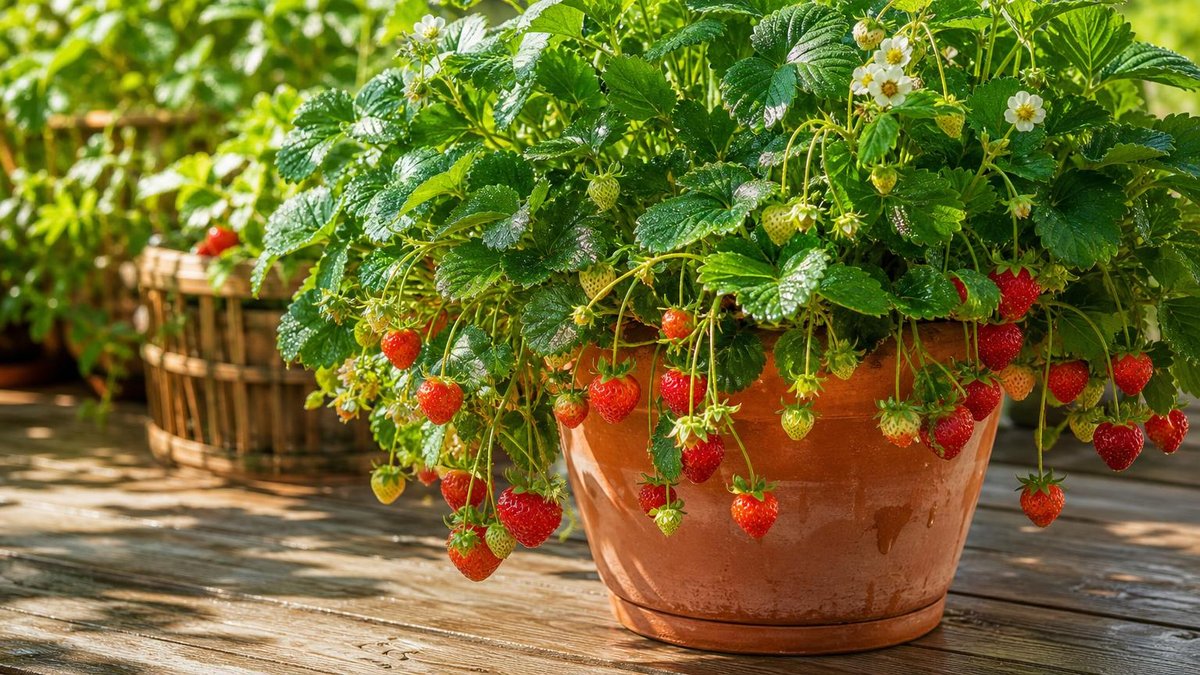
Growing strawberries in containers gives you control over soil, drainage, and sun exposure that open ground often cannot match. Whether you have a balcony, patio, or sunny windowsill, potted strawberry plant care lets you move plants to catch the best light and protect fruit from slugs and soil-borne disease. This guide covers everything from choosing cultivars to overwintering, with specific measurements and timelines you can act on today.
Choosing the Right Strawberry Type
Strawberries fall into three main groups, and your choice determines harvest timing and container strategy. The Royal Horticultural Society (RHS) classifies these by flowering habit, not just flavour.
| Type | Fruiting period | Best container use |
|---|---|---|
| June-bearing (summer-fruiting) | 4-6 weeks in early to mid-summer | Large pots for maximum single harvest; replace every 3 years |
| Everbearing | Two crops: early summer and early autumn | Hanging baskets; moderate pot size |
| Day-neutral | Continuously from late spring until first frost, given 16-24°C (61-75°F) | Windowsills and grow bags for steady picking |
For beginners, day-neutral cultivars such as ‘Albion’ or ‘Seascape’ offer the most forgiving learning curve. They fruit regardless of day length, provided temperatures stay within range. June-bearing types like ‘Honeoye’ deliver heavier crops but demand precise timing for runner removal and renewal.
Container Selection and Setup
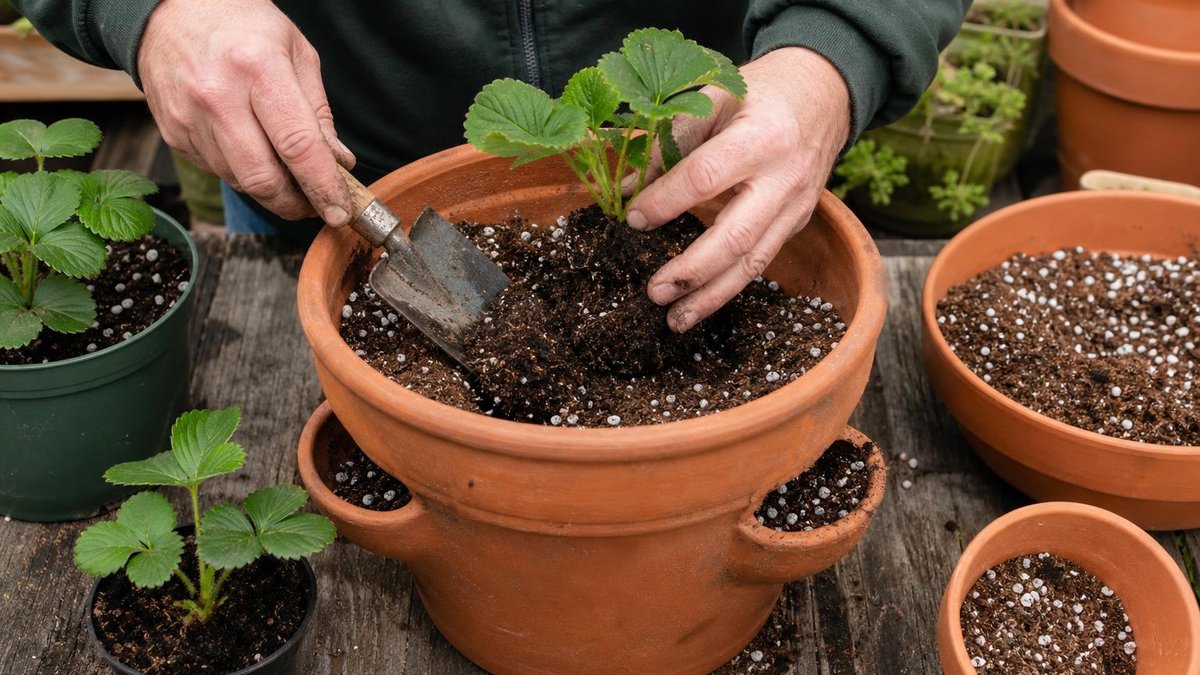
Container strawberry gardening tips start with volume and drainage. The RHS recommends a minimum pot size of 20-25cm (8-10 inches) diameter per plant, with 30cm (12 inches) preferable for June-bearing varieties that develop larger root systems. Terracotta dries faster than plastic; factor this into your watering schedule.
Strawberry pots with multiple planting pockets look efficient but create dry pockets at the top and waterlogged bases. If you use one, install a vertical watering tube (perforated PVC, 5cm/2 inches diameter) down the centre to distribute moisture evenly. Alternatively, standard round pots or purpose-built container arrangements often outperform specialist designs.
Hanging baskets work for trailing cultivars but require daily watering in warm weather. The compost volume is small, typically 10-12 litres, so expect to feed more frequently. Window boxes suit day-neutral types if they receive 8-10 hours direct sun.
Compost and Planting
Strawberries need acidic to neutral soil, pH 5.5-6.5, according to Kew’s growing guidelines. Use a loam-based compost such as John Innes No. 2, or mix multi-purpose compost with 30% perlite or grit by volume to improve drainage. Never use garden soil; it compacts in containers and may harbour verticillium wilt.
Plant bare-root runners in early spring, setting the crown (the swollen base where leaves emerge) level with the compost surface. Burying the crown causes rot; leaving roots exposed desiccates them. For potted plants bought in growth, transplant at the same depth they were growing in their original container.
Space plants 25-30cm (10-12 inches) apart in large containers, or one per 20cm pot. After planting, water thoroughly until liquid drains from the base, then withhold water until the top 2.5cm (1 inch) of compost dries. This encourages root establishment.
Light, Water, and Temperature
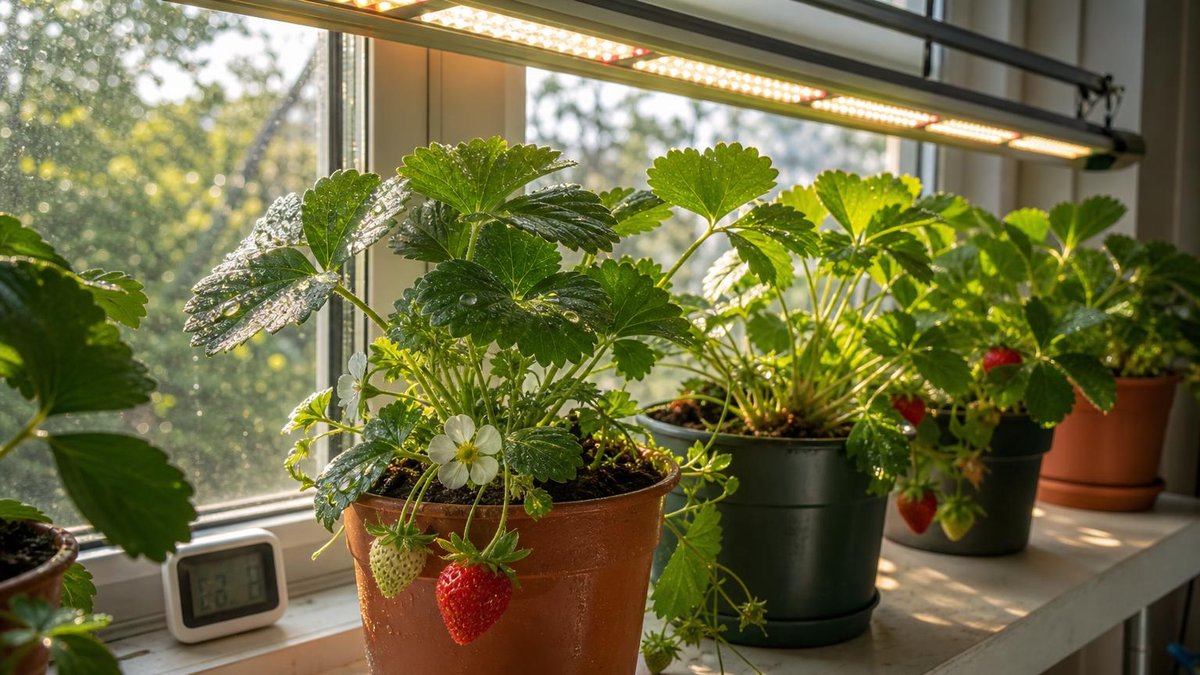
Strawberries fruit best with 8-10 hours direct sunlight daily. In partial shade, you get leaves at the expense of sweetness. Indoors, a south-facing window or supplemental LED grow lights at 400-600 micromoles per square metre per second for 12-14 hours substitutes for natural light.
Water when the top 2.5cm (1 inch) of compost is dry, not on a calendar schedule. Container plants in full sun may need water twice daily during heatwaves. The goal is consistently moist, never sodden, compost. Erratic watering produces misshapen fruit and blossom end rot.
Temperature governs flowering more than most growers realise. Flower initiation occurs at 10-15°C (50-59°F) for June-bearing types; day-neutral cultivars flower across a wider range but set fruit poorly above 30°C (86°F). Move pots to afternoon shade during heatwaves, or bring indoor plants to a cooler room overnight.
Feeding Schedule
Container-grown strawberries exhaust nutrients faster than ground-planted stock. The RHS advises a high-potassium liquid feed, such as tomato fertiliser at half the manufacturer’s recommended strength, applied every 10-14 days from flowering until the final fruits ripen. Cease feeding six weeks before your planned final harvest to let plants harden off for winter or renewal.
Avoid high-nitrogen feeds after initial establishment. Soft, leafy growth attracts aphids and reduces fruiting potential. If leaves pale between veins, this indicates magnesium deficiency; apply Epsom salts at 15g per litre (0.5 ounce per quart) as a foliar spray once, then reassess.
Runners, Renewal, and Replacement
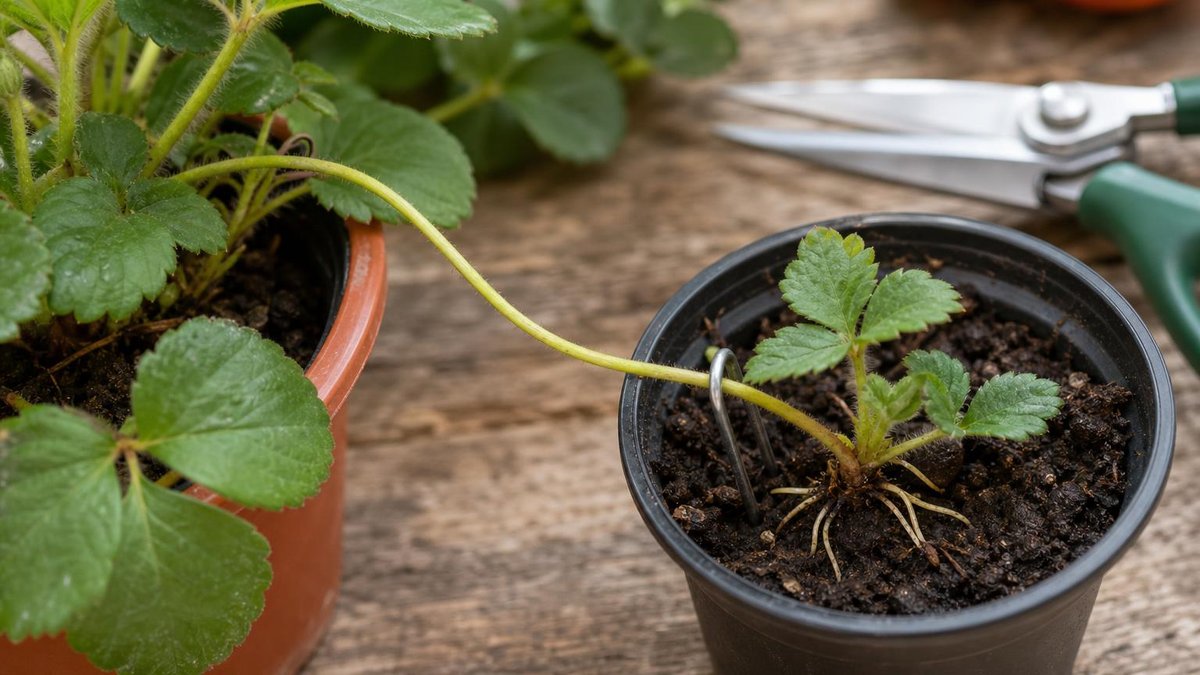
Runners (stolons) divert energy from fruit production. For maximum yield in year one, pinch them off when they reach 10cm (4 inches) long. If you want to propagate replacements, allow 2-3 runners per plant to root into 8cm (3 inch) pots of compost pinned to the mother plant. Sever the runner once roots hold, typically 4-6 weeks.
Strawberry plants decline after 3-4 years, with virus accumulation and crown congestion reducing vigour. The most productive container strawberry gardening tips include planned replacement: maintain a nursery of year-old runners, retire oldest plants after their third fruiting season, and never propagate from plants showing mottled leaves or stunted growth.
Pollination Indoors and in Enclosed Spaces
Outdoor strawberries rely on bees and other insects. Indoors, or in greenhouses with closed vents, you must hand-pollinate or provide air movement. Brush flower centres gently with a soft paintbrush every 2-3 days during flowering, transferring pollen between blooms. A small fan running intermittently improves pollen distribution but does not replace direct transfer.
Single flowers left unpollinated develop small, misshapen fruits or none at all. Day-neutral cultivars in apartment settings need this attention most, as they flower continuously over months.
Common Problems and Fixes
Container culture eliminates some soil-borne issues but introduces others. Grey mould (Botrytis cinerea) thrives in humid, overcrowded conditions; space plants for air circulation and remove affected fruit immediately. Vine weevil larvae chew roots in potting compost; biological control with Steinernema nematodes, applied at 15-20°C (59-68°F) soil temperature, provides effective management where chemical options are restricted.
Red spider mite appears in hot, dry conditions, causing pale stippling on leaves. Increase humidity by standing pots on damp gravel, and wash foliage with water weekly. For severe infestations, predatory mites (Phytoseiulus persimilis) establish at temperatures above 20°C (68°F).
Overwintering Potted Strawberries
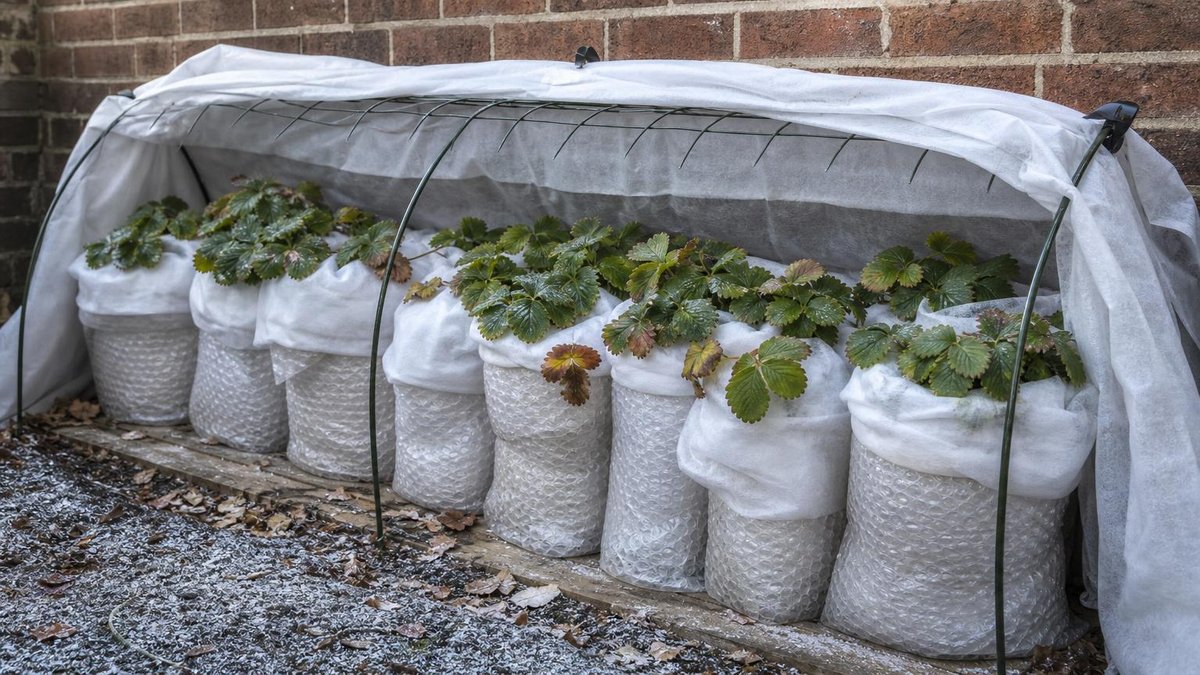
In hardiness zones below USDA 8, container plants need protection. The roots are more exposed to freezing than ground-planted stock. Move pots to an unheated greenhouse, cold frame, or against a south-facing wall, insulated with bubble wrap or horticultural fleece. The goal is keeping roots at -1 to 4°C (30-39°F), cold enough for dormancy but not lethal freezing.
Water sparingly in winter, just enough to prevent desiccation. Resume normal watering and feeding when new growth appears in spring, typically when soil temperature reaches 7-10°C (45-50°F) at 10cm (4 inches) depth.
When to Call a Professional
Consult a qualified horticulturist or your local extension service if plants show systemic decline despite correct care, or if you suspect notifiable diseases such as red core (Phytophthora fragariae). Crown rot with internal reddish-brown discoloration requires laboratory diagnosis; home treatment is ineffective and risks spreading pathogens via compost and tools.
Frequently Asked Questions
Starting and timing
How long for strawberries to grow from planting to first harvest?
Bare-root June-bearing plants fruit 4-6 weeks after flowering, typically 12-16 weeks after spring planting. Day-neutral cultivars planted in early spring may yield lightly within 10-12 weeks, with full production from month four. Plants grown from seed take 5-6 months to reach fruiting size; most commercial growers use runners for this reason.
Can you grow strawberries indoors year-round?
Yes, with sufficient light and temperature control. Day-neutral cultivars under LED grow lights at 14-16 hours daily, maintained at 16-24°C (61-75°F), produce continuously. Hand-pollination is essential. Expect lower yields per plant than outdoor summer crops, but staggered planting of 6-8 plants provides weekly picking.
How do strawberries grow, and what do they grow on?
Strawberries are herbaceous perennials with fibrous root systems and no woody stems. They grow on raised crowns that sit at or just above soil level, sending out leaves, flower trusses, and runners. The “fruit” is technically an accessory fruit, with the fleshy red part derived from the receptacle and the true fruits being the achenes (seeds) on the surface.
Location and method
How to grow strawberries in Florida or Texas?
In Florida, plant short-day cultivars such as ‘Sweet Charlie’ or ‘Camarosa’ in October for winter and spring harvest, avoiding summer heat that shuts down flowering. Provide afternoon shade and excellent drainage; raised containers help during heavy rains. In Texas, USDA zones 7-9 suit day-neutral and short-day types planted in September-October for spring production; protect from late frosts with row cover when temperatures drop below -1°C (30°F). Both states demand vigilant spider mite management in hot periods.
What is the best way to grow strawberries for beginners?
Start with purchased cold-stored runners (not seed) of a day-neutral cultivar in 25-30cm pots. Use loam-based compost, place in full sun, water when the top 2.5cm dries, and feed with tomato fertiliser fortnightly from flowering. Remove runners in year one. This approach delivers fruit fastest with the fewest variables to mismanage.
How to grow strawberries from seeds successfully?
Stratify seeds for 2-4 weeks at 2-4°C (35-39°F) in damp compost to break dormancy. Sow on the surface, pressing in lightly without covering, as light aids germination. Maintain 18-21°C (64-70°F) and high humidity under a propagator lid. Germination takes 2-6 weeks. Transplant seedlings at the two-true-leaf stage into 8cm pots, then 15cm pots, before final container placement. This method demands patience; most gardeners prefer runners for reliability.
When do strawberries grow and produce fruit?
In temperate climates, outdoor strawberries flower in April-May and fruit May-July depending on type. Day-neutral cultivars continue until autumn frost. Indoors with controlled conditions, production aligns with your light and temperature management rather than calendar months.
Sources
- Royal Horticultural Society (RHS), 2024, “Strawberries: growing in containers”, https://www.rhs.org.uk/fruit/strawberries/grow-your-own
- Royal Botanic Gardens, Kew, 2023, “Fragaria x ananassa (garden strawberry)”, https://www.kew.org/plants/fragaria-x-ananassa
- University of California Agriculture and Natural Resources, 2022, “Strawberry Production Guidelines for Home Gardeners”, https://ucanr.edu/sites/CEStanislausCo/files/345791.pdf
- University of Florida IFAS Extension, 2023, “Strawberry Production in Florida”, https://edis.ifas.ufl.edu/publication/HS403
- Texas A&M AgriLife Extension, 2021, “Home Fruit Production: Strawberries”, https://aggie-horticulture.tamu.edu/extension/homefruit/strawberry/strawberry.html
