




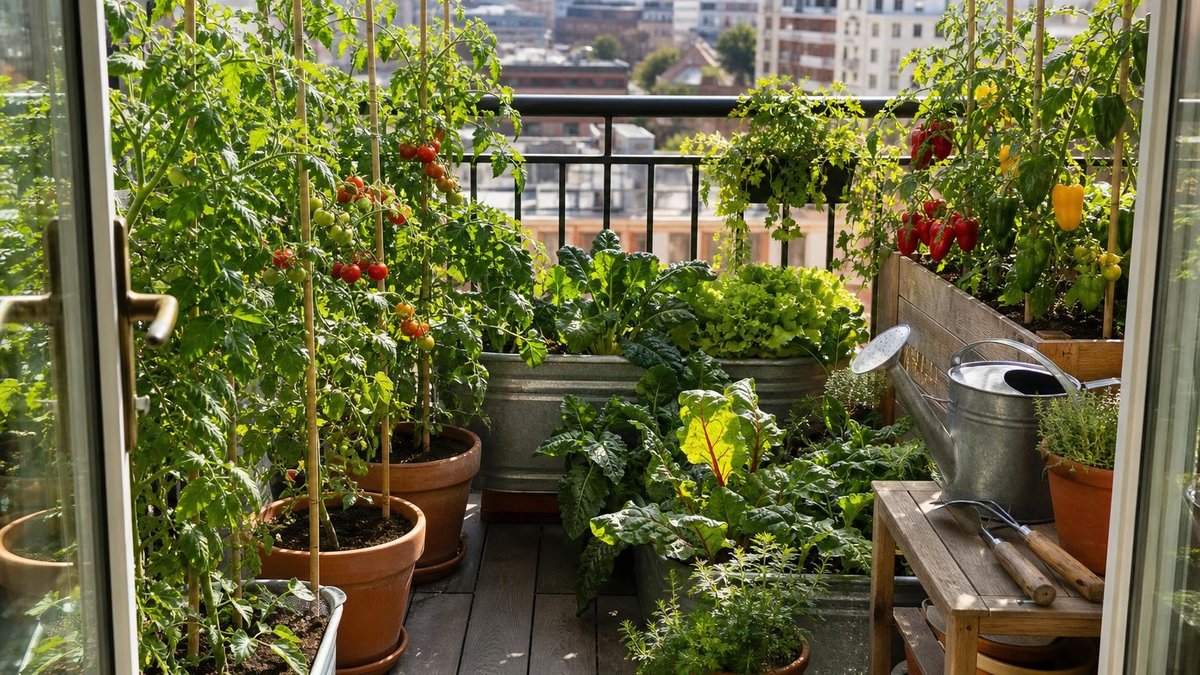
A south-facing balcony in Birmingham or a north-facing fire escape in Boston can both produce food, but the crop list and timetable change completely. The limiting factor is rarely ambition; it is light, load capacity, and wind exposure measured against the biological needs of each crop. This guide sets out how to match vegetables to those constraints, build a container system that will not damage your building, and keep plants productive through the growing season.
Assess your balcony before you buy a seed
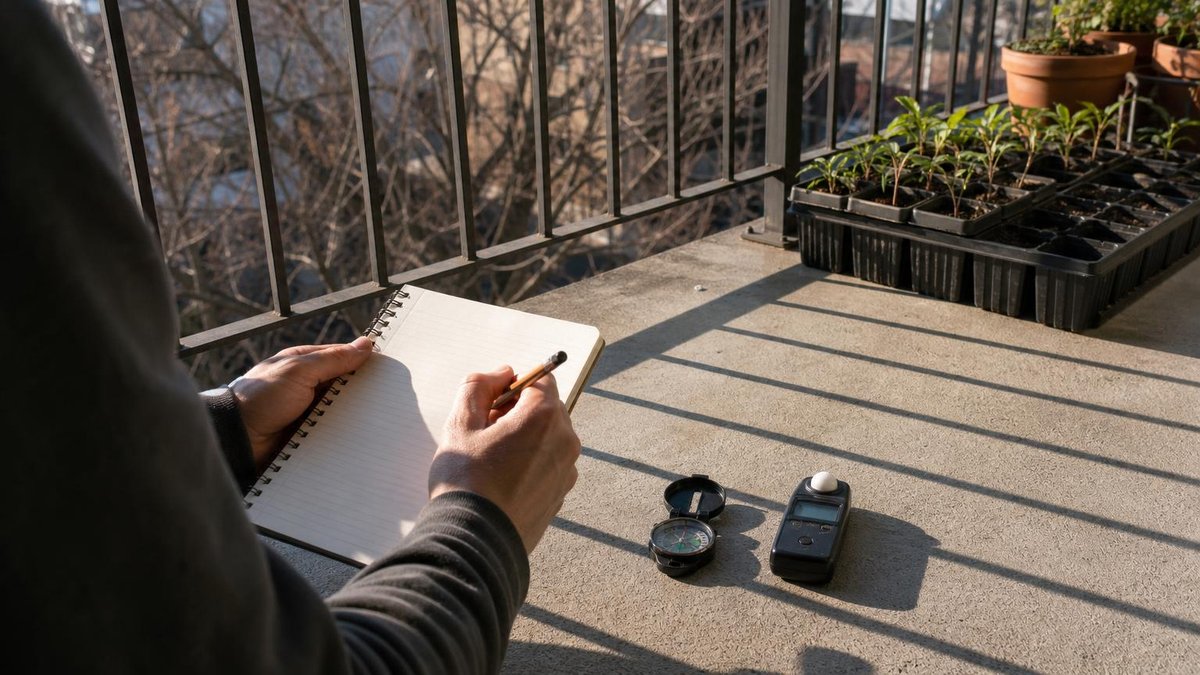
Three measurements determine what you can grow and how you will grow it. Take them in early spring before temperatures rise enough to germinate seed.
- Daily light hours. Stand at the balcony rail at 09:00, 12:00, and 15:00. Count the hours of direct sun that strike the floor. The Royal Horticultural Society (RHS) classifies 6+ hours as full sun, 4-6 as partial sun, and below 4 as shade for vegetable purposes.
- Weight capacity. Check your lease or building regulations for live-load limits. A saturated 30 cm terracotta pot with compost and a mature tomato plant can exceed 25 kg. If your balcony is rated below 200 kg/m², you will need lightweight containers and a distributed layout.
- Wind exposure. Upper floors and corner balconies accelerate drying and can snap stems. The University of Florida IFAS Extension notes that wind above 15 km/h (9 mph) increases transpiration by 40% and damages tender growth.
Record these figures. They are the filter through which every seed packet and pot choice must pass.
Choose containers that match the crop and the structure
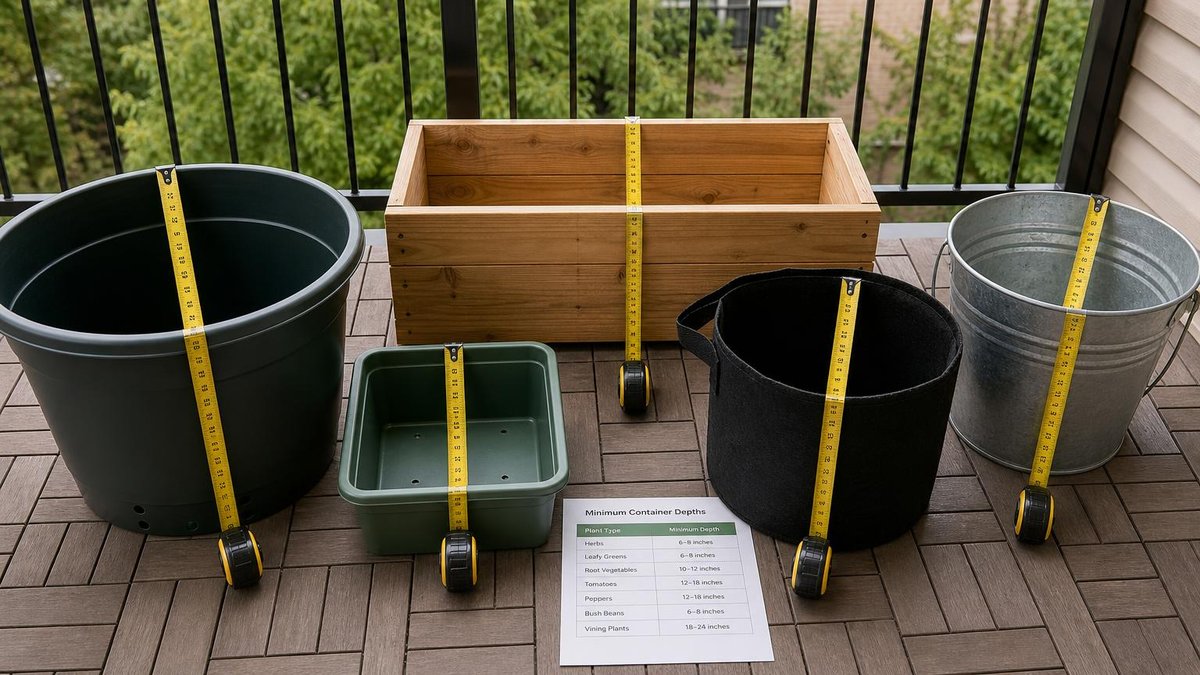
Container volume dictates root development, water buffering, and nutrient availability. The RHS provides minimum container depths for common vegetables grown in restricted spaces.
| Crop | Minimum container depth | Minimum volume per plant | Key source |
|---|---|---|---|
| Lettuce, spinach, rocket | 15 cm (6 in) | 3-5 litres | RHS container gardening guidance |
| Bush beans, dwarf peas | 20 cm (8 in) | 5-7 litres | RHS container gardening guidance |
| Cherry tomatoes, peppers | 30 cm (12 in) | 10-15 litres | RHS container gardening guidance |
| Standard tomatoes, cucumbers | 40 cm (16 in) | 20-25 litres | RHS container gardening guidance |
| Root vegetables (carrots, beetroot) | 30 cm (12 in) | 10 litres | RHS container gardening guidance |
Material matters as much as volume. Plastic and resin containers weigh 60-70% less than terracotta when saturated. Fabric grow bags drain well and store flat in winter, but they dry out faster and may stain decking. Self-watering reservoirs extend the interval between watering by 2-3 days in trials by the University of Maryland Extension, yet they cost more and can harbour anaerobic bacteria if not cleaned annually.
For those starting out, a DIY container gardening project can reduce setup costs, though you sacrifice the precision fit of commercial systems. If you are designing from scratch, planning your container layout around apartment constraints will prevent costly repositioning once plants are established.
Select crops by light availability
A balcony vegetable garden fails most often because the grower selects crops for taste rather than for photoperiod. Match the crop to the light you measured.
Full sun (6+ hours direct light)
- Tomatoes (Solanum lycopersicum): indeterminate varieties need staking; determinate bush types suit small spaces.
- Peppers (Capsicum annuum): sweet and chilli types both fruit best above 21°C (70°F) soil temperature.
- Aubergines (Solanum melongena): demand 20-25°C (68-77°F) day temperatures and stall below 15°C (59°F).
- Courgettes (Cucurbita pepo): single plants produce 4-6 fruits per week in peak summer; one plant is often enough for a household.
Partial sun (4-6 hours)
- Leafy greens: lettuce, spinach, chard, and kale tolerate shade but grow more slowly; harvest outer leaves to extend production.
- Herbs: parsley, coriander, and mint prefer cooler conditions and will bolt in full midday sun.
- Radishes (Raphanus sativus): mature in 25-30 days from sowing, making them ideal for gap-filling between slower crops.
Shade (below 4 hours)
- Microgreens: harvested at cotyledon stage after 7-14 days; light quality matters less than for fruiting crops.
For cucumber-specific guidance, see our detailed guide on how to grow cucumbers in pots, which covers trellising and pollination in restricted spaces.
Compost, feeding, and watering
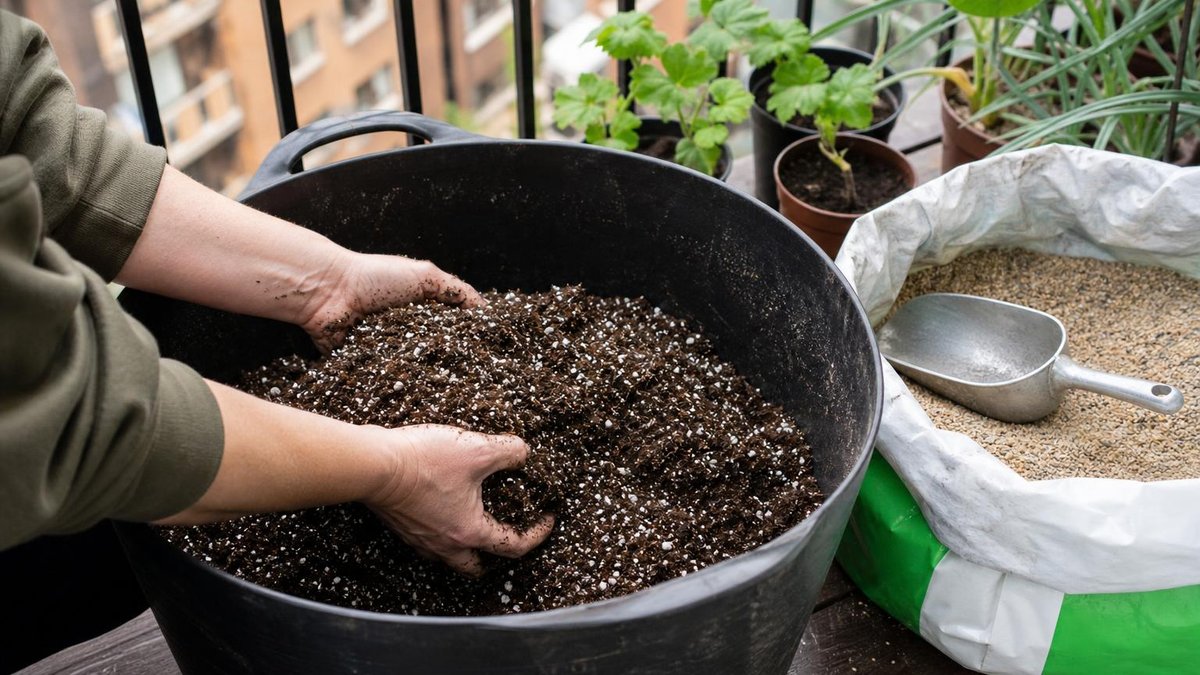
Container growing is hydroponics with training wheels: you control every input, and every mistake shows within days. Start with a soil-based compost, not garden soil, which compacts in containers. The RHS recommends a mix of 70% peat-free multipurpose compost and 30% perlite or horticultural grit by volume to improve drainage and aeration.
Feeding schedules depend on crop type and growth stage.
- Leafy crops: High nitrogen feed (NPK approximately 10:5:5) every 10-14 days after establishment.
- Fruiting crops: Switch to high potassium feed (NPK approximately 5:10:10 or tomato-specific formulation) once flowers set. Potassium deficiency manifests as blotchy ripening and hollow fruits.
- Root crops: Low nitrogen, higher phosphorus and potassium. Excess nitrogen produces forked, leafy carrots with poor storage quality.
Water when the top 5 cm (2 in) of compost is dry, not on a calendar schedule. In midsummer, a 20-litre tomato container may need water daily; a 5-litre lettuce pot may need it twice daily. The University of California Division of Agriculture and Natural Resources found that inconsistent watering (wet-dry cycles) increases blossom end rot in tomatoes by 35% compared with steady moisture.
Mulch the surface with 2-3 cm of straw, bark, or gravel to reduce evaporation. On exposed balconies, this single step can halve summer water demand.
Wind, heat, and pest management
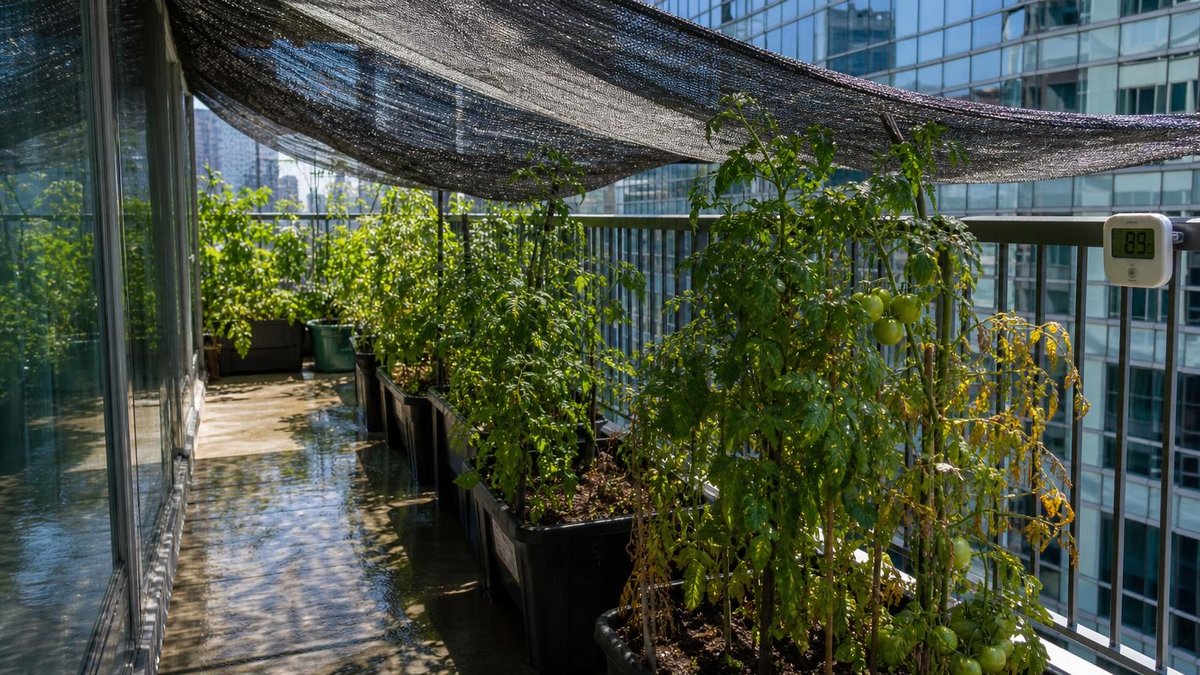
Balconies create microclimates that differ from ground-level gardens. Reflected heat from glass and concrete can raise air temperature by 3-5°C (5-9°F) above ambient. The RHS notes that temperatures above 32°C (90°F) cause pollen sterility in tomatoes and pepper flower drop.
Mitigation strategies:
- Shade cloth (30-50%) suspended on the windward side reduces temperature and wind speed without eliminating light.
- Grouping containers raises local humidity through transpiration; space them 10-15 cm apart for air circulation.
- Windbreaks of mesh or woven willow reduce physical damage but must be secured to the building, not the balcony rail, to comply with most lease agreements.
Pest pressure is generally lower on balconies than in ground gardens, but aphids, whitefly, and spider mites arrive on bought-in plants or drift from nearby vegetation. Inspect undersides of leaves weekly. The first aphid colony, caught at 5-10 individuals, can be removed with a damp cloth. At 50+ individuals, biological control (Aphidius colemani parasitic wasps) or insecticidal soap is warranted.
Season extension and succession sowing
A single balcony vegetable garden in a temperate climate can deliver harvests from April to November with planning. The key is succession: not planting everything on the same weekend, but sowing short-cycle crops every 2-3 weeks.
| Month | Sow outdoors | Harvest | Protection needed |
|---|---|---|---|
| March-April | Broad beans, peas, early potatoes, spinach | June-July | Fleece if frost below -2°C (28°F) |
| May | French beans, courgettes, tomatoes (plants), cucumbers | July-September | None after last frost date |
| June-July | Beetroot, carrots, lettuce, radish, turnips | August-October | Shade cloth in heatwaves |
| August-September | Winter lettuce, spinach, spring cabbage, garlic | October-April | Cold frame or cloche from October |
Source: Adapted from RHS sowing and harvest calendars for container-grown vegetables in USDA hardiness zones 8-9 and RHS hardiness zones H3-H4.
When to call a professional
Some balcony situations exceed safe amateur intervention. Contact a structural engineer or building surveyor if your balcony shows cracks, rust staining, or deflection under normal loading, or if you plan to install fixed beds or permanent trellis systems that alter load distribution. For pest or disease identification that eludes reference guides, your local university extension service or a Royal Horticultural Society consultant can provide definitive diagnosis. Do not guess at pesticide applications in confined outdoor spaces; drift affects neighbours and pollinators.
Frequently asked questions
Getting started
What is the best vegetable for a beginner’s balcony vegetable garden?
Radishes and lettuce are the most forgiving entry points. Radishes mature in 25-30 days, tolerate partial shade, and demonstrate visible growth daily. Lettuce rewards frequent cut-and-come-again harvesting and will not stall your confidence with pollination or staking complexities. Both crops reveal watering errors quickly but recover if corrected within 48 hours.
How much does it cost to start an apartment balcony vegetable garden?
A minimal setup (recycled containers, basic compost, open-pollinated seed) costs under £30 ($40). A mid-range system with purpose-built containers, quality compost, and a small selection of tools runs £80-120 ($100-150). A balanced tool selection prevents the common error of buying single-purpose gadgets before you know your routine. The ongoing annual cost, primarily compost and seed, is £20-40 ($25-50) for a 4-6 container garden.
Do I need a balcony vegetable garden kit, or can I assemble my own?
Kits provide matched components and reduce decision fatigue, but they rarely optimise for your specific light and load constraints. A self-assembled system lets you select container depths per crop and distribute weight across the balcony. Kits suit renters who want portability; custom builds suit those staying long-term. If choosing a kit, verify that container volumes meet the minimums in the table above; many herb kits ship with 1-2 litre pots inadequate for fruiting vegetables.
Growing and maintenance
How often should I water a container vegetable garden balcony setup in summer?
Check daily, water when the top 5 cm (2 in) of compost is dry. In practice, this means small containers (under 10 litres) need water once or twice daily in heat above 25°C (77°F); medium containers (10-20 litres) need daily watering in hot weather; and large containers (20+ litres) with mulch need water every 2-4 days. Tomatoes in fruit use 1.5-2 times more water than leafy greens in equivalent containers.
Can I grow tomatoes on a north-facing balcony?
Standard fruiting tomatoes require 6-8 hours of direct sun and will not set fruit reliably on a north-facing balcony in temperate latitudes. Cherry tomato varieties with tolerance for lower light (such as ‘Tumbling Tom’) may produce modest crops with 4-5 hours, but flavour and yield will be inferior to sun-grown plants. A north-facing space is better allocated to leafy greens, herbs, and microgreens.
What are the most common mistakes in small balcony vegetable garden ideas I see online?
Three errors recur in aspirational imagery: undersized containers (a 5-litre pot for a tomato plant guarantees nutrient stress and erratic watering), overcrowding (three courgette plants in a single container compete for root space and produce none to harvestable size), and neglecting wind (tall plants in exposed positions snap or desiccate; staking and grouping are non-negotiable on upper floors).
How do I pollinate vegetables if my balcony is high up with no insect access?
Tomatoes, peppers, and aubergines are self-fertile; vibration from wind or tapping the flower clusters releases pollen. Courgettes, cucumbers, and beans require insect pollination. For these, hand-pollinate by transferring pollen with a small brush between male and female flowers (identified by the swollen ovary behind the female bloom), or grow parthenocarpic varieties that set fruit without pollination.
Sources
- Royal Horticultural Society. Container gardening. https://www.rhs.org.uk/container-gardening
- Royal Horticultural Society. Sowing and planting calendar. https://www.rhs.org.uk/advice/in-month
- University of Florida IFAS Extension. Wind effects on plant growth and transpiration. https://edis.ifas.ufl.edu
- University of Maryland Extension. Self-watering container trials. https://extension.umd.edu
- University of California Division of Agriculture and Natural Resources. Blossom end rot in tomatoes. https://ucanr.edu
- ASPCA. Animal Poison Control Center. 888-426-4435. https://www.aspca.org/pet-care/animal-poison-control
