




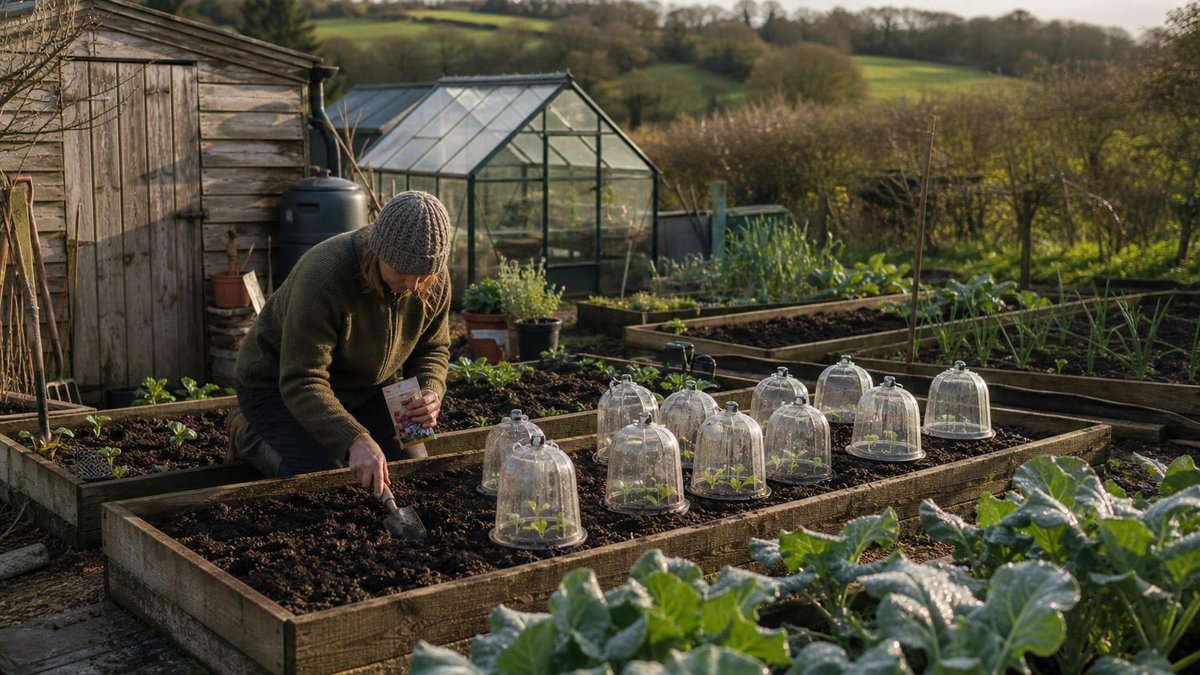
A UK planting calendar is not a universal grid you can print once and follow forever. British weather shifts with latitude, altitude, and the buffering effect of the Gulf Stream, so a schedule that works in Cornwall fails in Aberdeen. The Royal Horticultural Society (RHS) and the Met Office both stress that local frost dates, soil temperature, and accumulated day-degrees matter more than any fixed monthly label. This guide gives you a month-by-month framework for outdoor vegetable sowing and planting, with the measurable thresholds that actually determine whether seeds germinate or rot.
If you are comparing tools, note that the farmers almanac planting calendar and similar US systems use zip-code lookup and last-frost dates calibrated to North American climate zones. These do not transfer to UK conditions. The best planting calendar for a British grower is one that combines Met Office frost data, RHS hardiness ratings, and your own garden’s microclimate observations. For digital options, see our review of how to use plant calendar apps to plan your garden, which covers tools with UK weather integration.
Why British growing conditions defy fixed calendars

The UK spans USDA hardiness zones 6b to 10a, a range wider than many gardeners realise. The Isles of Scilly rarely drop below -1°C (30°F); parts of the Scottish Highlands experience -15°C (5°F) or lower. The growing season, measured between last spring frost and first autumn frost, stretches from roughly 300 days in coastal Cornwall to under 150 days in Highland glens, according to Met Office climate summaries.
Soil temperature at 10cm (4in) depth determines germination speed more reliably than air temperature. The RHS notes that most vegetable seeds need sustained soil temperatures above 5°C (41°F) to break dormancy, with optimal ranges of 10-16°C (50-61°F) for cool-season crops and 16-24°C (61-75°F) for warm-season crops. A soil thermometer costs less than a packet of failed seed and removes guesswork.
Day length also triggers development in many crops. Onions and shallots are photoperiod-sensitive: long-day varieties bulb when daylight exceeds 14 hours, which in southern England happens from late April onward. Plant too late and you get foliage without bulbs.
Monthly tasks: what to sow and plant outdoors
The following schedule applies to southern and central England (roughly zones 8a-9a). Adjust sowing dates 2-4 weeks earlier for sheltered Cornish or Welsh sites, and 2-4 weeks later for northern England, Scotland, or exposed upland gardens.
January to February
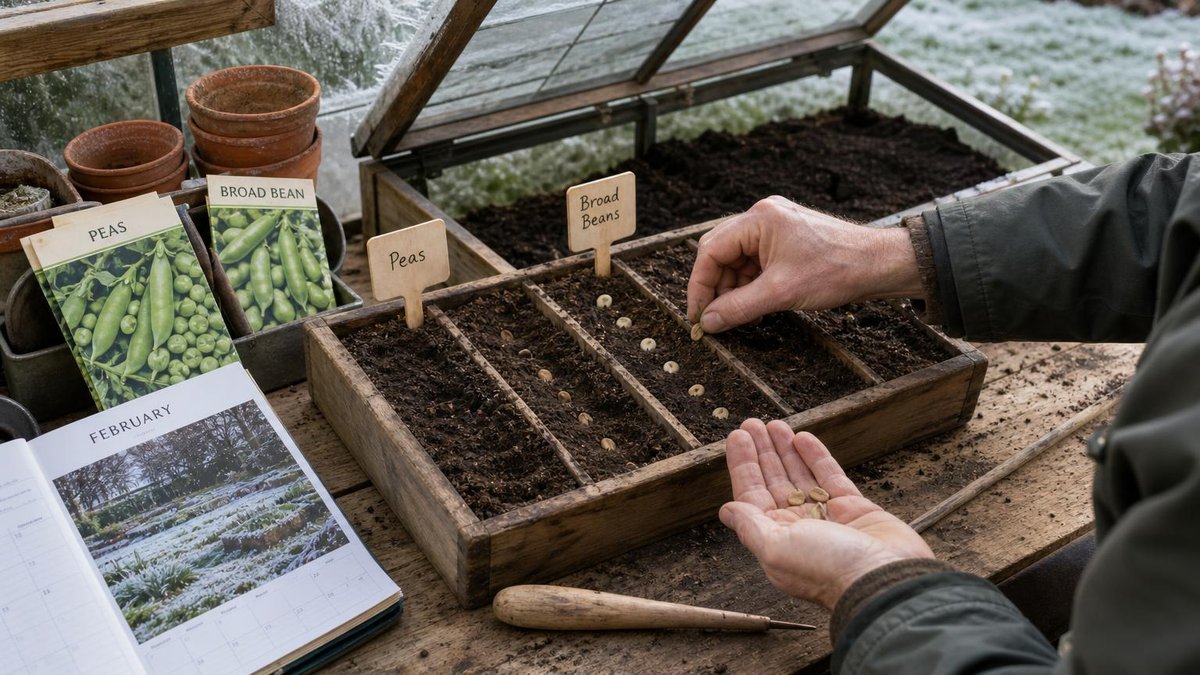
Direct sowing is limited to the mildest regions. Under cover in unheated greenhouses or cold frames, sow broad beans (Aquadulce Claudia) and early peas (Meteor, Feltham First) when soil is workable and not waterlogged. The RHS recommends starting these at 5°C (41°F) soil temperature minimum. Garlic should have been planted in November, but late plantings in February still yield smaller bulbs; see our guide to growing garlic for cultivar-specific timing.
Indoor sowing of tomatoes, peppers, and aubergines begins in late February under grow lights or on the brightest windowsill, 6-8 weeks before last frost. These need 18-21°C (64-70°F) to germinate within 7-14 days.
March to April
March is the pivot month. When soil at 10cm (4in) depth holds at 7°C (45°F) for three consecutive mornings, direct sow:
- Parsnips: slow germinators needing 14-21 days at 10°C (50°F); sow before soil dries in late spring
- Beetroot: germinates at 8-10°C (46-50°F); bolt-resistant varieties (Bolthardy) for early sowing
- Early carrots: Amsterdam Forcing or Nantes 2; cover with fleece if frost threatens
- Spinach and rocket: germinate at 5-10°C (41-50°F); sow every three weeks for succession
- First early potatoes: plant when shoots emerge and soil is 8°C (46°F), typically mid-to-late March in the south
April brings the main sowing window. Second early and maincrop potatoes go in. Direct sow peas, lettuce, radish, spring onions, and kale. The Met Office notes that late frosts in April remain probable until approximately the third week in southern counties, so keep horticultural fleece accessible.
May to June
By early May, risk of ground frost has usually passed in southern and central England (check local Met Office records: 1950-2023 data shows 90% probability of no frost after 5 May in London, 15 May in Manchester). This is when warm-season crops go out:
- French and runner beans: sow directly when soil reaches 12°C (54°F); do not pre-soak seeds or they crack
- Sweetcorn: needs 13°C (55°F) minimum; sow in blocks, not rows, for wind pollination
- Courgettes and squash: sow indoors in April, plant out after hardening off when nights stay above 10°C (50°F)
- Outdoor tomatoes: plant deep, removing lower leaves, when soil is 13°C (55°F) and forecast is settled
June fills gaps: successional sowings of beetroot, carrots, and lettuce; plant leeks and brassicas for autumn and winter harvest. Florence fennel sown before midsummer bulbs reliably; later sowings bolt in shortening days.
July to August
July sowings are strategic, not desperate. The RHS advises:
- Last sowing of French beans for autumn cropping: early July in the north, mid-July in the south
- Spring cabbage and winter kale: sow in nursery beds, transplant in August
- Turnips and swede: fast crops for autumn; swede needs 12-14 weeks before first hard frost
- Winter purslane and corn salad: for unheated greenhouse or cold frame harvest through winter
August is for planting, not sowing: autumn-cropping onions from sets, spring cabbage, and overwintering broad beans (Aquadulce Claudia again, or The Sutton for exposed sites).
September to October
Soil remains warm enough for root establishment even as air temperatures drop. Plant garlic by late October; cloves need 4-6 weeks of cool but not frozen soil to develop roots before winter dormancy. The RHS garlic guidance specifies planting depth at 2.5cm (1in) in heavy soil, 5cm (2in) in light soil.
October is also last call for green manures: field beans or grazing rye sown by mid-month to capture residual nitrogen and prevent leaching over winter.
November to December
Gardening shifts to planning and protection. Spread compost or well-rotted manure on vacant beds; winter weather breaks it down without you digging. Check stored crops weekly: remove rotting onions or squash promptly. Order seed catalogues and plan rotations, noting where brassicas, alliums, and legumes grew this year.
Key sowing parameters by crop group
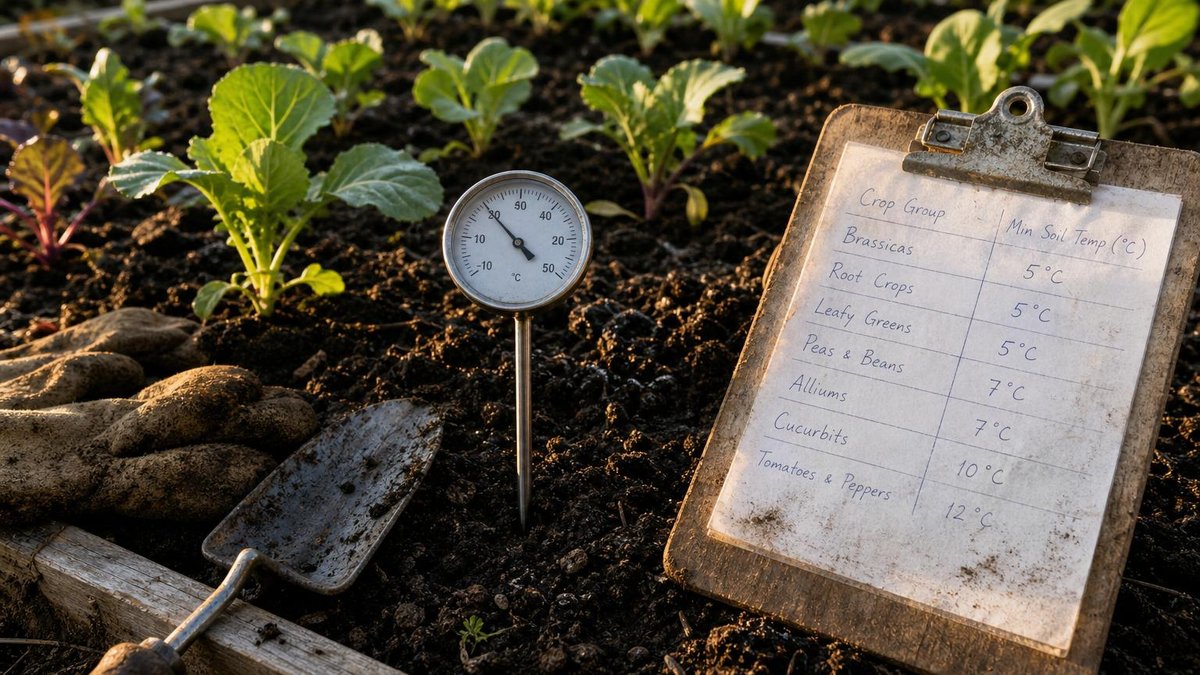
The RHS and Kew base their sowing recommendations on soil temperature thresholds and days to maturity. This table summarises critical parameters for major vegetable groups in UK conditions.
| Crop group | Minimum soil temp | Optimal soil temp | Typical sowing window (south/central England) | Source |
|---|---|---|---|---|
| Brassicas (cabbage, kale, broccoli) | 5°C (41°F) | 10-21°C (50-70°F) | March-May; July-August for overwintering | RHS |
| Legumes (peas, beans) | 5°C (41°F) peas; 12°C (54°F) French beans | 13-18°C (55-64°F) | February-March (broad beans); April-July (others) | RHS |
| Root crops (carrots, beetroot, parsnips) | 5-8°C (41-46°F) | 10-16°C (50-61°F) | March-July (successional) | RHS |
| Solanaceae (tomatoes, peppers, potatoes) | 10°C (50°F) tomatoes; 15°C (59°F) peppers | 16-21°C (61-70°F) | March (indoor sowing); May (outdoor planting) | RHS |
| Cucurbits (courgettes, squash, cucumbers) | 13°C (55°F) | 18-24°C (64-75°F) | April (indoor); May-June (outdoor) | RHS |
| Alliums (onions, garlic, shallots) | 5°C (41°F) | 10-16°C (50-61°F) | October-November (garlic); February-April (onions) | RHS |
Tools and records that improve your calendar
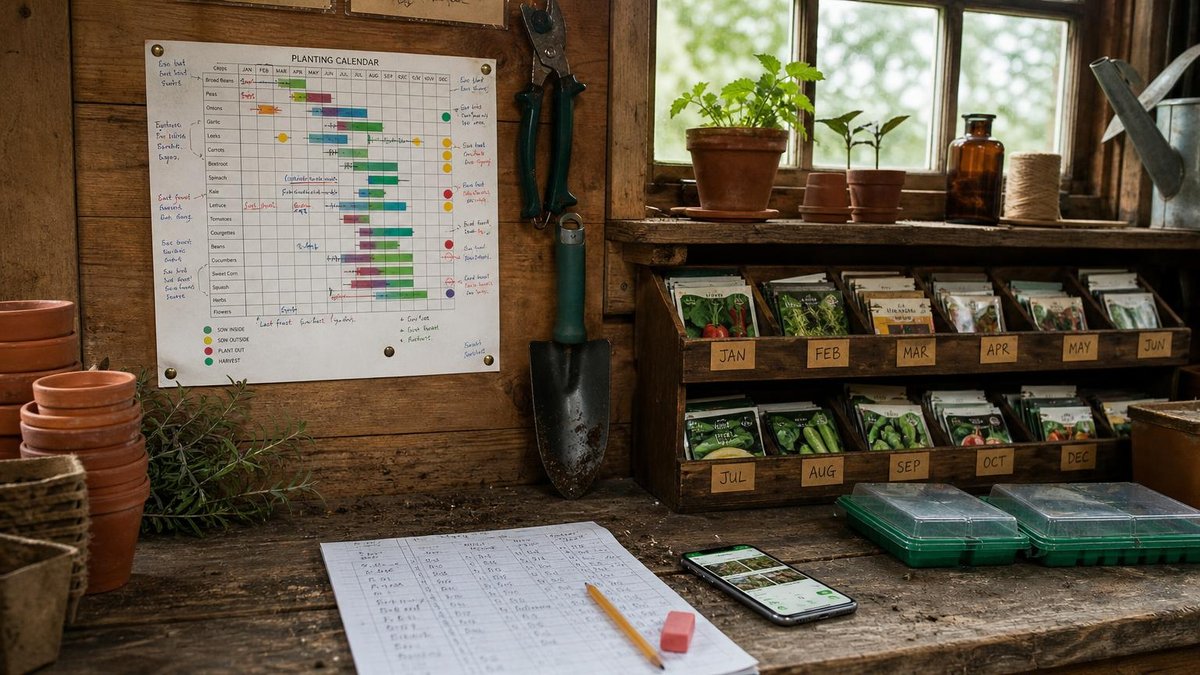
A free printable planting calendar is useful only if you annotate it. The best planting calendar app or paper system tracks:
- Actual sowing dates versus recommended dates
- Soil temperature at sowing (measured with probe thermometer)
- Germination percentage and days to emergence
- First and last frost dates for your specific garden (Met Office MIDAS data or your own records)
- Pest and disease pressure by month
Over three to five years, these records become more valuable than any published guide. The RHS maintains that gardens within 16km (10 miles) of each other can differ by two weeks in spring readiness due to aspect, shelter, and soil type.
For digital tracking, plant care apps with UK weather APIs can prompt sowing windows based on real-time soil temperature models. Our guide to plant calendar apps evaluates which tools integrate Met Office forecasts versus generic Northern Hemisphere algorithms.
Frequently asked questions
Using UK planting calendars effectively
What is the best planting calendar for UK vegetable growers?
The best planting calendar combines Met Office frost data for your postcode, RHS cultivar guidance, and your own garden records. National calendars give starting points; local observation determines actual sowing dates. A calendar without soil temperature thresholds is decorative, not functional.
Can I use a vegetable planting calendar by zip code or farmers almanac planting calendar in the UK?
No. US zip-code systems and the farmers almanac planting calendar use USDA hardiness zones and last-frost algorithms calibrated to North American climate patterns. UK gardeners need tools based on Met Office data and RHS hardiness ratings (H1-H7). The almanac planting calendar and similar US tools will mislead you by 2-6 weeks.
Is there a best planting calendar app with UK-specific data?
Several apps now integrate Met Office APIs and RHS databases. The best planting calendar app for your needs depends on whether you want sowing reminders, pest alerts, or record-keeping. Look for apps that allow you to override generic advice with your own frost dates and soil observations.
Timing and technique
When should I start sowing tomatoes and peppers indoors?
Sow tomatoes 6-8 weeks before your last frost date; peppers need 8-10 weeks. In southern England, this means mid-to-late February for tomatoes, early February for peppers. Maintain 18-21°C (64-70°F) for germination. Without a heated propagator or grow light, wait until March and accept later crops.
How do I know when my soil is warm enough for direct sowing?
Insert a soil thermometer 10cm (4in) deep at 9am for three consecutive days. Most vegetable seeds need sustained temperatures at or above their minimum for 48-72 hours to germinate reliably. Soil warms more slowly than air; a sunny week in March does not guarantee workable soil.
What is the latest I can sow winter vegetables?
Count backward from your average first frost date using the crop’s days to maturity. For example, swede needs 12-14 weeks: sow by mid-July in northern England, late July in the south. Winter-hardy salads (corn salad, land cress) can be sown into August for protected harvest.
Should I follow month-by-month advice exactly?
No. Monthly labels are conveniences, not commands. A cold, wet May delays everything; a warm March accelerates it. Use months as memory anchors, but let soil temperature, day length, and the 10-day weather forecast determine your actions. The British growing season calendar is a framework, not a rulebook.
Sources
- Royal Horticultural Society (2024). Vegetable seed sowing guide. https://www.rhs.org.uk/vegetables
- Royal Horticultural Society (2024). Garlic: cultivation and care. https://www.rhs.org.uk/plants/garlic/growing-guide
- Met Office (2023). UK climate averages and frost data 1991-2020. https://www.metoffice.gov.uk/research/climate/maps-and-data/uk-climate-averages
- Met Office (2023). MIDAS: UK daily temperature data. https://www.metoffice.gov.uk/research/climate/maps-and-data/historic-station-data
- Royal Botanic Gardens, Kew (2022). Plant hardiness and climate adaptation. https://www.kew.org/science/our-science/projects/plant-hardiness
