




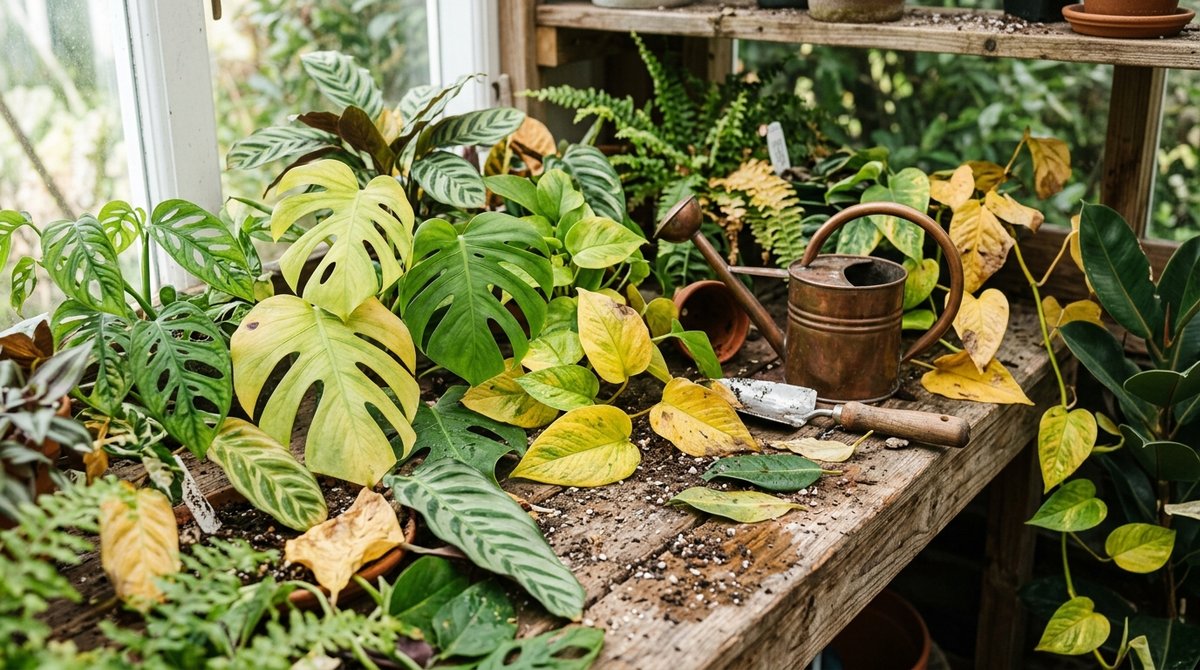
Yellow leaves are the most common distress signal plants send, and the cause is almost never the one gardeners guess first. Before you reach for a fertiliser or a watering can, you need to diagnose the actual trigger, because the same symptom has at least six distinct causes that require opposite fixes. Treating overwatering with more water accelerates root decline rather than reversing it.
This guide works through each cause in order of frequency, gives you measurable thresholds for each diagnosis, and tells you when to call a professional rather than experiment further. Where relevant, it also covers how yellowing patterns differ between indoor houseplants and outdoor specimens, including the ground cover Blue My Mind plant (Evolvulus glomeratus), a trailing blue-flowered perennial widely used in Florida landscapes that yellows rapidly when its drainage needs are not met.
The six most common causes of yellow plant leaves
The table below summarises the six leading causes, their distinguishing visual cues, and the corrective action for each. Figures are drawn from Royal Horticultural Society and University of Florida IFAS Extension guidance.
| Cause | Distinguishing sign | Corrective action |
|---|---|---|
| Overwatering | Uniform yellowing, soft stems, wet soil below 5 cm (2 in) | Allow top 5 cm (2 in) to dry completely before next water; check drainage holes |
| Underwatering | Yellow-then-crisp edges, dry soil throughout pot | Water thoroughly until drainage from base, then reassess schedule |
| Nitrogen deficiency | Yellowing starts on oldest (lower) leaves first | Apply balanced liquid fertiliser (10-10-10 NPK) at half strength monthly during growth |
| Iron/magnesium deficiency | Interveinal chlorosis: green veins, yellow leaf body, typically on new growth | Test soil pH; correct to 6.0-7.0 (RHS) before adding chelated iron |
| Pest damage | Stippled or mottled yellowing; webbing, sticky residue, or visible insects | Isolate plant; treat with insecticidal soap or neem oil per label instructions |
| Natural senescence | One or two lowest leaves yellow; rest of plant healthy | No action required; remove fallen leaves to prevent fungal spread |
Overwatering: the leading cause of yellowing indoors
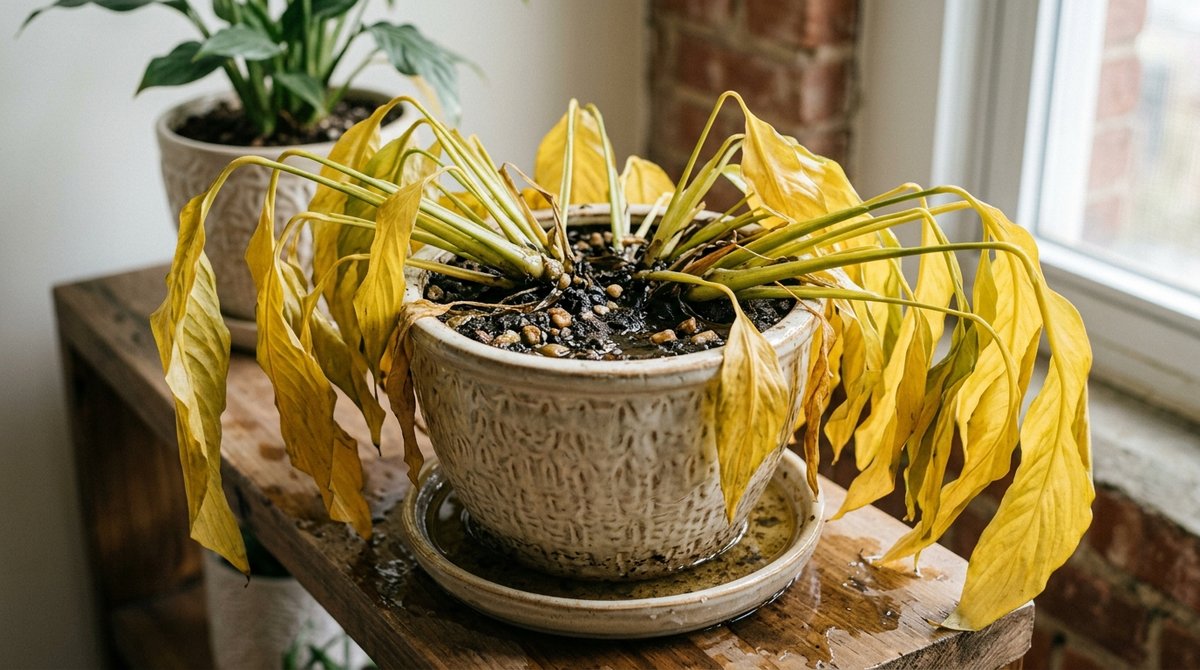
Overwatering is responsible for the majority of yellow-leaf complaints on indoor plants, according to the RHS. The mechanism is root oxygen deprivation: saturated compost excludes air, roots begin to decay, and nutrient uptake collapses within days. The result is uniform yellowing that spreads upward from the base. For a full visual guide, see our signs your indoor plants are overwatered and how to fix it article.
Water when the top 5 cm (2 in) of compost is dry. Use a moisture meter or press a finger into the compost to the second knuckle. If the soil feels damp, wait. When root rot has already set in, drying the compost is not enough. Unpot the plant, trim blackened roots back to healthy white tissue, dust cut ends with powdered cinnamon (a mild antifungal), and repot into fresh, well-draining compost. For step-by-step technique, see our guide on how to repot your plants without causing root damage.
Nutrient deficiency and soil pH
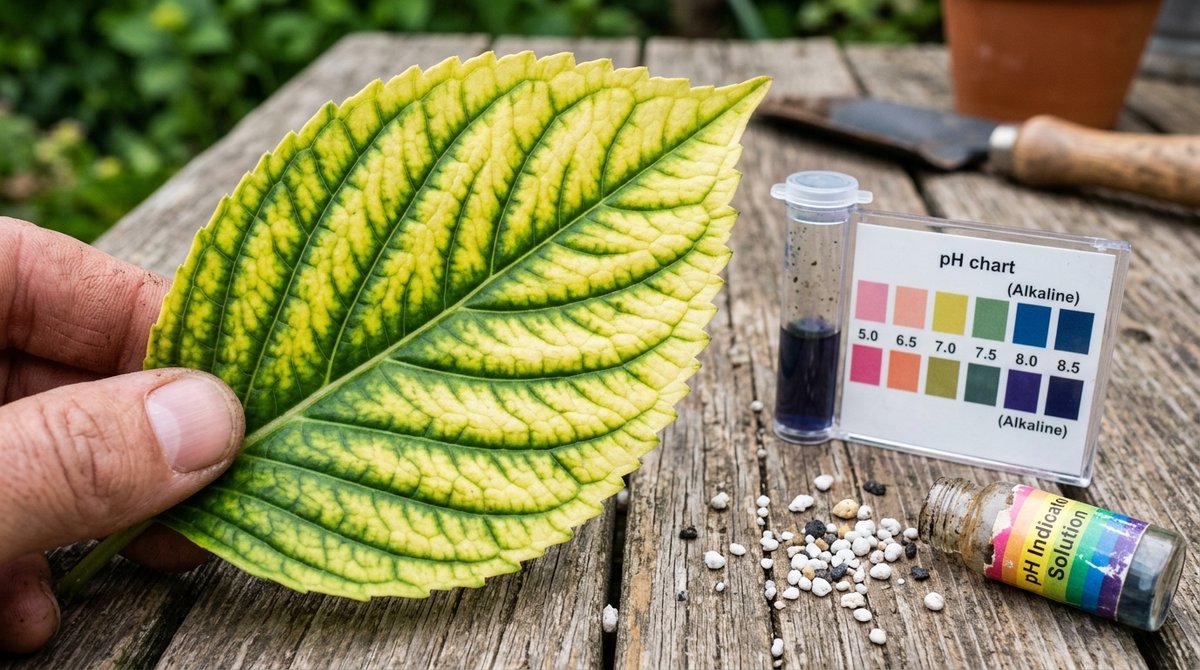
Nitrogen deficiency produces yellowing that begins on the oldest, lowest leaves because the plant scavenges nitrogen from older tissue to support new growth. Iron or magnesium deficiency, by contrast, causes interveinal chlorosis on newer leaves. The distinction matters because adding nitrogen to a plant suffering from iron lock-out (caused by soil pH above 7.5) will not resolve the symptom.
Before adding any fertiliser, test your soil or compost pH. The RHS recommends a target range of 6.0-7.0 for most houseplants and garden border perennials. If pH is out of range, amend it first; then apply a balanced fertiliser.
Pest-driven yellowing
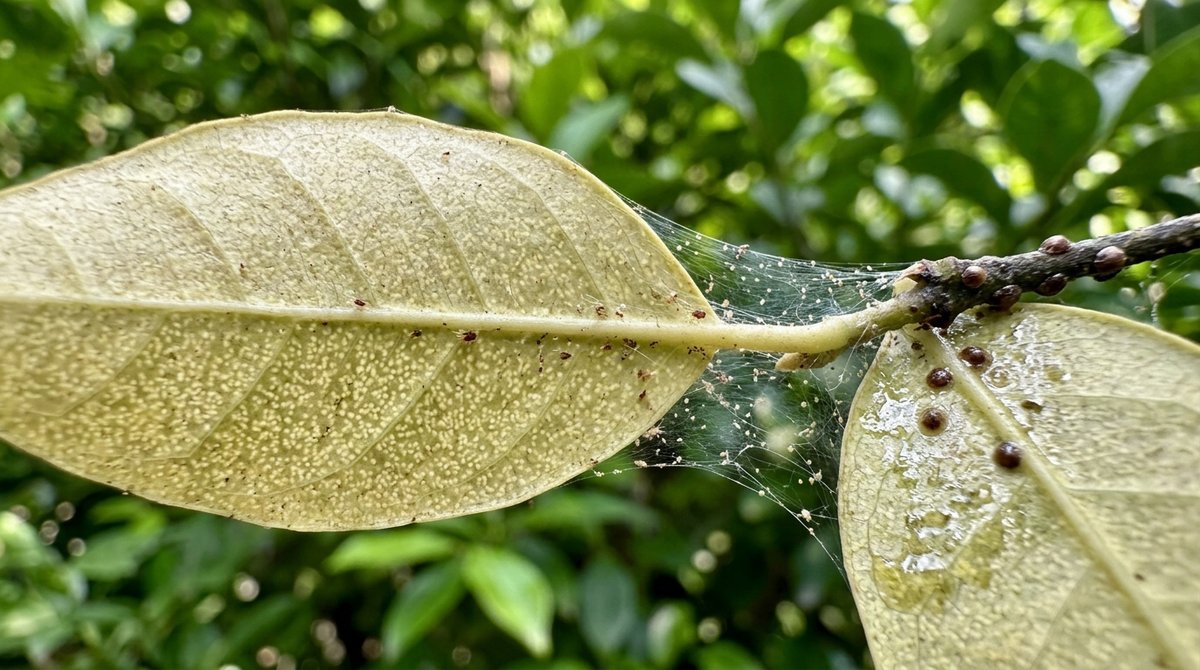
Spider mites, fungus gnats, and scale insects all cause plant leaf discoloration, but each leaves a different trace. Spider mites produce fine webbing on leaf undersides and stippled, pale yellowing. Scale insects leave sticky honeydew and raised brown bumps on stems. Fungus gnats damage roots rather than leaves directly, so the yellowing can resemble overwatering even when the compost is not wet.
Isolate any plant you suspect of pest infestation immediately. A detailed identification and treatment protocol is available in our article on how to identify and treat common indoor plant pests. Insecticidal soap is effective against soft-bodied insects at 1-2% solution applied to all leaf surfaces, repeated every five to seven days for three cycles to break the egg-to-adult lifecycle.
Yellow leaves outdoors: the Blue My Mind plant example
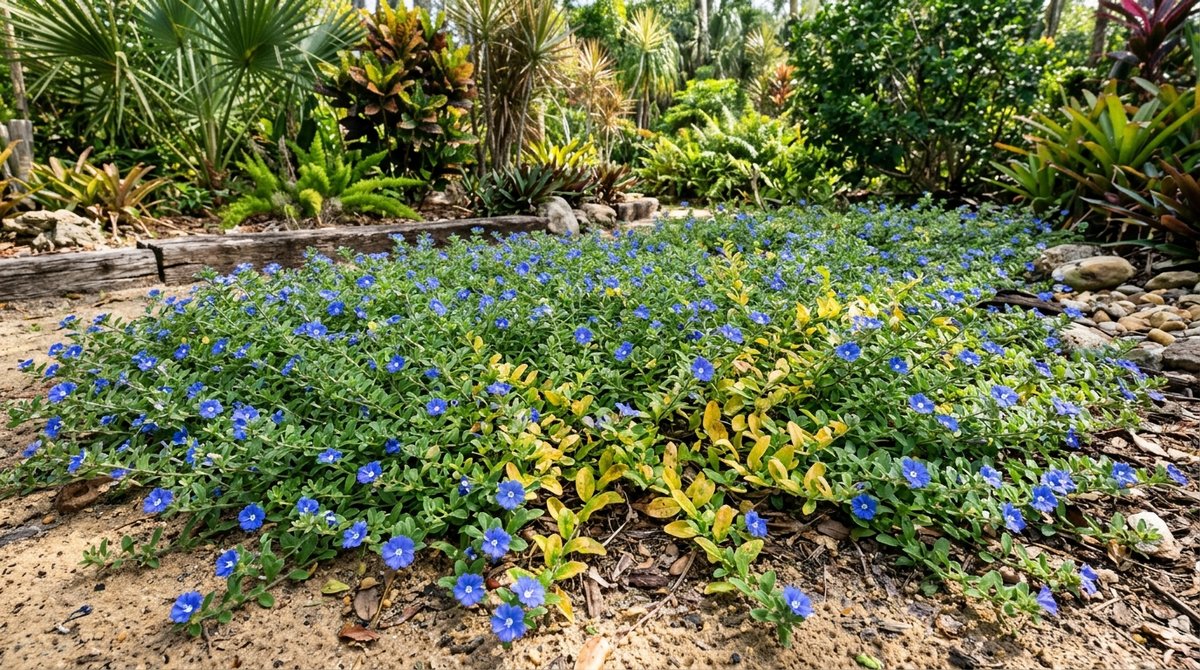
The Evolvulus glomeratus cultivar marketed as Blue My Mind plant is a compact, trailing perennial used widely as a ground cover in Florida and other warm-climate gardens. Gardeners frequently report yellowing, and the cause is almost always one of three issues: waterlogged soil, cold damage, or iron deficiency induced by alkaline irrigation water.
Blue My Mind plant care centres on drainage. University of Florida IFAS Extension notes that Evolvulus glomeratus is intolerant of standing water, which causes chlorosis and stem dieback within one to two weeks. In landscape use, plant it in raised areas or amend heavy clay with 30% coarse perlite before planting.
Blue My Mind plant cold tolerance is limited: IFAS Extension lists it as hardy in USDA zones 9-11, meaning it begins to suffer tissue damage below approximately 4°C (39°F). Yellowing after a cold night in a Florida landscape is cold injury, and no fertiliser will reverse it. If the growing tip remains green after frost exposure, the plant may recover with warmth. If the tip is brown and mushy, cut back to live tissue and wait.
Iron deficiency is common in Blue My Mind plants grown on alkaline soils (pH above 7.0). The symptom is interveinal chlorosis on new growth. Apply chelated iron drench at the label rate, and test irrigation water pH if the problem recurs seasonally.
When to act fast and when to call a professional
Most cases of plant leaves turning yellow are solvable without specialist help. However, seek professional advice when:
- Yellowing spreads to more than 50% of the canopy within one week, regardless of care changes.
- Brown, water-soaked lesions appear at the soil line, possibly indicating Phytophthora root rot requiring fungicide intervention.
- A new plant arrives from a nursery with yellowing already present and a notifiable disease is suspected (in the UK, report to the Animal and Plant Health Agency; in the US, to your state department of agriculture).
- You cannot identify the cause after ruling out watering, nutrition, pests, pH, and seasonal senescence.
Yellowing on large trees or woody shrubs that spreads systematically from branch tips inward over several seasons may indicate vascular disease such as verticillium wilt. These require a qualified arborist, not a home treatment.
Preventing recurrence
- Water on a needs basis using the 5 cm (2 in) dry-topsoil rule, not a fixed schedule.
- Feed during active growth only (typically March to September for most temperate houseplants, per RHS), using a balanced liquid feed at the label dose.
- Inspect leaf undersides monthly for early pest activity.
- Keep plants away from heating vents and single-glazed windows in winter, where temperature fluctuations exceed the 5°C (9°F) swing that triggers stress yellowing in many tropical species.
- Repot into fresh compost every two to three years, as nutrients in potting compost are largely depleted within 12 months (RHS).
For additional guidance, our guide to avoiding common seasonal mistakes with indoor plants covers the most frequent winter care errors that trigger yellowing from October onward.
Frequently asked questions
Why are my plant leaves turning yellow even though I water correctly?
Correct watering rules out the most common cause, but yellowing has five other primary triggers. Work through them in order: check soil pH (target 6.0-7.0 per RHS), inspect leaf undersides for pest signs, assess light levels, and consider whether the plant is in its natural leaf-shedding cycle. If all check out, the issue may be compacted or exhausted compost reducing nutrient availability despite adequate watering.
Does yellow mean I should water more or less?
It depends on the soil, not the leaf. Press a finger 5 cm (2 in) into the compost:
- If it is wet or cold, you are overwatering. Hold off until it dries to that depth.
- If it is bone dry all the way through, underwater stress is likely. Water thoroughly and allow full drainage.
- If it is evenly moist, watering frequency is not the primary problem.
Why is my snake plant drooping and turning yellow?
In Dracaena trifasciata (formerly Sansevieria), simultaneous drooping and yellowing almost always indicates overwatering or root rot. Snake plants tolerate drought well and can go three to four weeks without water in winter. If the base of the leaves feels soft rather than firm, unpot and inspect roots. Blackened, malodorous roots confirm rot; trim these away and repot in fast-draining cactus compost.
What causes interveinal chlorosis?
Interveinal chlorosis on new leaves indicates iron, manganese, or magnesium deficiency. The most common cause is not a lack of these minerals in the compost but soil pH above 7.5, which locks them into insoluble forms. Test pH first. Lowering it to 6.0-6.5 often resolves the symptom without adding supplements.
Can leaves turn yellow from too much sun?
Yes, but the pattern differs from nutrient or water stress. Sun scorch initially produces bleached or pale patches, not uniform yellow, and typically affects the side of the plant facing the light source. The RHS describes this as “scorch,” and the fix is to move the plant out of direct midday sun or filter the light with a sheer curtain.
Why does the Blue My Mind plant turn yellow in Florida gardens?
The three most common causes are waterlogged soil after heavy rain, alkaline irrigation water raising pH above 7.0 and locking out iron, and cold injury when temperatures drop below 4°C (39°F). Blue My Mind plant care in Florida should prioritise raised or amended beds, periodic soil pH testing, and frost cloth protection during cold snaps. Persistent yellowing despite good drainage points to iron deficiency; apply chelated iron drench and retest soil pH after six weeks.
When do yellowing leaves not need treatment?
Natural senescence requires no action. Most plants periodically shed their oldest, lowest leaves as resources redirect to new growth. If one or two leaves at the very base of an otherwise healthy plant turn yellow, this is normal. Remove fallen leaves from the soil surface to prevent fungal growth, and monitor to confirm that yellowing does not spread upward over the following two weeks.
Sources
- Royal Horticultural Society (RHS). “Yellow leaves on plants.” RHS Advisory. https://www.rhs.org.uk/advice/profile?pid=277
- University of Florida IFAS Extension. “Evolvulus glomeratus (Blue My Mind).” Florida Master Gardener Program. https://gardeningsolutions.ifas.ufl.edu/plants/ornamentals/evolvulus.html
- Royal Horticultural Society (RHS). “Repotting houseplants.” RHS Grow Your Own. https://www.rhs.org.uk/plants/types/houseplants/repotting
- Royal Horticultural Society (RHS). “Nutrient deficiencies.” RHS Advisory. https://www.rhs.org.uk/advice/profile?pid=239
- Royal Horticultural Society (RHS). “Leaf scorch on houseplants.” RHS Advisory. https://www.rhs.org.uk/advice/profile?pid=784 [VERIFY]
