




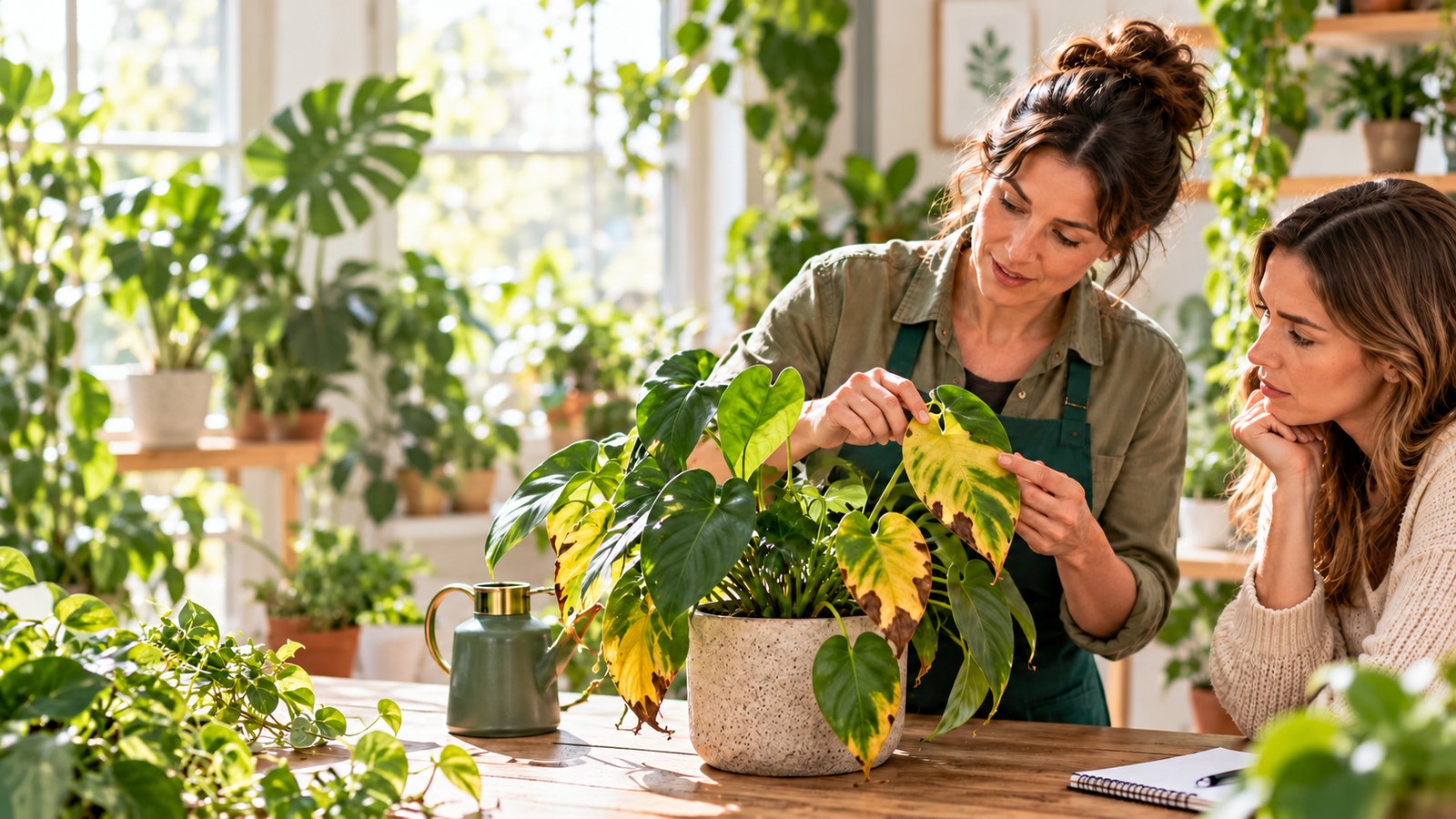
Most houseplant problems are solvable at home. Overwatered soil, a pot that’s too small, a windowsill that’s too dark – these are well-documented issues with clear, practical fixes. But some problems sit outside the reach of standard houseplant care advice, and attempting a DIY fix on a seriously diseased or infested plant can waste weeks, spread pathogens to neighbouring plants, and still end in failure. Knowing exactly where that line falls is worth understanding before you lose a plant you’ve grown for years.
This guide uses a Symptom – Cause – Fix structure to help you distinguish between what’s manageable at home and what genuinely requires professional diagnosis or intervention. The threshold isn’t about skill level; it’s about the nature of the problem itself.
Signs your plant has a problem you can probably fix yourself
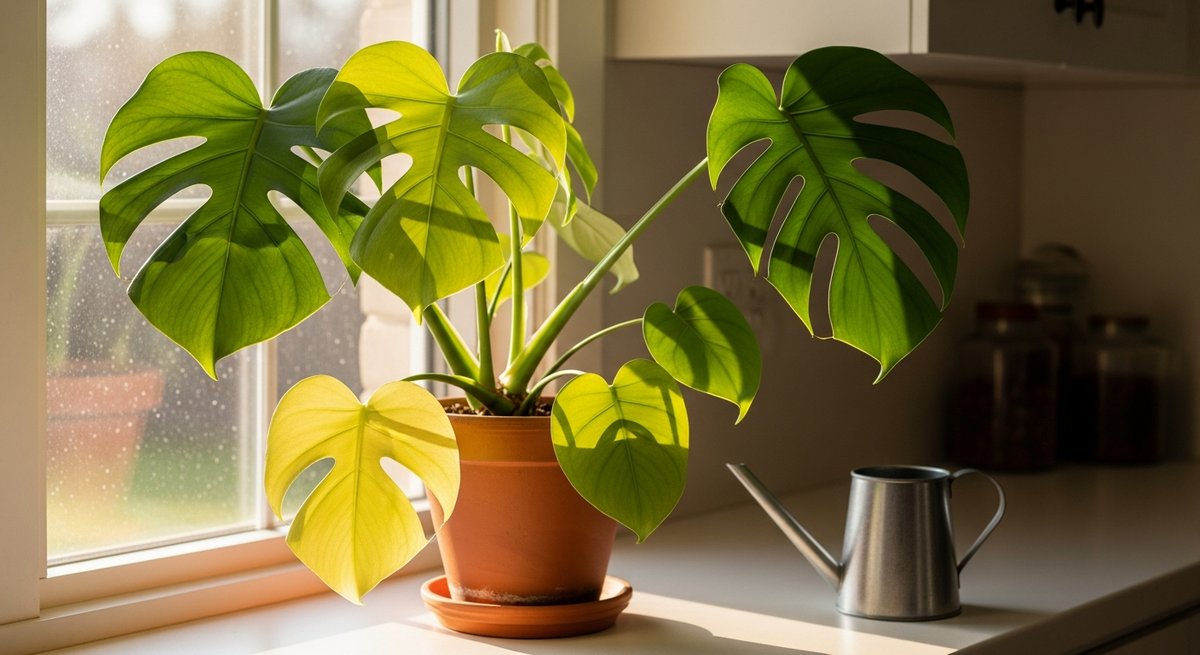
Before escalating, it’s worth being clear about what counts as routine. According to the Royal Horticultural Society (RHS), the majority of houseplant failures result from watering errors rather than disease or pest infestation. Yellow leaves in a Monstera deliciosa, for example, are caused by overwatering in approximately 60% of cases – identifiable by soggy soil and a sour smell at the roots. Reduce watering to once every 10-14 days in winter and allow the top 5 cm (2 inches) of soil to dry before watering again. That’s a fixable problem, and our guide to watering indoor plants covers the full decision process in detail.
Similarly, a plant that’s become pot-bound – roots circling the drainage holes, growth stalling despite adequate light and water – is a clear DIY repotting job. The RHS recommends moving up one pot size (typically 2-4 cm / 1-1.5 inches larger in diameter) in spring, using a species-appropriate compost mix. You can find the full criteria and step-by-step process in our repotting guide.
A small, localised pest problem – a handful of spider mites on one stem, a few fungus gnats around the soil surface – also falls within DIY range. Isolate the affected plant immediately (within 24 hours), and treat with an appropriate intervention such as insecticidal soap spray or a neem oil solution. Read the label before applying either product; both can cause phytotoxicity if applied in direct sunlight or at concentrations above the manufacturer’s recommendation.
When the problem has moved beyond what’s manageable at home
Systemic root rot that doesn’t respond to standard treatment
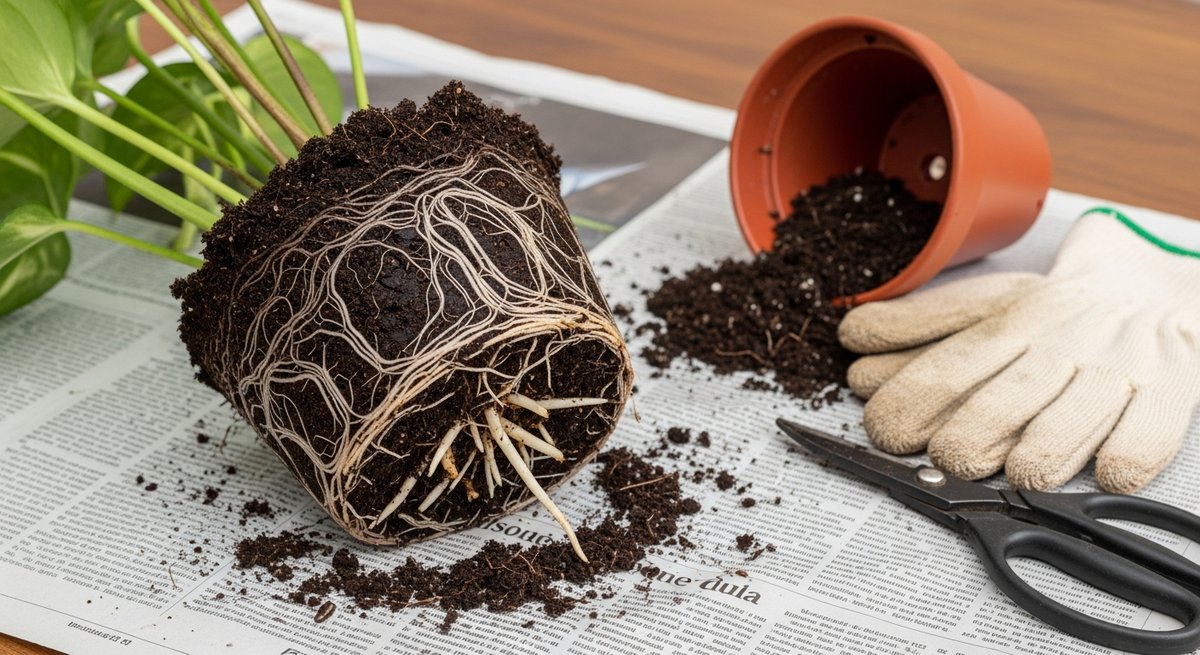
Root rot caused by the water mould Phytophthora or the fungal pathogen Pythium is among the most commonly mismanaged houseplant problems. Early-stage root rot – soft, brown roots affecting less than 30% of the root system – can often be treated by trimming affected roots back to healthy tissue, treating with a hydrogen peroxide solution (3% dilution, applied directly to remaining roots), and repotting into fresh, sterilised medium with improved drainage. However, if the rot has reached the crown or stem base, if more than 50% of the root mass is affected, or if the plant shows no recovery after 3-4 weeks in fresh compost, the pathogen has likely established systemically. At that point, standard home treatment cannot reach the infection, and a professional plant diagnostician or mycologist can identify the exact pathogen and advise whether the plant is salvageable.
Unidentified lesions, cankers, or bacterial ooze
Discoloured lesions that are water-soaked in appearance, sunken cankers on stems, or a foul-smelling bacterial ooze from the base of a plant are not typical overwatering symptoms. These presentations are consistent with bacterial pathogens including Erwinia spp. and Pseudomonas spp., both of which are documented by Kew Gardens as serious threats to collection plants. These infections spread rapidly in warm, humid conditions and are not treatable with standard household fungicides. Isolate the plant immediately; do not mist it or move it near other plants. If you cannot get a professional assessment within 48 hours, the safest course is disposal (bagged, not composted).
Pest infestations that have spread to multiple plants
A thrips infestation that has reached three or more plants, a mealybug colony that has persisted through two full treatment cycles of neem oil or insecticidal soap, or a scale insect population covering more than 30% of a plant’s stems all represent situations where DIY control has effectively failed. According to the RHS, some scale insect species produce a protective waxy coating that makes topical sprays functionally ineffective without repeated physical removal. A professional horticulturist or integrated pest management (IPM) consultant can apply systemic treatments (where legally available and appropriate for indoor use) and assess whether the spread has reached plants you haven’t yet identified. For guidance on what an insecticidal soap treatment correctly applied looks like before reaching that threshold, see how to use insecticidal soap on indoor plants.
Mosaic patterns on leaves – irregular light and dark green patches that do not correspond to variegation in the cultivar – alongside distorted new growth and stunted leaf development can indicate a viral infection. Common houseplant viruses include Tomato mosaic virus (ToMV) and Cucumber mosaic virus (CMV), both of which are documented by the RHS as transmissible via sap contact, unsterilised tools, and certain aphid species. There is no treatment for plant viruses. A plant virologist or plant pathology laboratory can confirm the diagnosis via ELISA (enzyme-linked immunosorbent assay) testing. If viral infection is confirmed, the plant should be destroyed and all tools that contacted it sterilised with a 70% isopropyl alcohol solution. Do not propagate from a plant showing these symptoms.
Structural decline in high-value or irreplaceable specimens
If you have a specimen plant – a mature Ficus lyrata (fiddle-leaf fig) trained over several years, a large Strelitzia nicolai (giant bird of paradise) with significant sentimental or monetary value – and it is showing progressive decline despite correct care adjustments, the cost of professional diagnosis is almost always lower than the replacement cost. A qualified horticulturist can conduct an in-person assessment, review your watering and feeding log (a digital plant care journal is useful here), and provide a structured treatment plan. This is not a failure of home care; it is appropriate resource allocation.
How to document the problem before you call
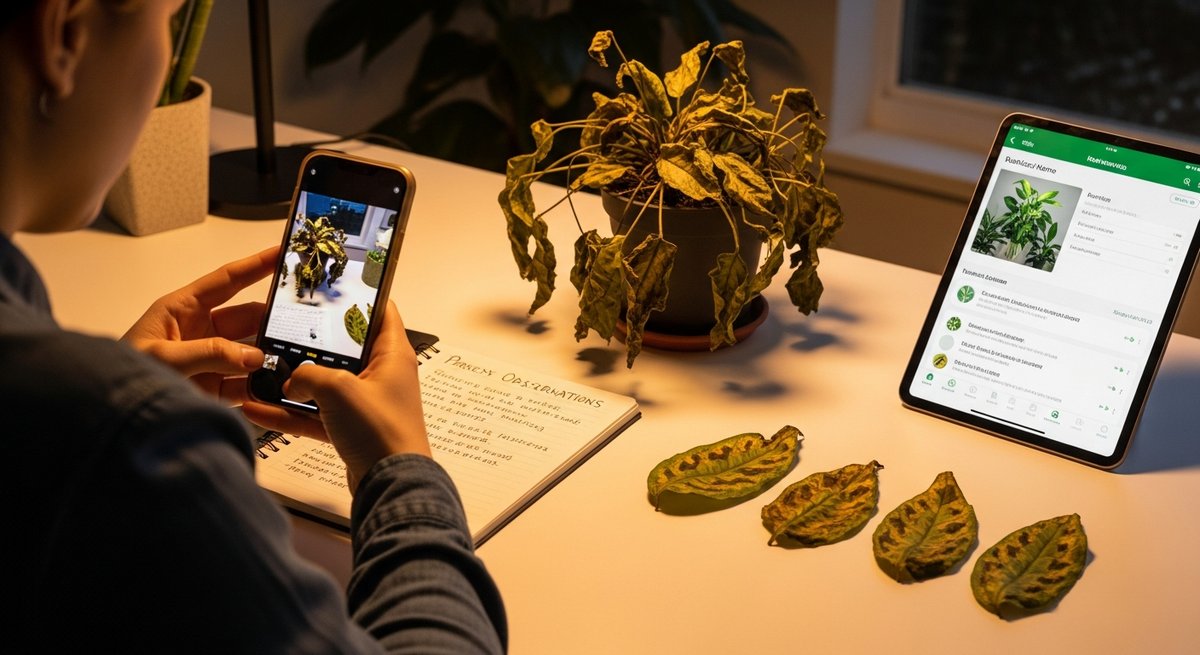
A professional diagnosis is faster and more accurate when you arrive with structured information. Before you contact a plant expert or send a plant to a laboratory, record the following: the plant’s common and botanical name (a plant identification app can confirm this if you’re unsure – see how to use plant identification apps for a reliable methodology); how long the symptoms have been visible; which parts of the plant are affected and in what order they appeared; your watering frequency and the method used; the ambient temperature range in the room (both Celsius and Fahrenheit); and any treatments already applied, with product names and dates. Photographs taken in natural light, showing both the whole plant and close-up of affected tissue, are valuable supporting evidence.
Where to find professional plant help
In the UK, the RHS offers plant diagnostic services through their advisory team, accessible via the RHS website, with laboratory analysis available for suspected disease cases. The RHS also operates advice lines for members. University horticultural departments and botanic gardens (including those affiliated with Kew) sometimes offer diagnostic consultations or can refer you to a registered practitioner. In the US, each state’s land-grant university operates a Cooperative Extension Service with plant diagnostic labs – the USDA National Institute of Food and Agriculture (NIFA) maintains a searchable directory at nifa.usda.gov. For pest identification specifically, an IPM (Integrated Pest Management) consultant registered with the relevant national body is the appropriate route.
Avoid relying solely on garden centre staff for diagnosis of serious problems. Most garden centre employees are trained in retail horticulture rather than plant pathology, and a misdiagnosis at this stage can add weeks to an already deteriorating situation.
Preventing recurrence after professional treatment
Once a serious problem has been professionally resolved, the priority is to eliminate the conditions that allowed it to develop. For disease problems, this almost always involves improving airflow around plants (maintaining at least 10-15 cm / 4-6 inches of space between pots), reviewing humidity levels (most fungal pathogens proliferate above 70% relative humidity), and establishing a consistent watering discipline based on soil moisture rather than a fixed schedule. For pest problems, a monthly preventive treatment with diluted neem oil during warmer months (when pest populations cycle most rapidly) is supported by RHS guidance as an effective integrated approach. Quarantine any new plant for a minimum of two weeks before placing it near established specimens – this applies regardless of where it was purchased.
Seasonal care adjustments also reduce plant stress, which is the primary factor that makes plants susceptible to both disease and pest pressure in the first place. Reduced light, lower temperatures, and dry indoor heating in autumn and winter create conditions where many houseplants are physiologically compromised. A consistent seasonal care review – covering light, temperature, watering frequency, and feeding schedule – is the most reliable preventive measure available.
Frequently asked questions
How do I know if my houseplant has root rot or just needs repotting?
Root rot and pot-bound stress share some surface symptoms – wilting, slow growth, yellowing leaves – but the distinction is clear when you inspect the roots. Healthy roots are white or pale tan and firm to the touch. Roots affected by rot are brown or black, soft, and often smell sour or musty. If fewer than 30% of roots show rot and the crown is firm, a home treatment (trimming, fresh compost, reduced watering) is appropriate. If the rot has reached the stem base or more than half the root mass is affected, seek professional advice before proceeding.
Can I treat a fungal infection on my houseplant at home?
Many surface fungal infections – powdery mildew, sooty mould, early-stage leaf spot – can be managed at home with appropriate fungicide products or improved growing conditions. However, systemic fungal infections (those affecting roots, stems, or vascular tissue) and any infection that does not respond to two full treatment cycles should be referred to a professional diagnostician. Applying repeated fungicide treatments to a misidentified problem risks phytotoxicity and delays effective intervention.
My plant has been dying slowly for months despite correct care. Should I call a professional?
Progressive decline over more than 6-8 weeks, despite verified corrections to watering, light, temperature (kept within 16-24 C / 61-75 F for most tropical houseplants), and feeding, is a reasonable threshold for professional consultation. Slow decline without an identifiable cause often indicates a root-level problem – either pathogen-based or structural – that requires physical inspection to diagnose accurately.
How much does professional plant diagnosis cost?
Costs vary significantly by service type. RHS laboratory analysis for disease identification starts from approximately £30-£50 per sample (as of 2025 – check the RHS website for current pricing). University Extension diagnostic labs in the US typically charge $20-$50 USD per sample. An in-person consultation with a qualified horticulturist or IPM consultant is typically charged at an hourly rate of £50-£120 in the UK or $60-$150 in the US, depending on location and specialism. For a high-value specimen plant, this cost is usually proportionate.
Is it worth trying to save a severely infested plant, or should I discard it?
- Discard immediately if: the infestation has spread to more than five other plants, the pest is confirmed as a regulated or notifiable species, or the plant has no sentimental or monetary value that justifies the risk to your collection.
- Attempt professional treatment if: the plant is rare, mature, or irreplaceable, and the infestation is contained to one or two specimens.
- Always isolate the affected plant before making a decision, and do not place new plants near it during the assessment period.
Nutrient deficiencies tend to produce uniform discolouration following predictable patterns: interveinal chlorosis (yellowing between leaf veins) typically indicates iron or magnesium deficiency and responds to appropriate supplementation within 2-4 weeks. Viral infections produce irregular mosaic patterns, often with distorted leaf margins and stunted new growth, and do not improve with feeding or corrected care. If a suspected deficiency does not respond to targeted treatment within 4 weeks, viral infection should be considered and laboratory testing requested.
Sources
- Royal Horticultural Society (RHS) – Plant Health and Diseases: rhs.org.uk/disease
- Royal Botanic Gardens, Kew – Plant Pathogens: kew.org/science/our-science/departments/plant-health
- USDA National Institute of Food and Agriculture – Cooperative Extension: nifa.usda.gov/extension
- RHS – Scale Insects on Houseplants: rhs.org.uk/biodiversity/scale-insects
- RHS – Root Rot (Phytophthora): rhs.org.uk/disease/phytophthora-root-rot
