




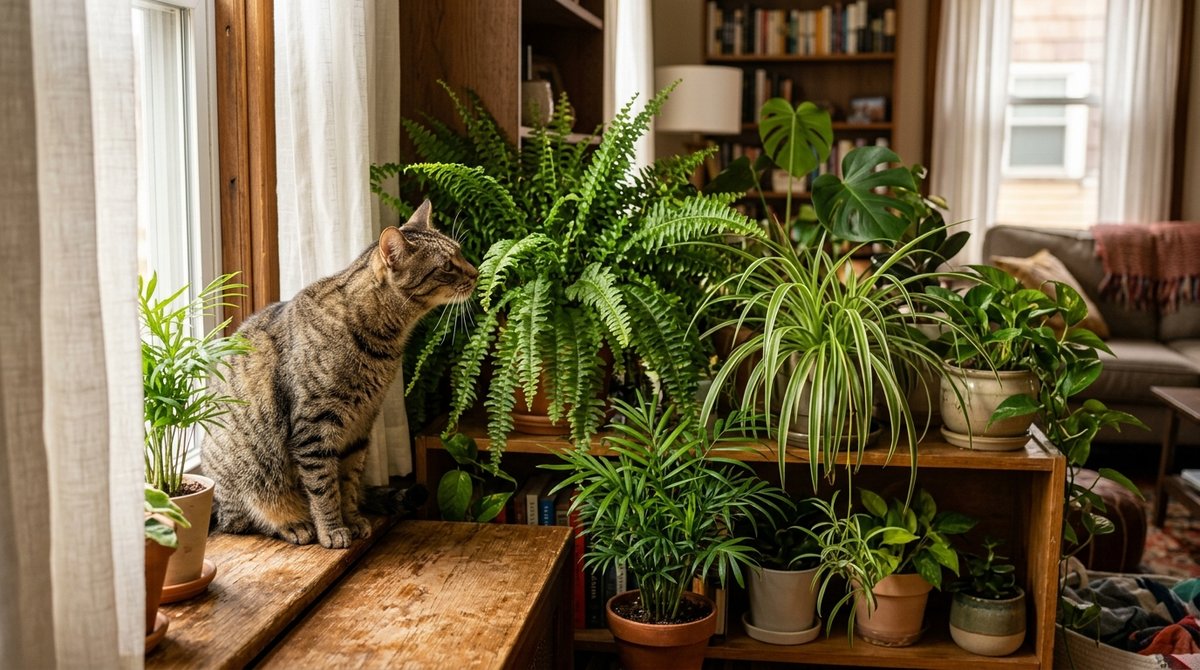
Keeping a green home and sharing it with a cat is entirely possible. The challenge is knowing which plants are genuinely safe and which carry hidden risks. The ASPCA maintains a searchable toxicity database listing hundreds of plant species, and the gap between “probably fine” and “causes acute kidney failure” can be as narrow as the difference between a Boston fern and a common lily. This guide cuts through the confusion with sourced, species-level information so you can build a plant collection that does not put your cat at risk.
If you are new to indoor gardening alongside a pet, our guide to pet-friendly indoor plants that are safe for your furry friends is a useful companion to the detail here.
Why plant safety matters more than you might expect
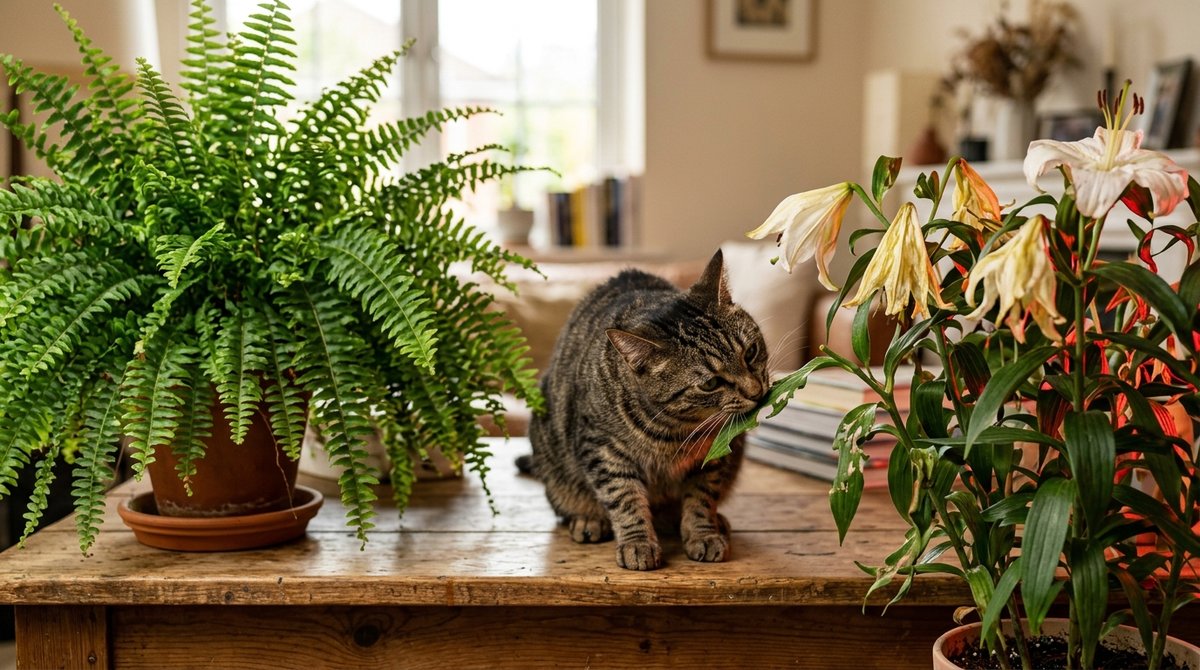
Cats are obligate carnivores, but they chew plants regularly, most often out of curiosity or to aid digestion. The ASPCA Animal Poison Control Center lists over 400 plants as toxic to cats, with effects ranging from mild gastrointestinal upset to multi-organ failure. True lilies in the genus Lilium (such as Easter lily, Lilium longiflorum) and Daylilies (Hemerocallis spp.) are among the most dangerous: ingestion of even a small amount of pollen or leaf material can cause acute kidney injury within 24 to 72 hours. Waiting to see what happens is not a safe strategy.
Non-toxic does not mean zero risk. Even ASPCA-listed safe plants can cause mild vomiting if eaten in large quantities, because bulk plant matter is simply indigestible for a cat’s gut. The goal is to eliminate serious toxins, then manage the rest through placement and enrichment.
The best non toxic plants for cats: a sourced species list
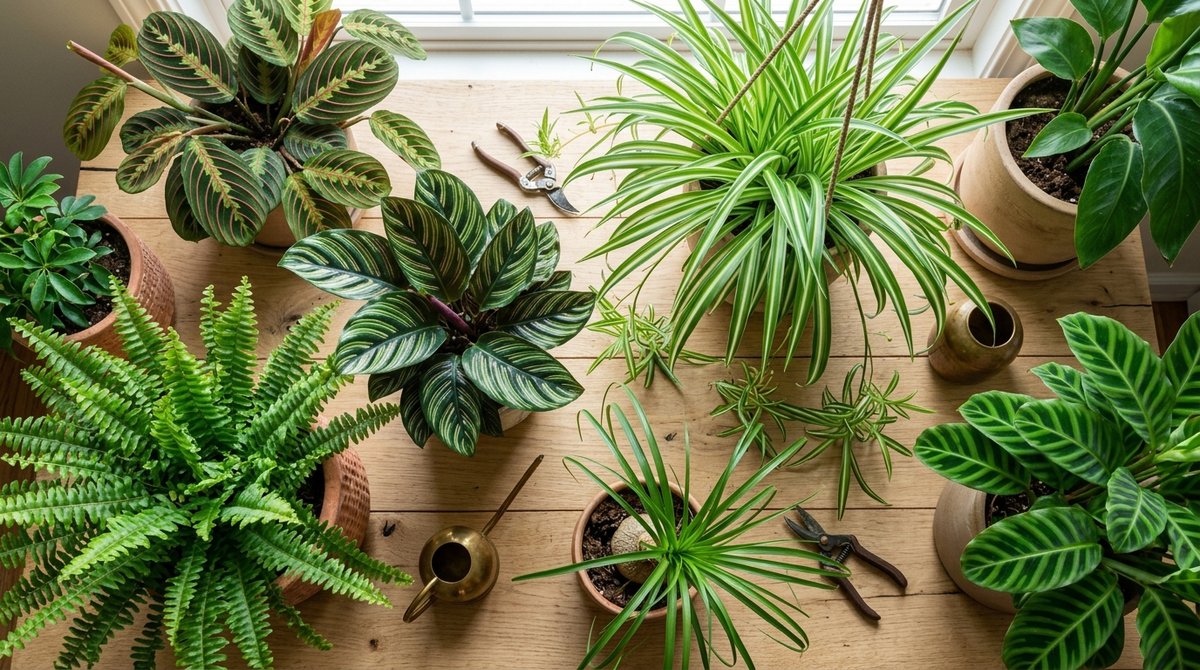
The following plants are confirmed non-toxic to cats by the ASPCA. Species names are included so you can cross-reference the ASPCA database directly.
- Boston fern (Nephrolepis exaltata), Non-toxic to cats and dogs per ASPCA. Thrives in indirect light and humidity above 50%, making it well-suited to bathrooms.
- Spider plant (Chlorophytum comosum), ASPCA-listed as non-toxic, though compounds mildly related to opioids may cause temporary vomiting if eaten in quantity. Keep it out of easy reach regardless.
- Areca palm (Dypsis lutescens), Non-toxic to cats and dogs per ASPCA. One of the more reliable cat safe houseplants for large, bright living spaces.
- African violet (Saintpaulia spp.), ASPCA-confirmed non-toxic. Compact, flowering, and suited to north- or east-facing windowsills with indirect light.
- Calathea (Calathea spp., now reclassified as Goeppertia spp.), Non-toxic to cats and dogs per ASPCA. Requires consistent moisture and indirect light.
- Peperomia (Peperomia spp.), ASPCA-listed as non-toxic. Over 1,000 species exist; most tolerate low light better than many tropical houseplants.
- Haworthia (Haworthia spp.), Non-toxic to cats per ASPCA, unlike many other succulents such as aloe, which is listed as toxic.
- Swedish ivy (Plectranthus australis), ASPCA-confirmed non-toxic. A trailing plant well-suited to shelves and non toxic hanging plants for cats arrangements.
- Orchid (Phalaenopsis spp.), Non-toxic to cats and dogs per ASPCA. One of the most commonly gifted non toxic flowers for cats when in bloom.
- Friendship plant (Pilea involucrata), ASPCA-listed as non-toxic. Low-growing and suitable for terrariums or enclosed plant displays.
Comparing cat-safe and high-risk common houseplants
The table below compares commonly sold houseplants by their ASPCA toxicity status and documented clinical risk. All classifications are sourced from the ASPCA Toxic and Non-Toxic Plants database.
| Plant (common name) | Species name | ASPCA status for cats | Key risk if toxic |
|---|---|---|---|
| Boston fern | Nephrolepis exaltata | Non-toxic | None listed |
| Easter lily | Lilium longiflorum | Toxic | Acute kidney failure |
| Areca palm | Dypsis lutescens | Non-toxic | None listed |
| Pothos | Epipremnum aureum | Toxic | Oral irritation, vomiting, difficulty swallowing |
| African violet | Saintpaulia spp. | Non-toxic | None listed |
| Peace lily | Spathiphyllum spp. | Toxic | Oral irritation, vomiting, difficulty swallowing |
| Haworthia | Haworthia spp. | Non-toxic | None listed |
| Aloe vera | Aloe barbadensis | Toxic | Vomiting, lethargy, diarrhoea |
| Phalaenopsis orchid | Phalaenopsis spp. | Non-toxic | None listed |
| Monstera | Monstera deliciosa | Toxic | Oral irritation, excessive drooling, vomiting |
Placement strategies that reduce risk
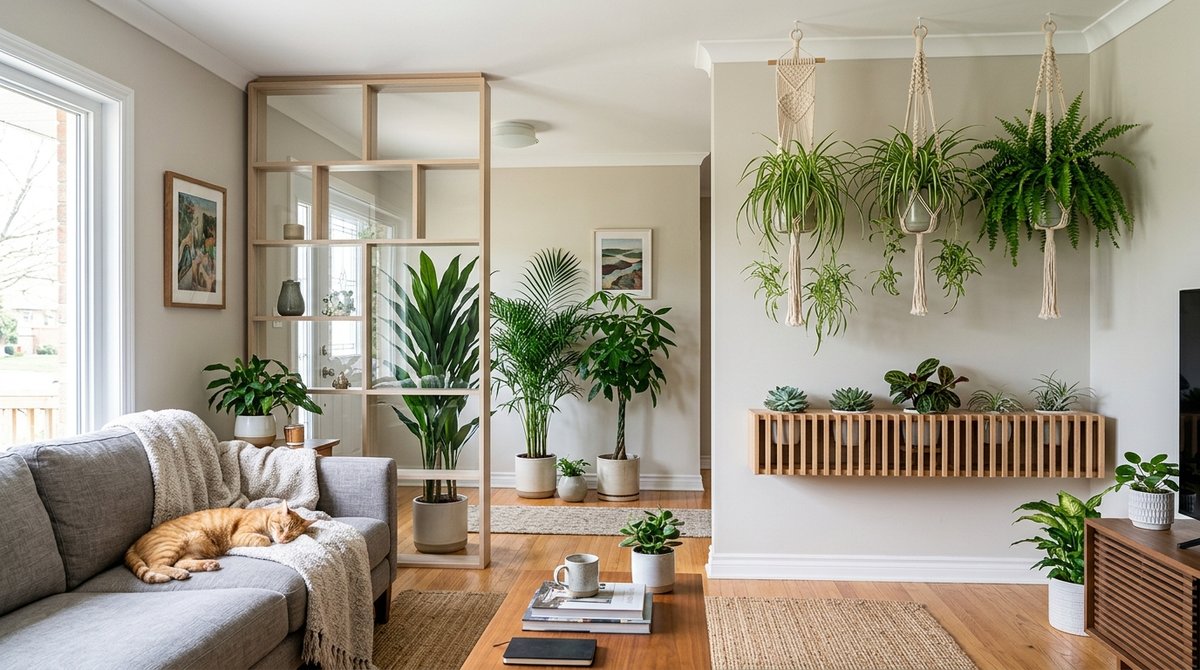
Even with a fully cat-safe collection, physical placement reduces the chance of a cat ingesting large quantities of any plant. Cats are more likely to chew plants when bored or when access is unimpeded. Practical steps include the following.
- Hang trailing non toxic indoor plants for cats in wall-mounted or ceiling brackets at least 1.5 m (5 ft) above floor level, combined with no nearby furniture for the cat to use as a launch point.
- Use terrariums or closed glass cabinets for small, low-growing species. This restricts access without restricting light.
- Provide cat grass (Dactylis glomerata or Triticum aestivum), which the ASPCA lists as non-toxic, as a dedicated chewing outlet.
- Place pots in rooms where your cat has limited unsupervised access, particularly for plants that may cause mild gastrointestinal upset if eaten in quantity.
If you are uncertain what species a plant actually is before bringing it home, how to use plant identification apps to identify your indoor plants explains how to confirm an ID before the plant comes through your front door.
What to do if your cat eats a plant
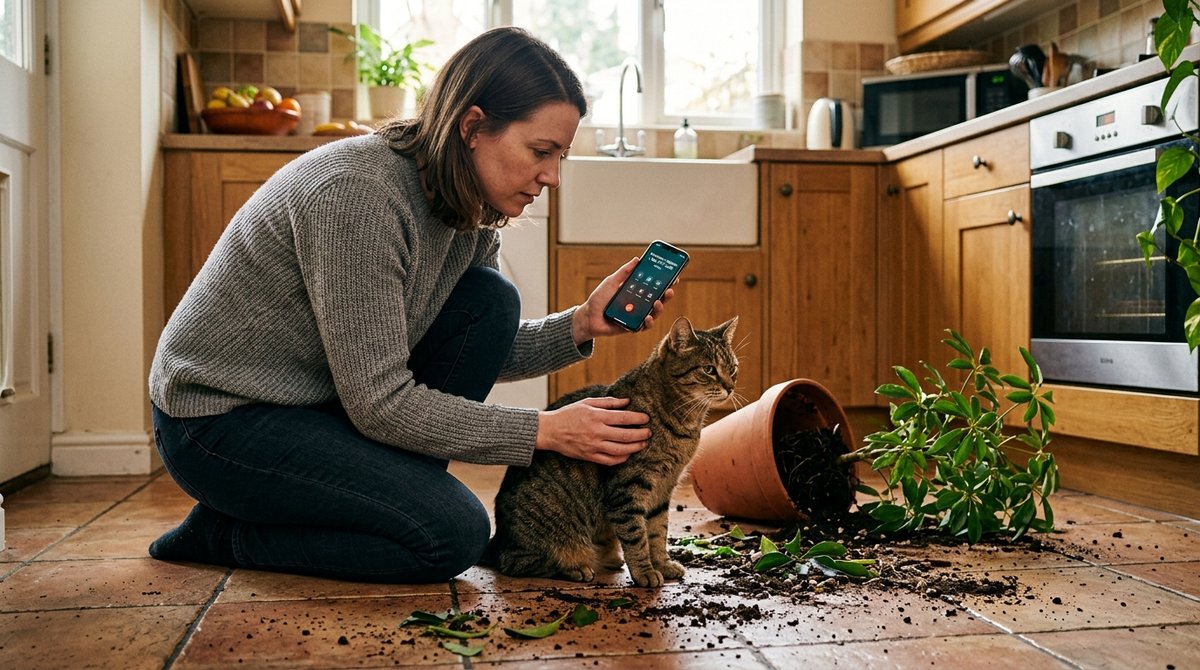
Act on the side of caution even when you believe the plant is non-toxic. If the plant is unidentified, treat the situation as a potential emergency. The steps below are based on guidance from the ASPCA Animal Poison Control Center.
- Remove your cat from the plant and keep them calm.
- Identify the plant to species level if possible. A clear photograph of leaf, stem, and any flower or fruit helps a vet identify it quickly.
- Call the ASPCA Animal Poison Control Center on 888-426-4435 or your veterinarian immediately. Do not induce vomiting unless explicitly instructed by a professional.
- Note the time of ingestion and estimate the quantity consumed.
- Monitor for vomiting, drooling, lethargy, difficulty breathing, or changes in urination over the 24 to 72 hours following ingestion, even after a vet has assessed the risk as low.
Frequently asked questions
Identifying and choosing safe plants
Are all succulents safe for cats?
No. While Haworthia species are ASPCA-listed as non-toxic to cats, several popular succulents are not. Aloe vera (Aloe barbadensis) is listed as toxic, causing vomiting, lethargy, and diarrhoea. Jade plant (Crassula ovata) is toxic, with ASPCA-documented effects including vomiting and incoordination. Always check the ASPCA database by species name, not by the broad category of “succulent.”
Is the peace lily safe for cats?
No. Despite its name and widespread popularity, the peace lily (Spathiphyllum spp.) is toxic to cats. The ASPCA lists it as causing oral irritation, drooling, vomiting, and difficulty swallowing due to insoluble calcium oxalate crystals.
Which plants are both safe for cats and dogs?
Several of the species listed above are confirmed non-toxic to both species by the ASPCA:
- Boston fern (Nephrolepis exaltata)
- Areca palm (Dypsis lutescens)
- African violet (Saintpaulia spp.)
- Calathea / Goeppertia spp.
- Phalaenopsis orchid
- Haworthia spp.
Always verify using the ASPCA database directly, as common-name confusion can affect the result.
How do I identify an unknown plant quickly?
A plant identification app can give you a working species name in seconds, which you can then check against the ASPCA database. No app achieves 100% accuracy; if match confidence is below 70%, treat the ID as provisional and seek a second confirmation. The app should be a starting point for a database check, not a substitute for it.
Managing plants safely at home
Can I keep non toxic hanging plants for cats safely indoors?
Yes, with the right hardware. Wall-mounted brackets or ceiling hooks at 1.5 m (5 ft) or above, combined with no nearby furniture for the cat to use as a launch point, are the most effective physical barrier. Swedish ivy (Plectranthus australis) and spider plant (Chlorophytum comosum) are both ASPCA-listed as non-toxic and well-suited to hanging arrangements.
My cat keeps eating my plants. What should I do?
First, confirm every plant in your home against the ASPCA database by species name. Then introduce cat grass as a sanctioned chewing target. If the behaviour persists and is causing the cat to vomit regularly, raise it with your vet: compulsive plant eating can sometimes indicate a nutritional deficiency or gastrointestinal issue that warrants investigation.
Are outdoor plants also a concern for cats?
Yes. Garden plants such as foxglove (Digitalis purpurea), autumn crocus (Colchicum autumnale), and all true lily species pose serious risks to outdoor-access cats. If your cat has garden access, cross-check any new planting against the ASPCA database before installing it.
Does ASPCA non-toxic status mean a plant is completely harmless?
Not entirely. ASPCA non-toxic classification means the plant does not contain compounds known to cause organ damage or systemic poisoning in cats at typical ingestion levels. Bulk ingestion of any plant matter can still cause vomiting or diarrhoea due to simple indigestibility. Non-toxic is a meaningful, important classification; it is not a guarantee of zero reaction.
Sources
- ASPCA (no date). Toxic and Non-Toxic Plants database. American Society for the Prevention of Cruelty to Animals. https://www.aspca.org/pet-care/animal-poison-control/toxic-and-non-toxic-plants
- ASPCA (no date). Animal Poison Control Center. American Society for the Prevention of Cruelty to Animals. https://www.aspca.org/pet-care/animal-poison-control
- RHS (no date). Plants and plant parts that are harmful to cats and dogs. Royal Horticultural Society. https://www.rhs.org.uk/prevention-protection/plants-harmful-to-dogs-and-cats
